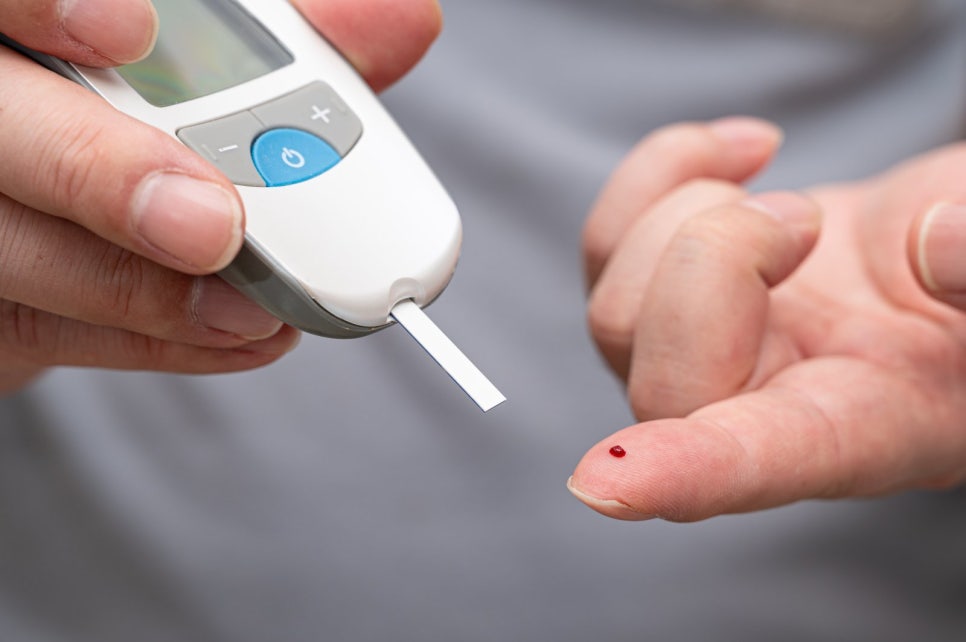
Your fasting blood sugar was 106 this morning. Did you reassure yourself by thinking, “It’s not diabetes yet, so I can manage it”?
As a practicing pharmacist, I’ll start with an uncomfortable truth. That number is not merely a warning.
It is the clearest evidence that your pancreas has already lost more than half its function and that your cells are pushing glucose away as though it were waste, unable to use it for energy.
You cut out carbohydrates, look for sugar substitutes, and force yourself to walk until you sweat after meals, yet the number still will not come down. It is no surprise.
Simply eating less and moving more cannot fix a “metabolic switch” in your body that has already stopped working properly.
If you stop reading here, you may spend years chewing through bland salads and repeating pointless fasts, only to find yourself caught in a cycle of diabetes medication you can never stop taking.
What is the real reason your blood sugar remains high despite all your efforts? And what is the most reliable way to address it?
Today, I’m going to fact-check both questions from a pharmacist’s point of view.
What We’ll Cover
- Why you need to manage your blood sugar
- Why blood sugar management is difficult
- Which blood sugar supplements are available
- The glucose-lowering effects reported in research
- A research-based comparison of supplements on the market
This is a fairly long article. But if you are new to blood sugar management, reading from the beginning, step by step, will help you manage it for the long term.
1. Why You Need to Manage Your Blood Sugar
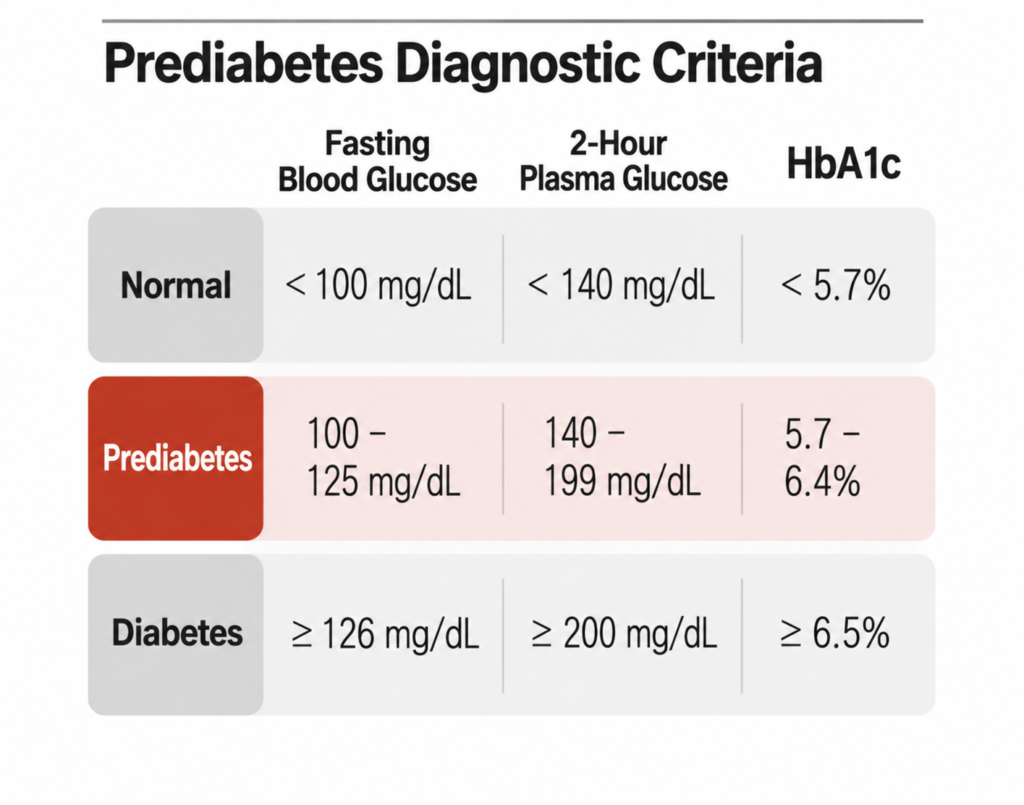
The key measurements used to diagnose and treat diabetes are fasting blood glucose, post-meal blood glucose, and HbA1c.
Of these, HbA1c reflects your average blood sugar over the past three months. Because it is not swayed by a short-term rise or fall, it gives the clearest picture of how well your blood sugar has been managed.
– HbA1c of 5.7–6.4%: Prediabetes
– HbA1c of 6.5% or higher: Diabetes
As a pharmacist, the people I find most frustrating to watch are those who receive an HbA1c result of 5.8% or 6.0% and say, “I’m only just over the line. A little dieting will take care of it.”
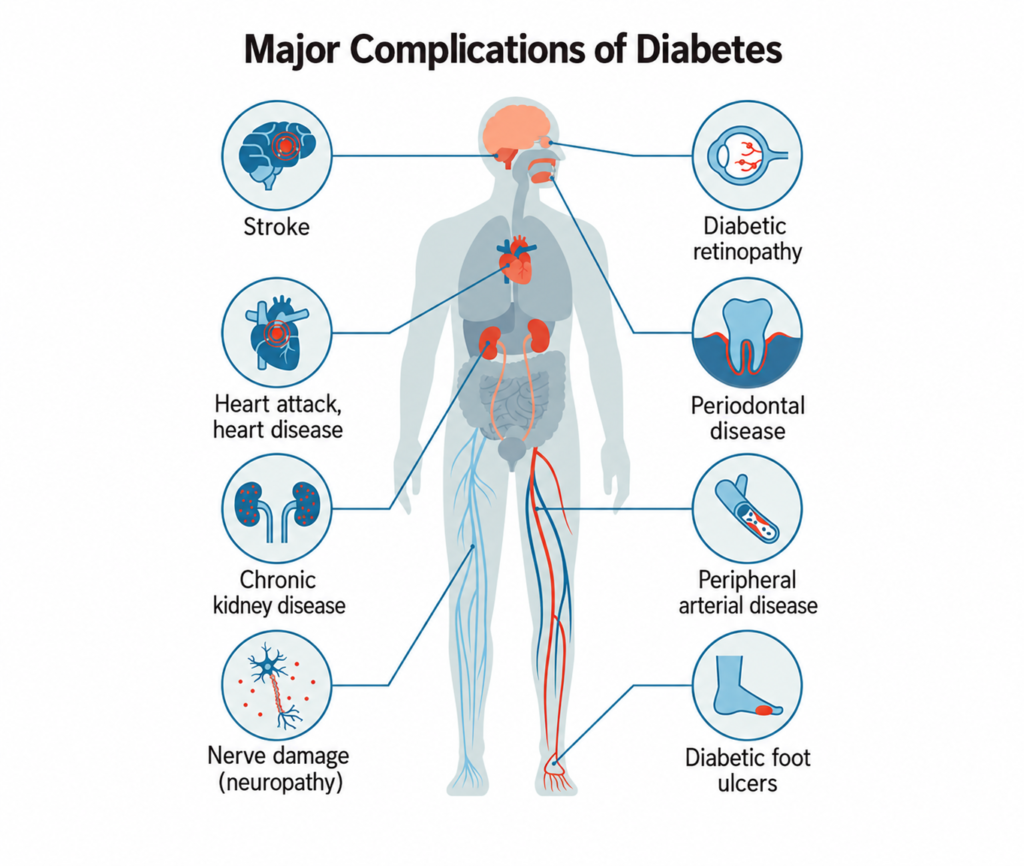
Diabetes is not a minor condition that simply makes a number on a lab report go up. Once your blood sugar moves outside the normal range, it means glucose-laden blood is already slowly damaging blood vessels throughout your body.
Wherever blood vessels reach, sticky deposits can build up, gradually narrowing them and triggering widespread inflammation.
The kidneys, eyes, peripheral nerves, and cardiovascular system can all be affected. In fact, a major cause of death among people with diabetes is cardiovascular complications rather than diabetes itself.
What makes it more frightening is that there may be no pain or warning signs until considerable damage has been done.
That is why diabetes is sometimes called a “silent killer.” Once complications develop, the damage cannot simply be undone.
That is why it is time to move beyond the appearance of managing a reading by one or two points. You need to address the underlying reason glucose builds up in the blood: your body’s impaired ability to regulate blood sugar. Now is the time to start managing that ability in earnest.
2. Why Blood Sugar Management Is So Difficult
“Walk for 30 minutes after meals. Eat foods in a different order. Limit carbohydrates.”
These are the basic rules you have heard over and over from clinics and health programs.
You did not read this far just to hear another predictable, textbook explanation, did you?
The issue is that knowing what to do and actually doing it are two different things. Most people do not skip these habits because they have never heard of them.
But when work dinners, late nights, and irregular meals are part of everyday life, following every rule perfectly is not realistic.
You do well for a few days, and then one unexpected change to your routine throws everything off. That is what happens to most of us.
And if you have already developed insulin resistance, results may be slow no matter how hard you try. Your body’s ability to process blood glucose has already declined.
* Insulin resistance means that insulin, the hormone that helps lower blood sugar, is no longer doing its job properly.
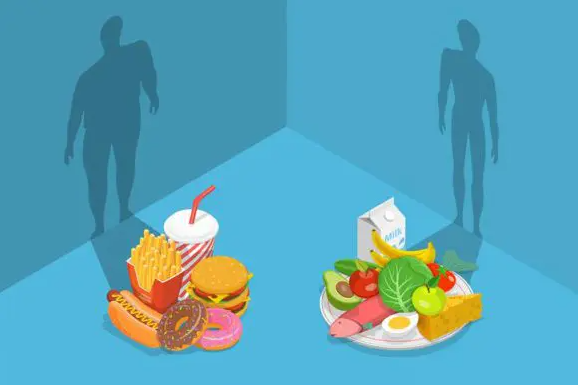
What fun is life if you have to give up every food you enjoy?
You do not have to force yourself to cut out everything and live with that stress.
There is a more realistic way to help manage blood sugar: taking a supplement that can offer practical support.
3. What Blood Sugar Supplements Are There?

Once you start looking for a blood sugar supplement, the number of ingredients can make choosing one harder, not easier.
Banaba leaf, berberine, bitter melon, chromium—each is said to be good for blood sugar. But they do different things in the body.
To work out which ingredient might suit you, you first need to understand why blood sugar rises.
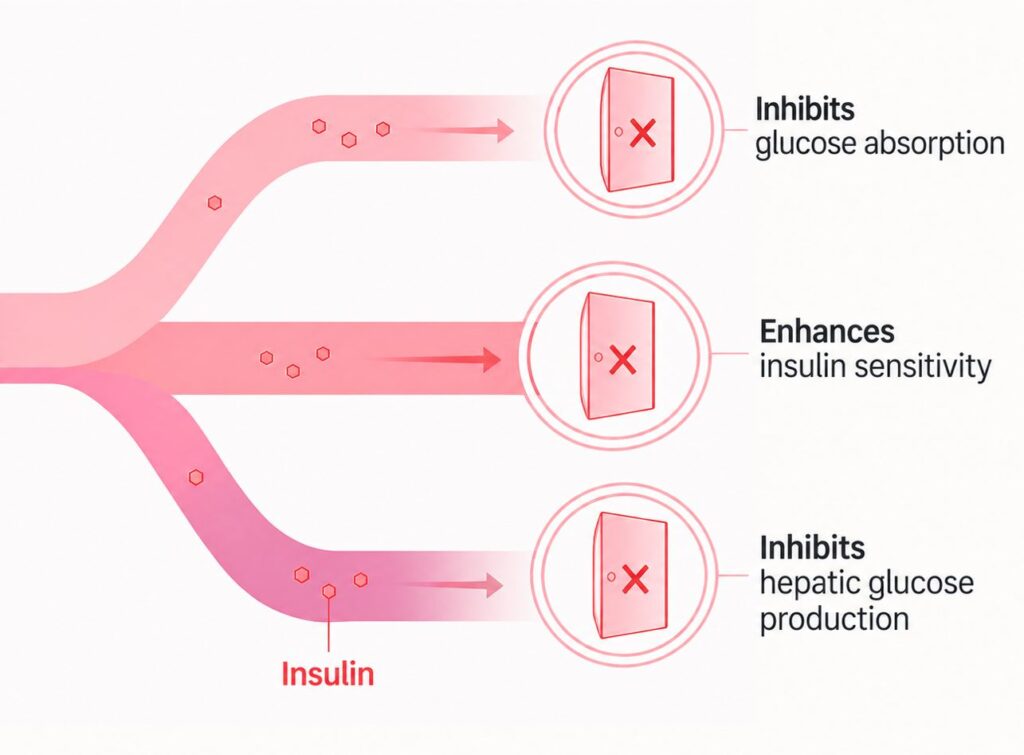
Broadly speaking, blood sugar can rise through three pathways:
1) sugar from food is absorbed too quickly
2) insulin fails to do its job properly
3) the liver makes more glucose than the body needs.
An ingredient’s effect depends on which of these pathways it acts on.
Ingredients such as bitter melon, banaba leaf, and chromium generally work by slowing sugar absorption or supporting insulin signaling.
That does not mean they are no help at all, but the range of their action is limited.
They address only some of the routes by which blood sugar rises.
So is there an ingredient that tackles all three at once?

There is. It is ‘berberine’, one of the most talked-about ingredients in blood sugar management today.
Berberine is a natural compound extracted from plants such as goldthread and barberry. It is involved in all three pathways I mentioned.
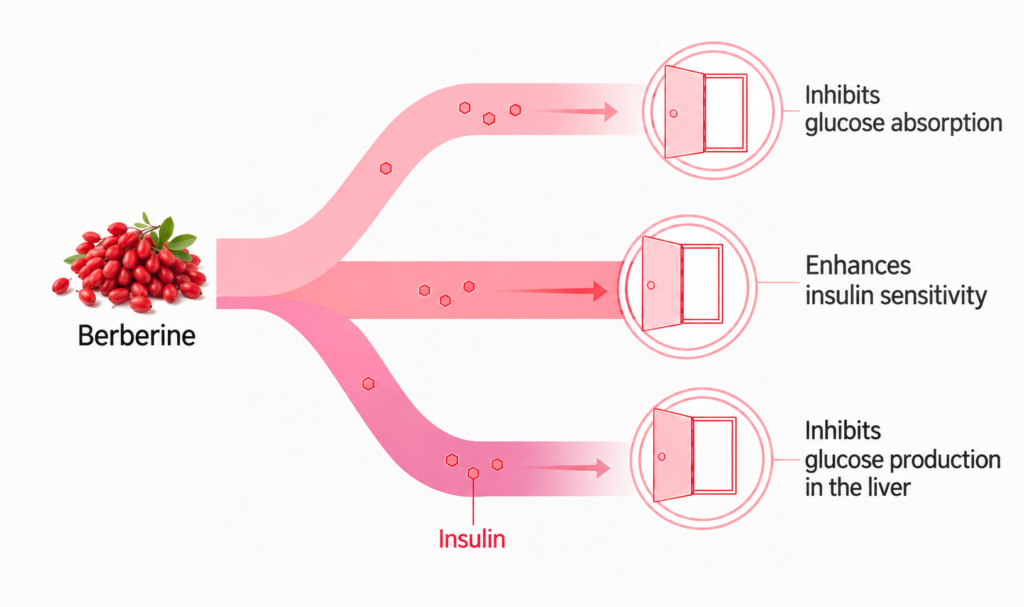
It slows sugar absorption, helps insulin do its job more effectively, and reduces excess glucose production in the liver.
Put simply, it acts on several of the doors through which blood sugar can rise at the same time.
Among the natural ingredients studied for blood sugar so far, berberine has one of the broadest ranges of action and some of the strongest clinical evidence. Several clinical studies have even reported glucose-lowering effects at a level similar to certain blood sugar medications.
That is why berberine deserves your attention if you are searching for a blood sugar supplement.
4. The Glucose-Lowering Effects Reported in Research
Here’s what the research actually shows:
1) HbA1c fell from 9.5% to 7.5%
2) fasting blood glucose fell from 10.6 to 6.9 mmol/L
3) the results were similar to those observed with the diabetes medication metformin.
How could berberine lower blood sugar this effectively? Let’s go through it step by step.
A key reason berberine may affect blood sugar is its ability to activate an enzyme called AMPK.
Think of AMPK as your body’s “energy-regulation switch.” When it is switched on, cells take up glucose more actively and the liver is less likely to make more glucose than the body needs.
As a result, less glucose remains in the blood, helping blood sugar come down.
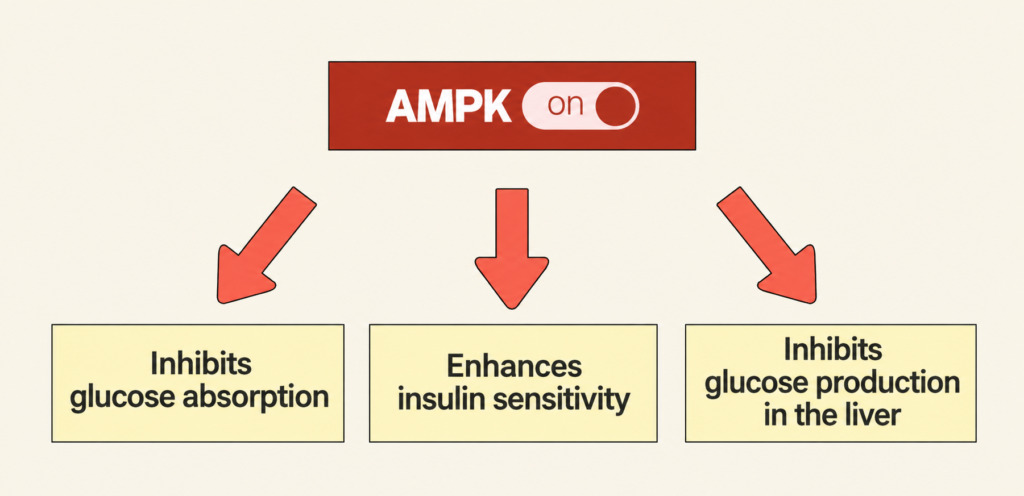
Berberine works by switching on that process.
Its strength is that the action does not stop there.
It also slows sugar absorption after meals, improves insulin sensitivity, and limits excess glucose production in the liver.
In other words, it addresses several pathways that raise blood sugar at once.
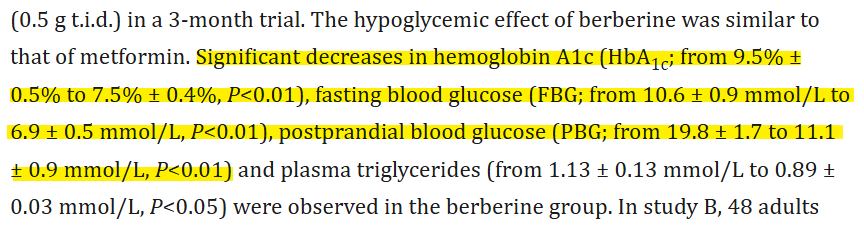
These results did not come from just one study. Dozens of clinical studies have repeatedly reported reductions in HbA1c, fasting blood glucose, and post-meal blood glucose among people taking berberine.
A two-percentage-point drop in HbA1c is a substantial change. Depending on where someone starts, it could be enough to move a reading from the prediabetes range back into the normal range.
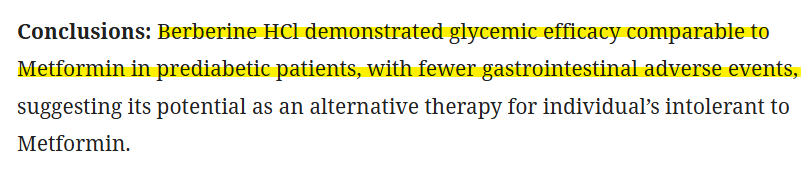
The comparison with metformin is even more striking. Metformin is one of the most widely prescribed first-line medicines for type 2 diabetes.
In a clinical trial that directly compared the two among people with type 2 diabetes, the improvements in fasting glucose, post-meal glucose, and HbA1c did not differ significantly between the groups.
The fact that berberine, a natural compound, showed effects comparable to a diabetes medication gives it a stronger basis in clinical evidence than a typical supporting ingredient.
To date, berberine has the most extensive clinical evidence among natural ingredients studied for blood sugar management. As interest in it has grown, numerous berberine products have entered the market.
But before choosing one, there is a weakness you absolutely need to understand.
Berberine’s Critical Weakness: Absorption Below 1%
The issue is bioavailability—in simple terms, how much of an ingredient the body can absorb and use.
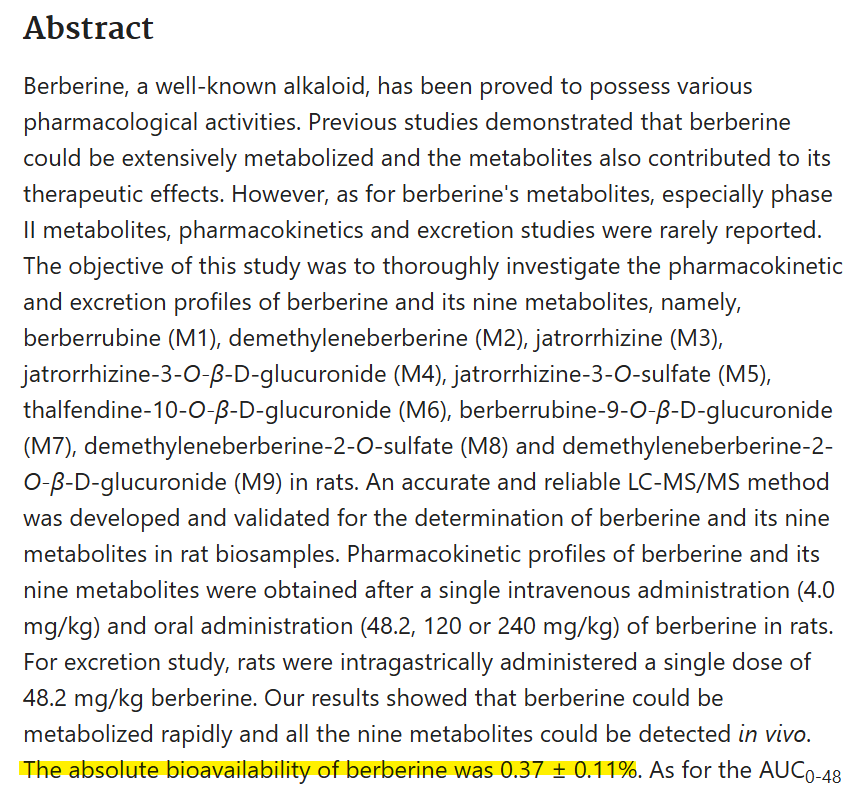
Numerous studies have reported that the oral bioavailability of standard berberine is below 1%.
Put simply, if you swallow 100 units, less than one unit may reach the bloodstream in a form the body can use for metabolism.
No matter how much cheap berberine you take, most of it never gets past the gut lining. It just ends up in your urine or stool.
The AMPK activation, reduced glucose production, and improved insulin action discussed above all depend on sufficient berberine reaching the body. If it is not absorbed, those expected effects will not occur as intended.
That is why some sellers recommend taking ordinary berberine in increasingly large doses to overcome its poor absorption. But simply increasing the dose can lead toa worst-case scenario: severe side effects. More is not always better.

Berberine has antimicrobial properties that can suppress certain harmful microorganisms. The problem arises when poor absorption leaves a large amount of berberine in the intestines.
At high concentrations in the colon, berberine can indiscriminately suppress both harmful bacteria and the beneficial bacteria that help protect gut health, without distinguishing between the two.
This disruption of the gut microbiome can lead to gas and other digestive discomfort.
In fact, many people report gas, loose stools, or abdominal pain after taking berberine. These are typical digestive complaints associated with taking too much standard berberine and its effects on the gut.
A supplement taken for health may end up making your stomach feel worse instead.
5. Comparing Berberine Supplements on the Market
We have looked at why berberine attracts attention for blood sugar management. Now comes the practical question: which product should you choose?
Based on the standards I have used when recommending products at the pharmacy and listening to people’s feedback, there are exactly two points I would check first.
Criterion 1: How Much Berberine Are You Actually Taking?
Look through studies on berberine and you will find that many used a 500 mg dose. Depending on the study design, participants took it one to three times a day.
The original reasoning was that 500 mg at a time offered a good balance of effects and side effects.
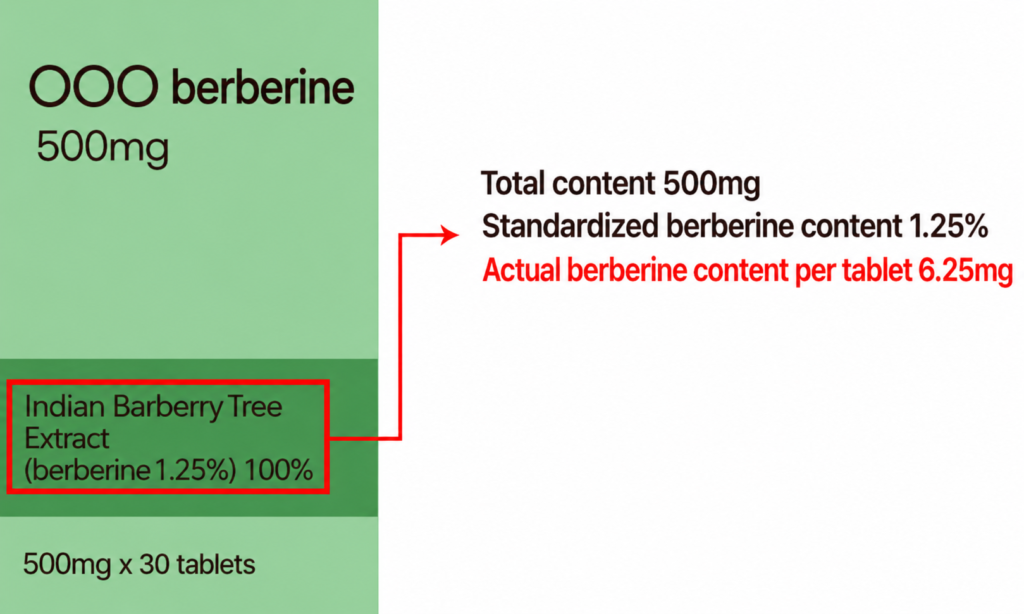
But the reality is that many products on the market actually fall short of their claimed potency.
As a pharmacist, I can say this with confidence: whenever possible, stay away from low-quality products that only end up wasting your money.
Personally, I do not believe supplements are something you should choose based on price alone. When it comes to supplements, you often get exactly what you pay for.
A product may cost half as much, yet you could find yourself needing far more of it to get the amount supplied by one serving of a properly formulated product—sometimes as much as twenty times more.
The simplest way to spot the difference is to check the label. What matters is the amount of berberine itself, not merely the amount of the raw extract.
A product containing 500 mg of actual berberine should state that clearly.
Look for an unambiguous “Berberine 500 mg” statement, then confirm the details on the supplement facts panel.
Criterion 2: Has the Product Been Designed to Improve Absorption?
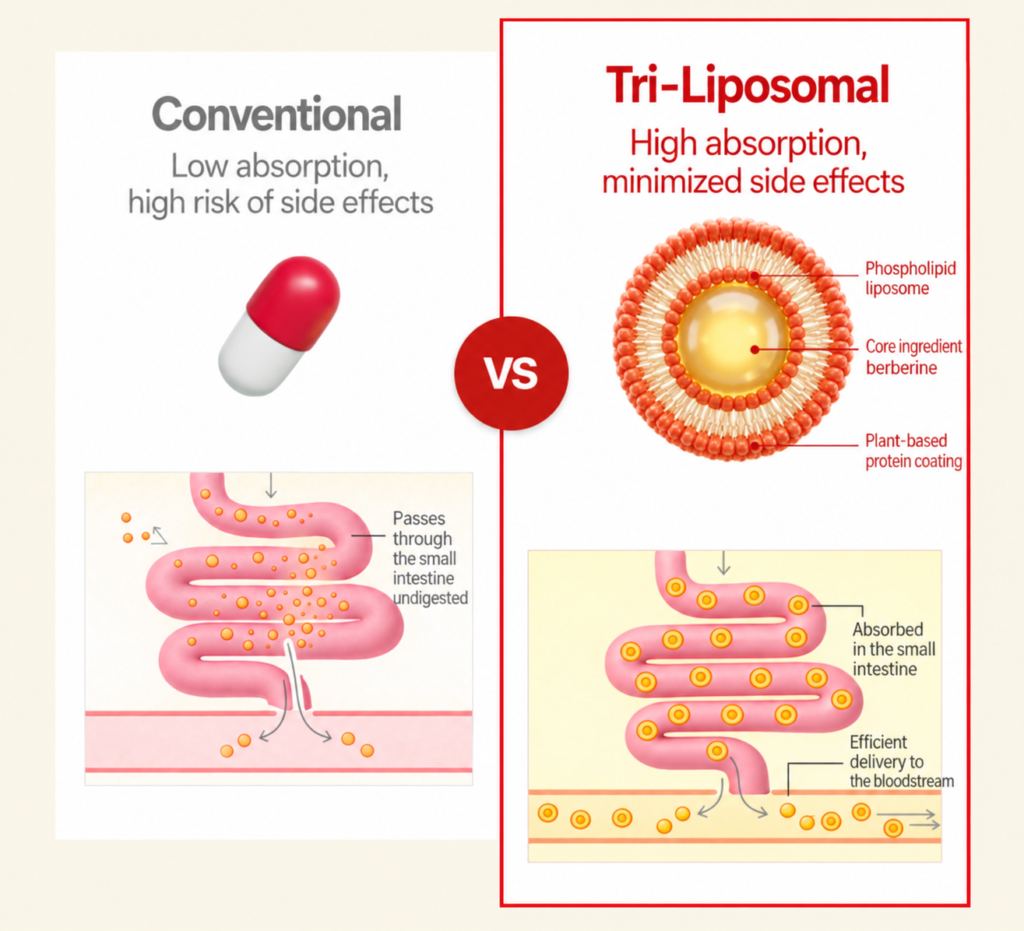
Even 500 mg of actual berberine means little if your body cannot absorb enough of it. As I mentioned, standard berberine has oral bioavailability below 1%.
That is why I check whether a product uses a method intended to improve absorption.
To overcome the limits of absorption, liposomal technology—which encapsulates active ingredients in a protective lipid layer—is no longer just an option.
It has become essential. And taking that concept one step further is a more advanced, premium delivery technology: the Triposome system.
Triposome technology surrounds berberine with a lipid bilayer structure similar to that of our own cell membranes.
This biomimetic design helps the body interact with berberine more naturally, supporting smoother and faster passage across the intestinal lining and ultimately improving its absorption.
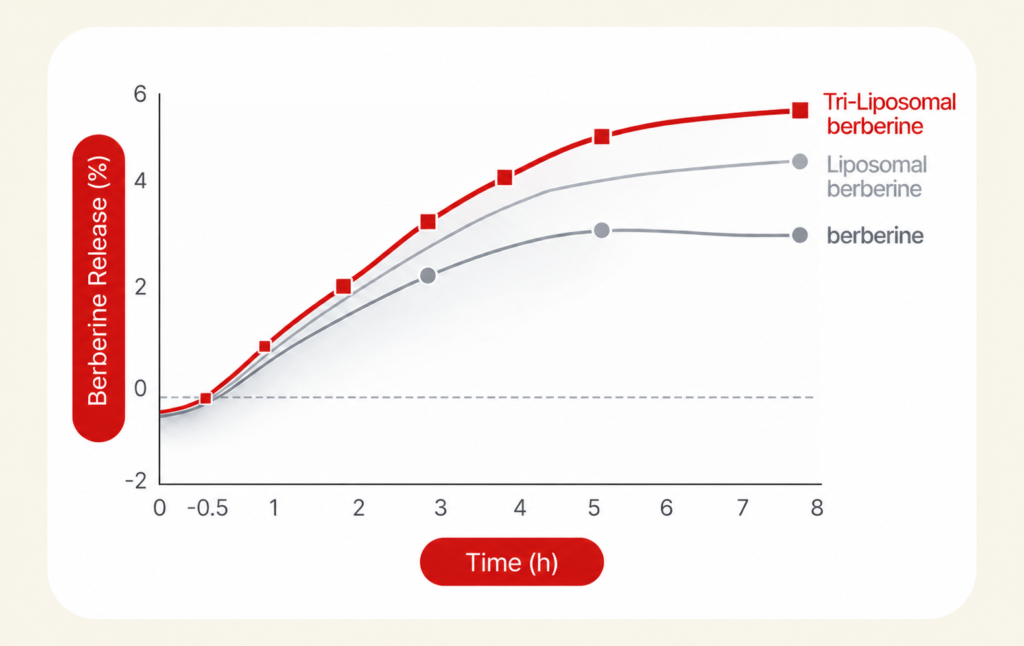
According to a human study comparing Triposome berberine with standard berberine, the same dose of Triposome berberine produced up to several times greater absorption.
In other words, more of the same amount could reach the bloodstream and begin working sooner.
That is why I recommend screening out standard formulations that have no absorption-enhancing technology, such as liposomal or Triposome delivery.
Comparing Berberine Content and Additional Ingredients
Using those two criteria, I compared the berberine products available on the market.
Rather than choosing based on price or recommendation videos alone, look for a product with a verified manufacturing process and a clearly stated amount of berberine per serving.
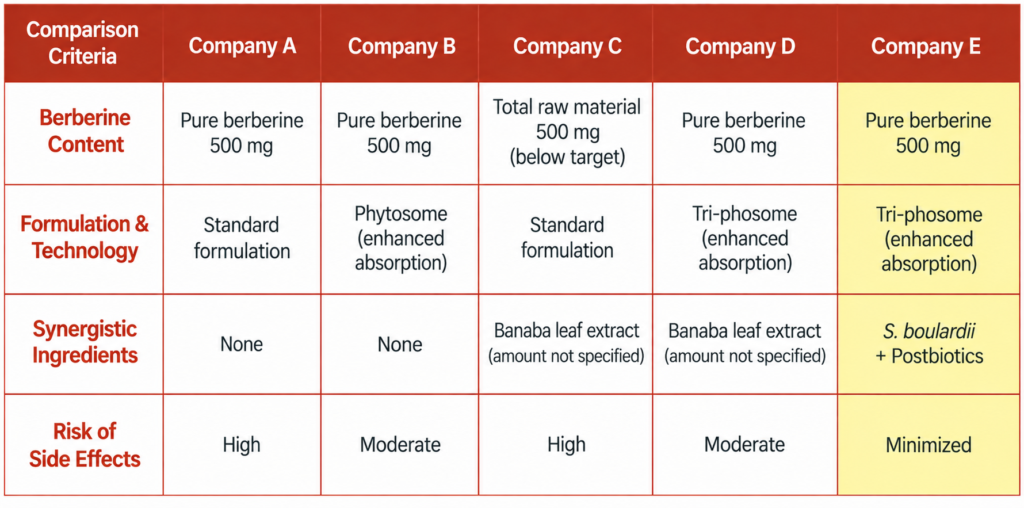
As the comparison chart shows, three products meet the 500 mg actual-berberine criterion and also use an absorption-enhancing method: brands B, D, and E. All three share one thing in common. They use Triposome or Phytosome, delivery technologies that go a step beyond standard liposomes.
The difference is in their additional ingredients.
Berberine needs to be taken consistently to make a difference. But if digestive side effects make you stop halfway through, the plan is no use.
Brand E combines berberine withSaccharomyces boulardii and postbiotics to address the concern that berberine may also suppress beneficial bacteria in the colon.
* Saccharomyces boulardii is a resilient yeast with antimicrobial properties. It is known for its ability to survive challenging conditions, including heat and exposure to antibiotics, and for its resistance to stomach acid and bile.
When I recommended this product, I often heard comments such as, “This one doesn’t give me diarrhea or stomach pain.”
Of course, a product that combines Triposome technology with these additional ingredients tends to cost more than other options.
Even so, the question I care about more than price is whether you can keep taking it.
If you have struggled with berberine-related stomach problems, I would pay particular attention to this part of the formula.

Search for “younglong berberine” and you will find products that claim to address absorption limits or combine berberine with complementary ingredients.
Compare them against the criteria above rather than compromising on what matters to you.
It is something you may take every day for your health. Take the time to check these details and choose carefully.
Why Don’t I Recommend Every Product With Banaba Leaf Extract?
People sometimes ask why I do not automatically recommend a product just because it includes banaba leaf extract as an additional ingredient.
Some products combine berberine and banaba leaf extract and promote the formula as a way to manage blood sugar from several angles. The idea itself is appealing.
But in many products, the amount of corosolic acid, the key compound in banaba leaf extract, falls far short of what it should be.
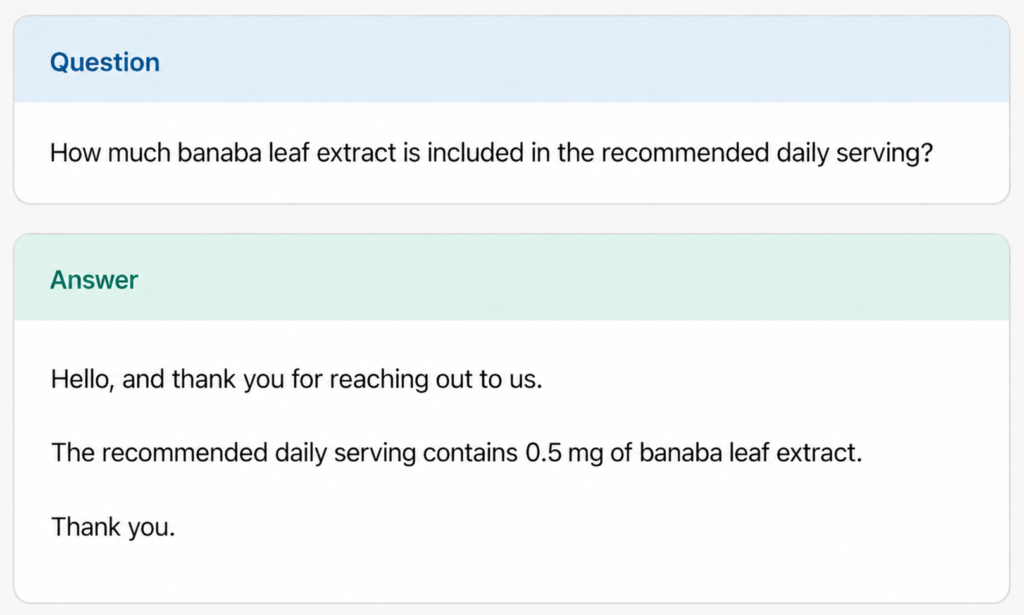
When I checked the actual Q&A, I even found responses saying that the amount of a secondary ingredient, such as banaba leaf extract, could not be disclosed because it was considered confidential.
From a consumer’s perspective, that means there is no real way to verify how much is actually in the product.
Adding multiple ingredients does not automatically make a supplement better.
If a company cannot even clearly disclose the amount of its own ingredients, there is little reason to choose that product in the first place.
Reference
Blood Sugar Reduction
https://pmc.ncbi.nlm.nih.gov/articles/PMC2410097/?utm_source=chatgpt.com
Improving Metabolic Health for Weight Management
https://pubmed.ncbi.nlm.nih.gov/32690176/
Cholesterol Reduction
https://pubmed.ncbi.nlm.nih.gov/18397984/
Berberine Absorption
https://pubmed.ncbi.nlm.nih.gov/33584274/
Comparison of Blood Sugar Control Effects Between Berberine and Metformin
https://www.ijbcp.com/index.php/ijbcp/article/view/6037?utm_source=chatgpt.com