In recent years, the pharmaceutical, dietary supplement, and health food markets have become flooded with unverified information and distorted claims.
As a healthcare professional, I believe we have a responsibility to identify reliable information and provide consumers with clear, accurate facts so they can make better-informed choices.

Recently, ‘berberine’ has become incredibly popular among people interested in blood sugar and weight management.
When you see all the glowing reviews pouring into online communities, it can feel like you should buy it and start taking it right away.
In fact, berberine is an excellent ingredient with remarkable potential for metabolic syndrome management and weight control.
As a pharmacist, if I had to choose just one supplement for metabolic concerns such as blood sugar, cholesterol, and weight, I would recommend berberine without hesitation.
Its mechanisms and effects are extremely compelling, with some of its pathways overlapping with those targeted by prescription medications used for diabetes management.
However, even berberine, with all of these impressive benefits, has one critical weakness.
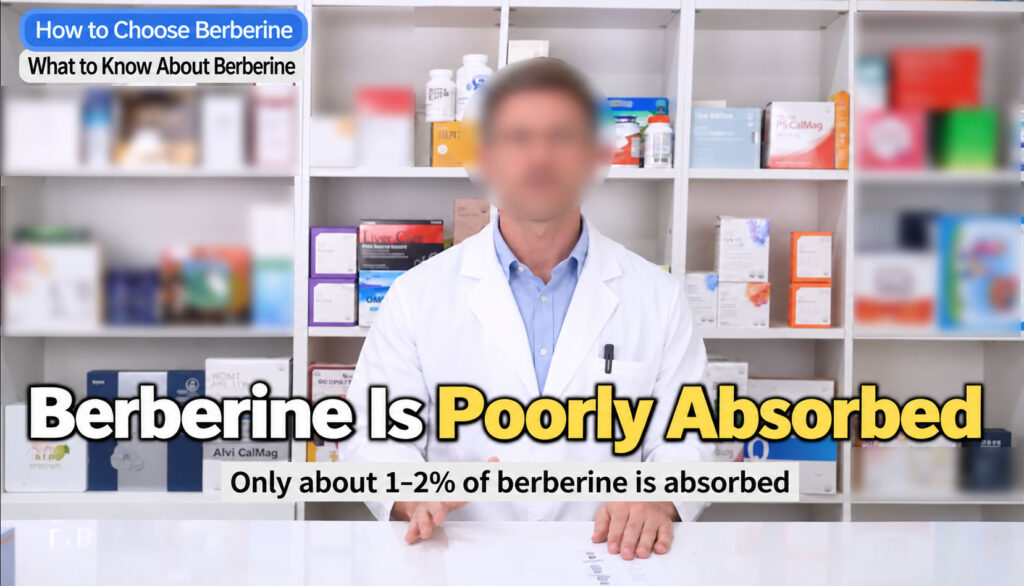
Unfortunately, most conventional berberine products have extremely poor absorption in the body.
Even after passing through the stomach and reaching the small intestine, much of the berberine that is not absorbed by the body is simply eliminated.
No matter how good an ingredient is, it becomes meaningless if the body cannot properly absorb and use it.
So what about the product you are taking right now?
Could it be passing through your body without being properly absorbed?
In this article, I will fact-check the limitations of conventional berberine products from a pharmacist’s perspective, especially the problem of poor absorption and elimination from the body.
Rather than simply following a trend, I will explain three clear criteria for choosing the right berberine—one that can actually work properly in your body.
I strongly recommend keeping these points in mind when choosing a berberine supplement.
1. Key Benefits of Berberine Proven Through Research
Berberine is not simply another trendy ingredient.
It is one of the most extensively studied ingredients, with thousands of research papers published on its effects.
The reason I strongly recommend berberine as a pharmacist is that it goes beyond the level of an ordinary supplement and affects fundamental metabolic systems in the body.
Three key benefits that have been demonstrated in numerous clinical studies are as follows.
Benefit 1) Lowering Blood Sugar
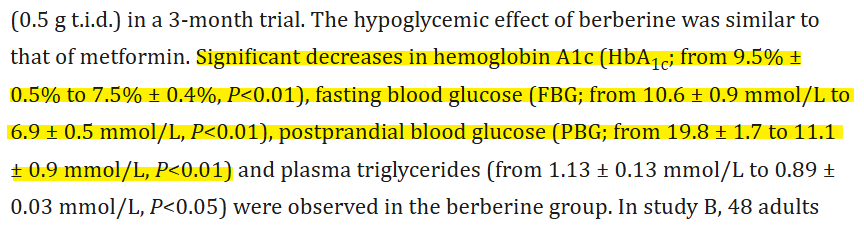
This is why berberine is often called a “natural diabetes drug” among people with diabetes or frequent blood sugar spikes.
Berberine helps reduce excessive glucose production in the liver and moves excess glucose from the bloodstream into cells, where it can be used as energy.
Multiple clinical studies have shown reductions in fasting blood glucose, post-meal glucose, and HbA1c, with effects that have even been compared with those of the prescription drug metformin.
Benefit 2) Weight Loss and Metabolic Improvement
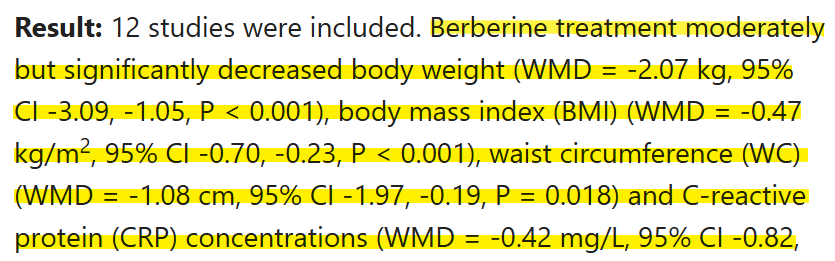
This is one of the main reasons berberine has recently become so popular.
Berberine does not simply reduce water weight or force the body to eliminate more.
It helps improve insulin resistance, one of the fundamental problems behind obesity.
It helps break the vicious cycle in which carbohydrates are stored as abdominal fat and promotes the breakdown of body fat that has become difficult to use.
As a result, it may help shift the body toward a metabolism that is less prone to storing excess fat, without relying solely on extreme calorie restriction.
In fact, multiple clinical studies have reported significant reductions in BMI and waist circumference in groups taking berberine.
Benefit 3) Cholesterol Reduction
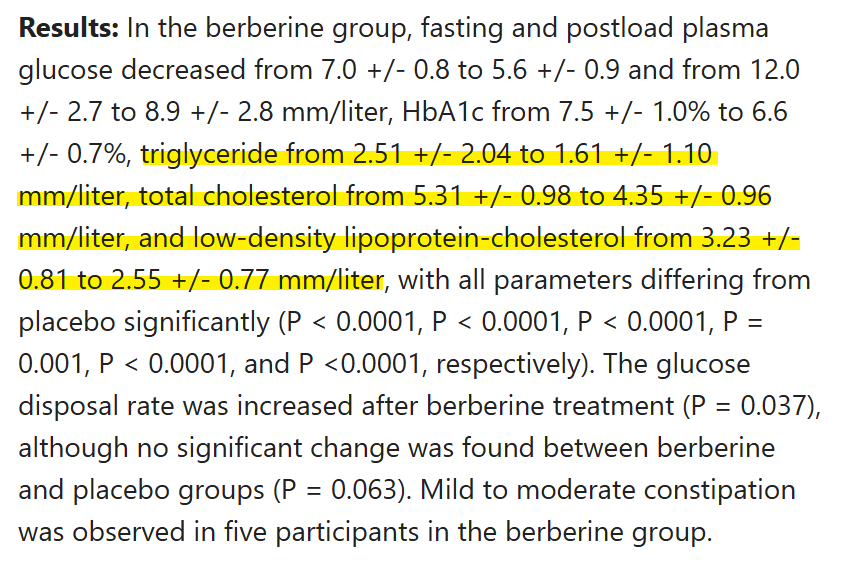
Berberine also has notable effects on blood lipid metabolism.
It helps the liver pull more LDL cholesterol out of the bloodstream and break it down before excess LDL can accumulate.
Clinical meta-analyses have also found that berberine significantly reduces both LDL cholesterol and triglycerides.
How can a single ingredient produce so many different effects?
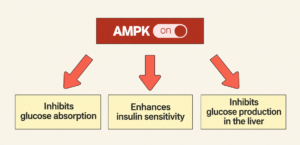
The key to this mechanism is ‘the activation of an enzyme called AMPK’.
AMPK can be thought of as the body’s energy metabolism switch.
Once this switch is turned on, several of the effects described above can occur in sequence.
However, modern lifestyles filled with frequent sugar intake and late-night eating can contribute to metabolic dysfunction.
Blood sugar rises → insulin resistance increases → excess energy is stored as belly fat → lipids build up in the bloodstream.
This is the metabolic state many modern adults are struggling with.
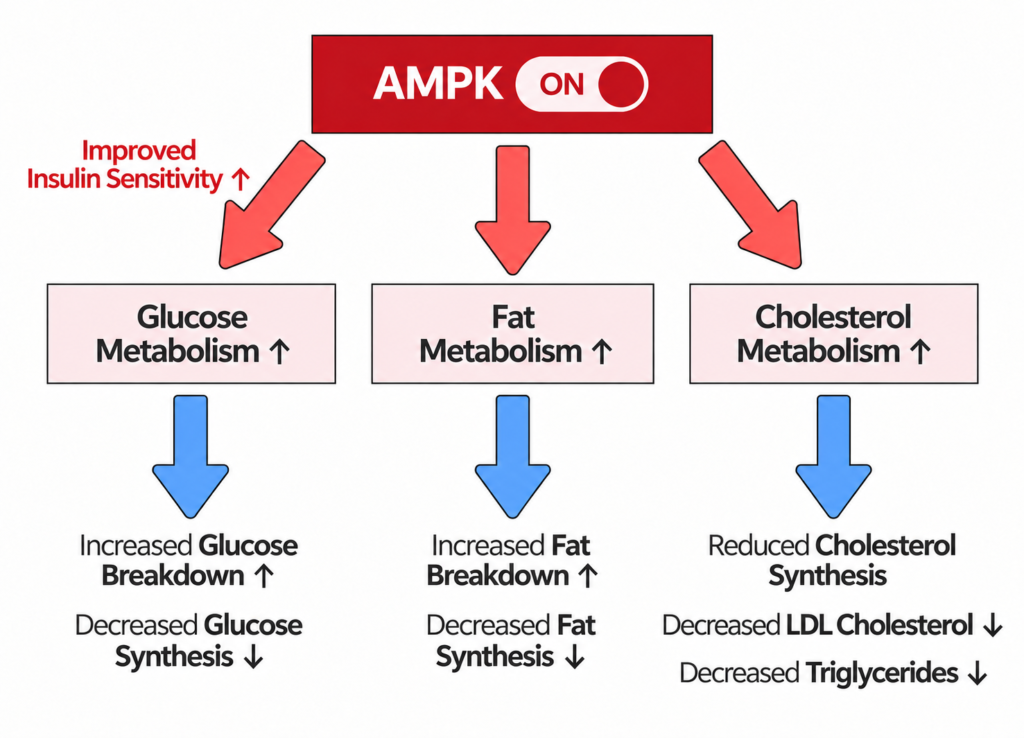
Berberine targets this metabolic pathway.
The moment it enters your body, it forces your AMPK switch from OFF to ON.
The body may then begin to show metabolic responses similar to some of those seen during aerobic exercise.
Blood sugar comes under control — Berberine helps reduce excess glucose production in the liver and promotes the movement of glucose from the bloodstream into cells, where it can be used for energy.
The metabolism becomes less prone to storing fat — It helps break the cycle of carbohydrates being stored as abdominal fat and promotes pathways involved in fat breakdown.
Blood lipid metabolism improves — It helps reduce LDL cholesterol and triglycerides.
One metabolic switch is activated, yet the effects can extend throughout the body.
Lowering blood sugar, helping create a metabolism that is less prone to excess fat storage, and reducing cholesterol—this is the reason berberine has attracted so much attention for comprehensive metabolic health management.
But all of these benefits come with one condition.
They can only occur when berberine is properly absorbed and available to the body.
2. Berberine’s Extremely Poor Bioavailability: Less Than 1%
Berberine has one critical weakness.
Its bioavailability—its ability to be absorbed and used by the body—is extremely low.
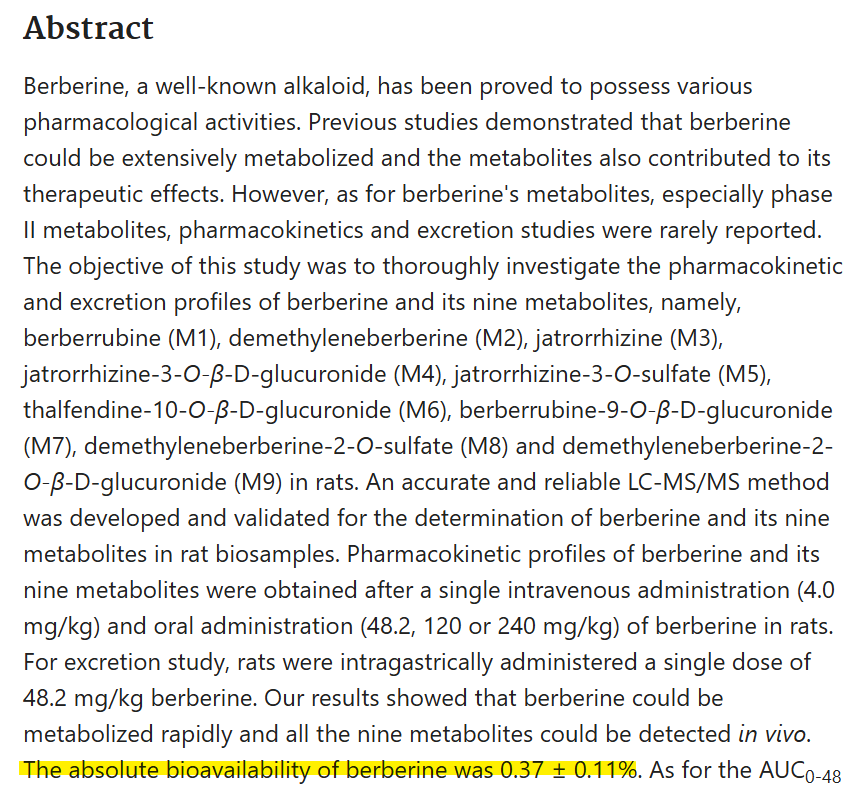
Numerous studies have reported that the oral bioavailability of conventional berberine is below 1%.
Put simply, even if you take 100 units, less than one unit may ultimately reach systemic circulation and become available for use in the body.
No matter how much high-dose conventional berberine you take, much of it may still fail to cross the intestinal barrier and eventually be eliminated.
In other words, AMPK activation, reduced glucose production, improved insulin action, and lower LDL cholesterol can only occur when enough berberine becomes available in the body.
If it is not absorbed, those systemic effects become much harder to achieve.
That is why some products try to compensate for poor absorption simply by recommending very high doses of conventional berberine.
But this is exactly where side effects can become a problem.
Simply increasing the dose does not solve the fundamental problem.

Berberine naturally has strong antimicrobial activity and can inhibit certain bacteria and microorganisms.
The problem occurs when large amounts of poorly absorbed berberine remain in the large intestine.
At high concentrations in the gut, berberine may affect not only harmful bacteria but also beneficial bacteria that help maintain a healthy intestinal environment.
This can disrupt the balance of the gut microbiome and may lead to increased gas and other gastrointestinal symptoms.
Many people say things like, “My stomach gets extremely bloated after taking berberine,” or “I keep getting loose stools and stomach pain.”
These are typical gastrointestinal side effects that may occur when large amounts of unabsorbed berberine remain in the gut and affect the intestinal environment.
A supplement taken for better health should not end up causing problems for your gut.
3. How to Choose the Right Berberine
Berberine is one of the most extensively studied metabolic health ingredients in the world.
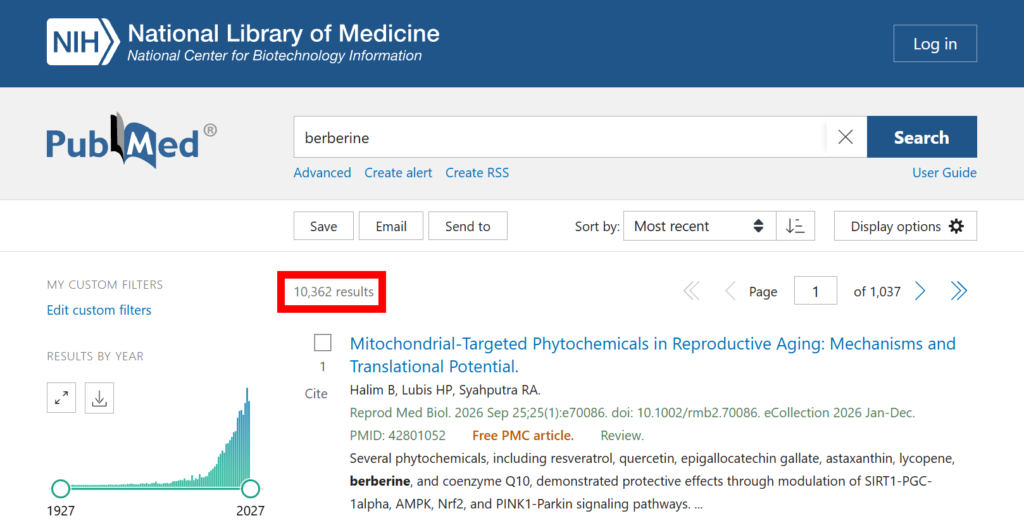
Today, a wide variety of berberine products are available, making it easier than ever to find different formulations.
However, when choosing a product, there are several things you should consider.
Instead of choosing based only on price or promotional videos, first check whether the manufacturing process has been properly verified and whether the actual berberine content is clearly stated.
What should you check to choose a properly formulated product?
CHECKPOINT 1)
Does it contain 500 mg of actual berberine?
When you look at studies on berberine, many of them used a dose of approximately 500 mg at a time.
Depending on the study, it was taken one to three times a day, but 500 mg was commonly used as a single dose.
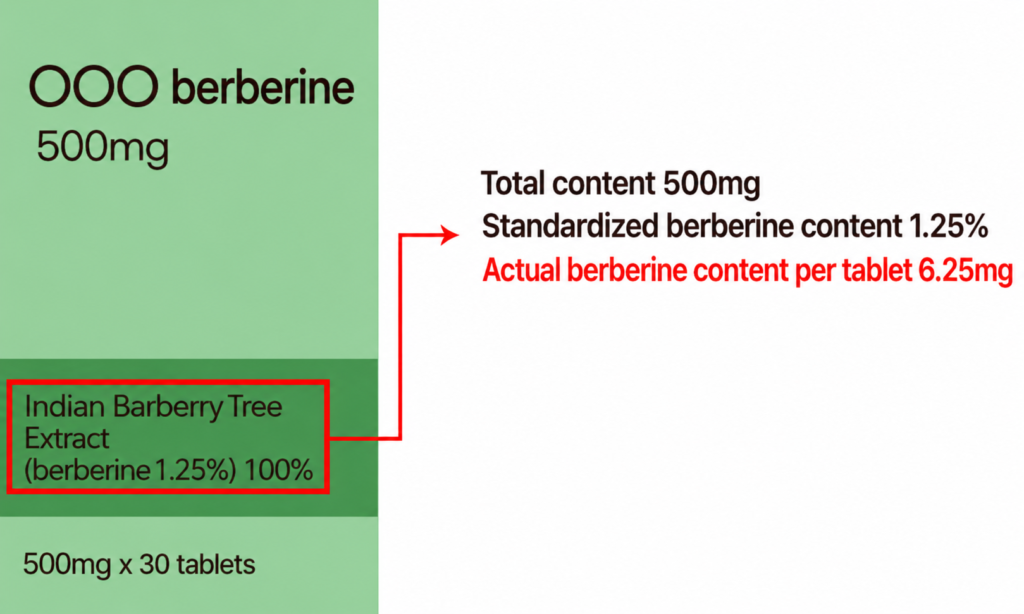
However, many products on the market do not necessarily provide the amount of actual berberine that consumers may assume from the front label.
As a pharmacist, I strongly recommend avoiding low-quality products that are simply a waste of money.
Personally, I do not believe that choosing supplements based on price alone is a good idea.
You get what you pay for.
Even if a product costs half as much, you may sometimes need far more of a poorly formulated product to obtain the same amount of active ingredient found in one properly formulated serving.
The easiest way to spot this problem is to check the front and back labels carefully.
With berberine, what matters is not the total amount of raw material—it is the amount of actual berberine.
A product that truly provides 500 mg of berberine should clearly state that amount.
Rather than overthinking it, look for a product that clearly and confidently states “Berberine 500 mg.”
CHECKPOINT 2)
Does it use Triposome technology to improve absorption?
Even if a product contains 500 mg of actual berberine, it means very little if it is not properly absorbed.
As mentioned earlier, the oral bioavailability of conventional berberine is below 1%.
That is why you need to check whether the product uses technology designed to improve absorption.
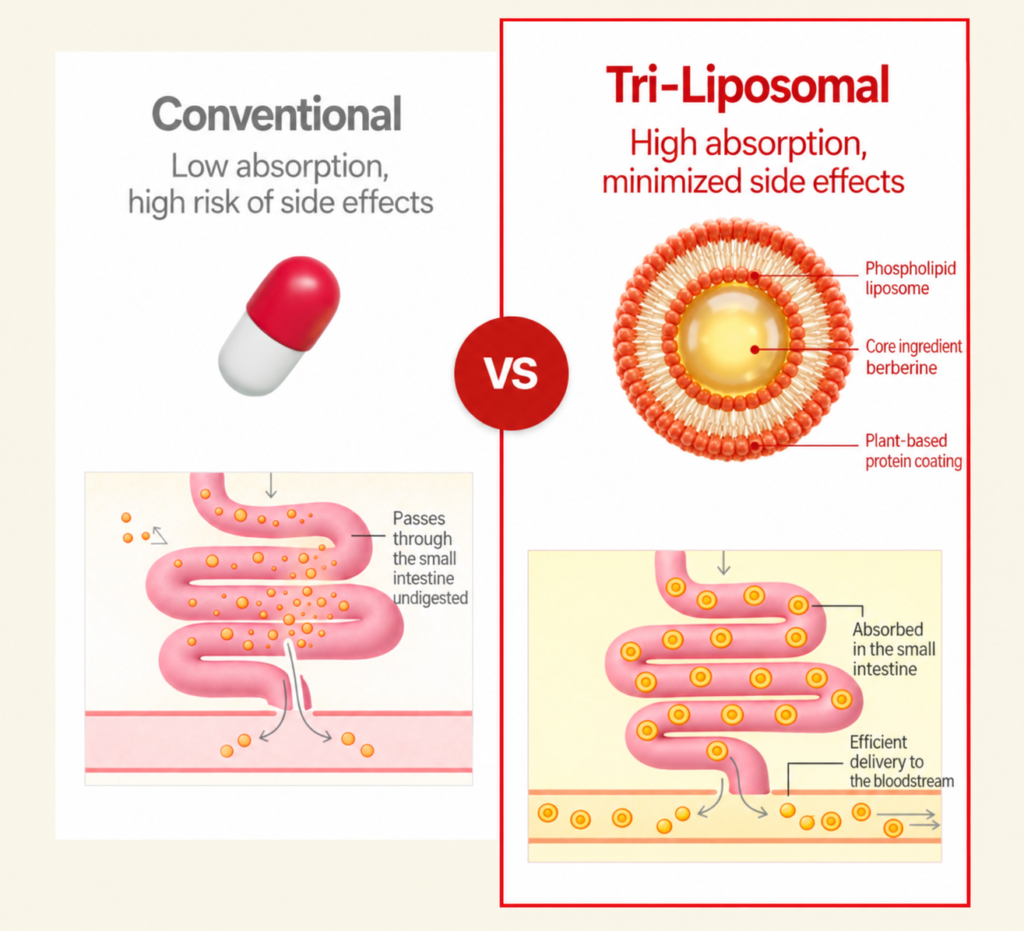
Liposomal technology, which encapsulates ingredients in lipid-based structures, is now widely used to improve delivery.
A more advanced delivery system used for berberine is Triposome technology.
Triposome encapsulates berberine in a lipid-based structure similar to biological membranes, helping improve its interaction with the intestinal barrier and allowing it to be absorbed more efficiently.
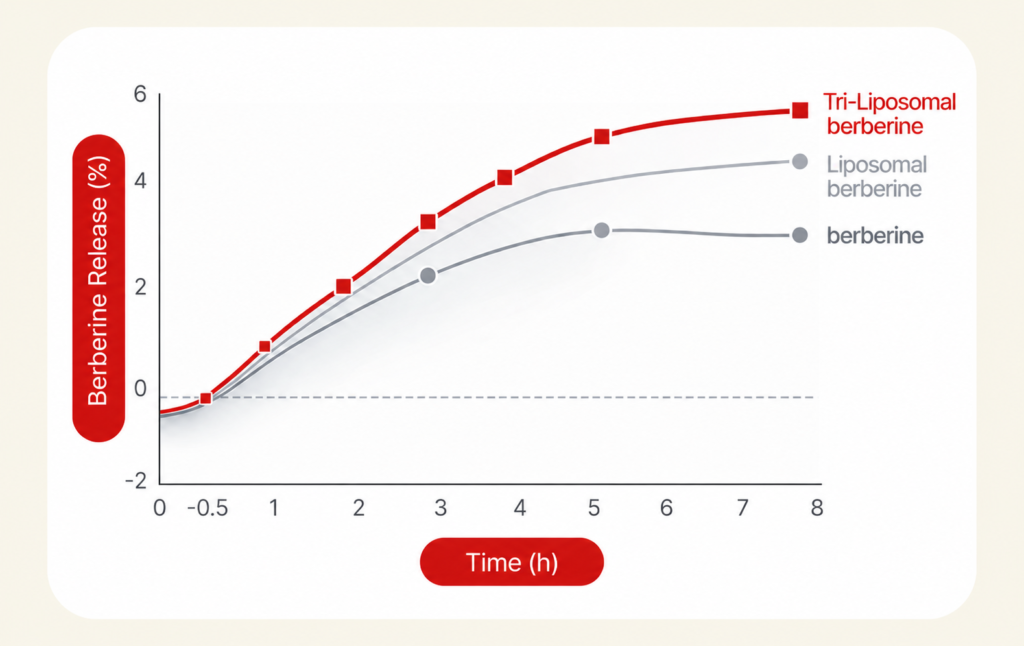
Human clinical research comparing absorption-enhanced berberine with conventional berberine has shown that, at the same dose, the enhanced formulation can achieve substantially greater systemic exposure.
In other words, even at the same dose, Triposome berberine may allow much more berberine to reach the bloodstream and become available to the body.
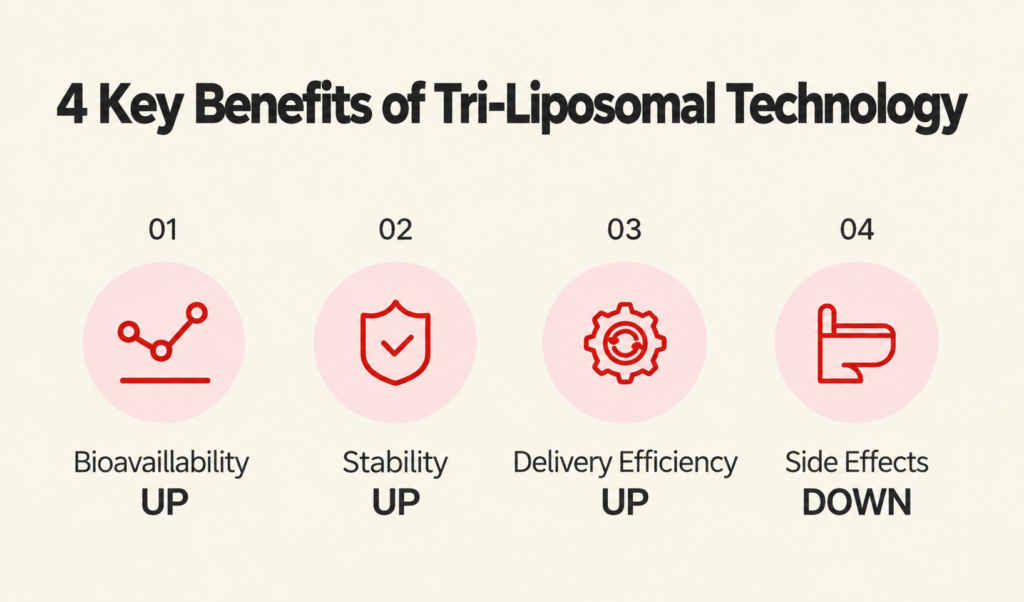
The real reason this technology matters is not just that it improves absorption—it may also help reduce gastrointestinal burden.
By helping berberine enter systemic circulation more efficiently, Triposome technology may reduce the amount of residual berberine that reaches the large intestine.
In other words, less berberine may remain in the large intestine for long periods and affect beneficial gut bacteria.
Ultimately, choosing a product with absorption-enhancing technology can be one way to increase bioavailability while reducing gastrointestinal burden.
The only obvious downside is that these formulations tend to be more expensive.
CHECKPOINT 3)
Is it designed to minimize side effects?
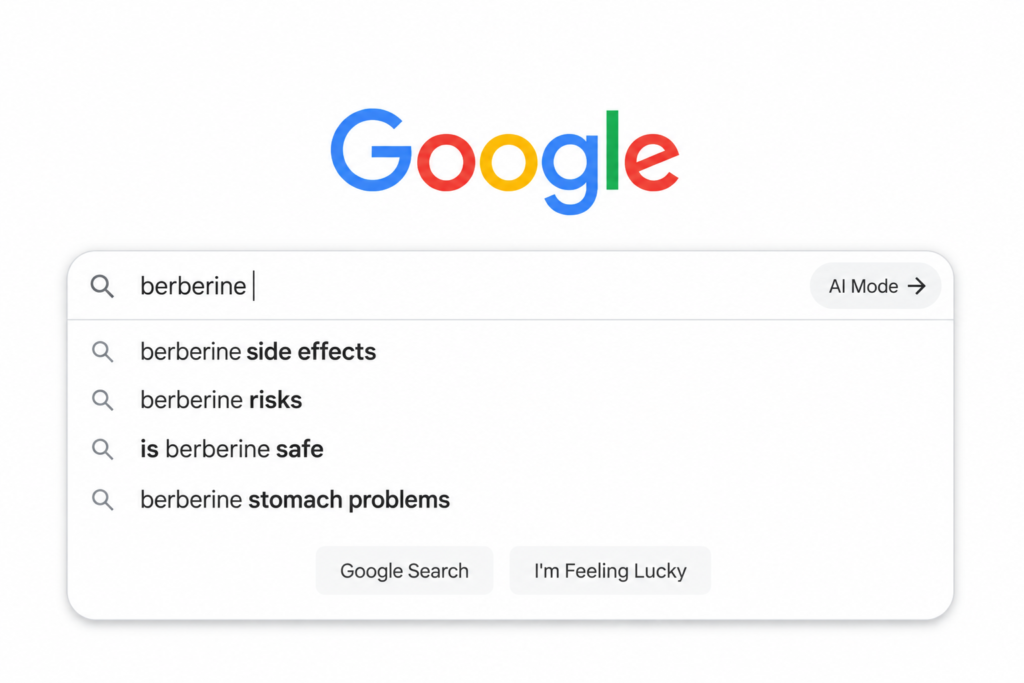
Berberine has powerful biological effects.
But because it is powerful, its side effects should not be taken lightly either.
One of the most common side effects reported by people taking berberine for the first time is diarrhea.
This is not simply something that happens once in a while.
Gastrointestinal side effects have also been reported in clinical studies, partly because berberine’s antimicrobial activity can affect the intestinal environment.
No matter how good the benefits are, it is difficult to keep taking a supplement if you have to deal with diarrhea every day.
So what should you do?
The basic rule is to start with a small amount and gradually increase the dose.
If you start with the full amount right away, your digestive system may have difficulty tolerating it.
Many people ask, “Can’t I just take probiotics with it?”
But there is one problem.
Because berberine has antimicrobial activity, some bacterial probiotics may be affected depending on the strain and formulation.
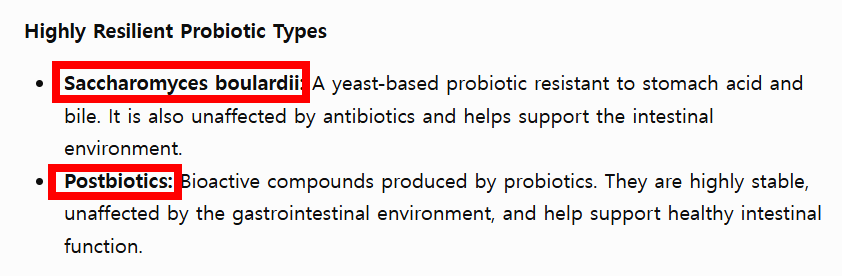
So the key is to choose strains that can survive even in a strong antimicrobial environment.
Two representative examples are Saccharomyces boulardii and postbiotics.
Saccharomyces boulardii is a yeast, not a bacterium, and is known for its ability to survive under conditions that may affect bacterial strains.
Postbiotics are not live bacteria. They consist of microbial-derived components and metabolites, so they do not depend on the survival of live bacterial cells.
If you want the benefits of berberine without giving up gastrointestinal tolerance, it makes sense to check whether the product has been designed with these factors in mind.
4. Comparing Berberine Products on the Market
Based on the three criteria above, I personally reviewed several of the most popular berberine products currently available.
I applied my own strict criteria as a pharmacist, and the results were as follows.
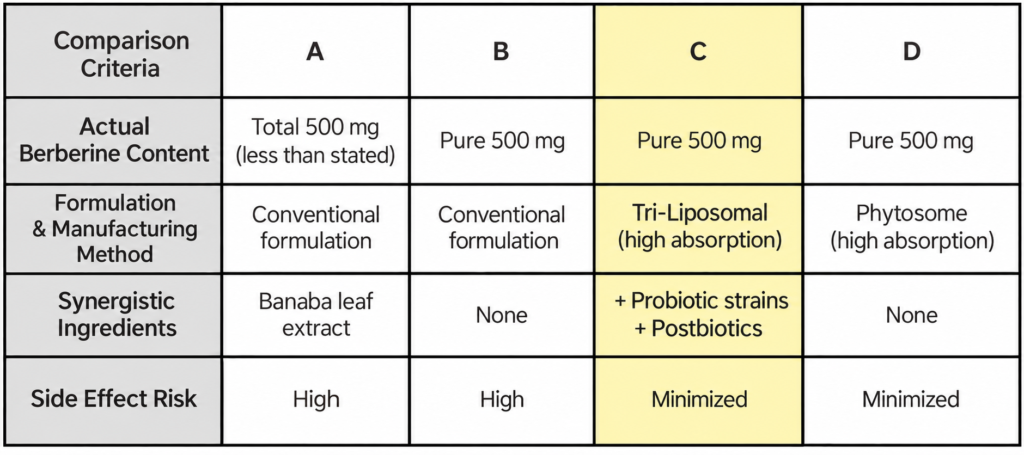
As you can see from the table, Product A was excluded because it prominently displayed “500 mg” on the front while the actual 500 mg referred to the total raw material amount rather than pure berberine.
It also included banaba leaf extract to create additional blood sugar synergy, but the amount was only 1 mg—far too little to be particularly meaningful.
There were also products like Product B that honestly provided the stated amount of berberine, but they used a conventional capsule formulation and had repeated consumer reviews mentioning gastrointestinal discomfort.
Product D used phytosome technology to improve absorption, which was a positive point, but there was still room for improvement when it came to reducing gastrointestinal burden.
In the end, Product C was the only one among those compared that met all three criteria: 500 mg of actual berberine, Triposome technology designed to overcome the absorption limitations of conventional berberine, and a combination of Saccharomyces boulardii plus postbiotics intended to reduce gastrointestinal burden.

One thing that has always concerned me when recommending berberine is how many people tell me, “I just can’t take it because it gives me diarrhea,” or “My stomach hurt so much that I eventually had to stop taking it.”
That is why this is one of the things I pay the closest attention to when recommending a product.
When I recommended Company C’s product to people like this, I received a lot of feedback such as, “This one doesn’t give me diarrhea or stomach pain.”
Even before talking about the effects, many people simply say that they are now able to take it consistently without discomfort.
Berberine is an ingredient that needs to be taken consistently to see its effects, so no matter how good a product is, it loses its meaning if you have to stop taking it halfway through because of side effects.
For those who have struggled with side effects from berberine, I recommend taking this aspect into consideration as well.

Just search for “younglong berberine” online, and you’ll find products that use advanced delivery technologies designed to overcome berberine’s absorption limitations, along with formulations that combine synergistic ingredients.
Among them, if you carefully evaluate each product based on the criteria we discussed earlier—without compromising simply for a lower price—you’ll be able to make a smarter choice with less chance of disappointment.
Since this is something you may take every day for your health, be sure to check these points carefully and choose a quality product.
Ultimately, when choosing a berberine supplement, one of the most important things is to check whether it offers improved absorption and clearly states the amount of actual berberine.
You are taking the supplement to improve your health.
No matter how good berberine may be, choosing the wrong product can make it difficult to achieve the benefits you are looking for and may even increase gastrointestinal discomfort.
Better health begins with careful choices.
Reference
- Blood Sugar Reduction
https://pmc.ncbi.nlm.nih.gov/articles/PMC2410097/?utm_source=chatgpt.com - Weight Management & Metabolic Improvement
https://pubmed.ncbi.nlm.nih.gov/32690176/ - Cholesterol Reduction
https://pubmed.ncbi.nlm.nih.gov/18397984/ - Berberine Absorption Rate
https://pubmed.ncbi.nlm.nih.gov/33584274/