Hello, this is Pharmacist Mom.
What is the supplement Americans reach for most?
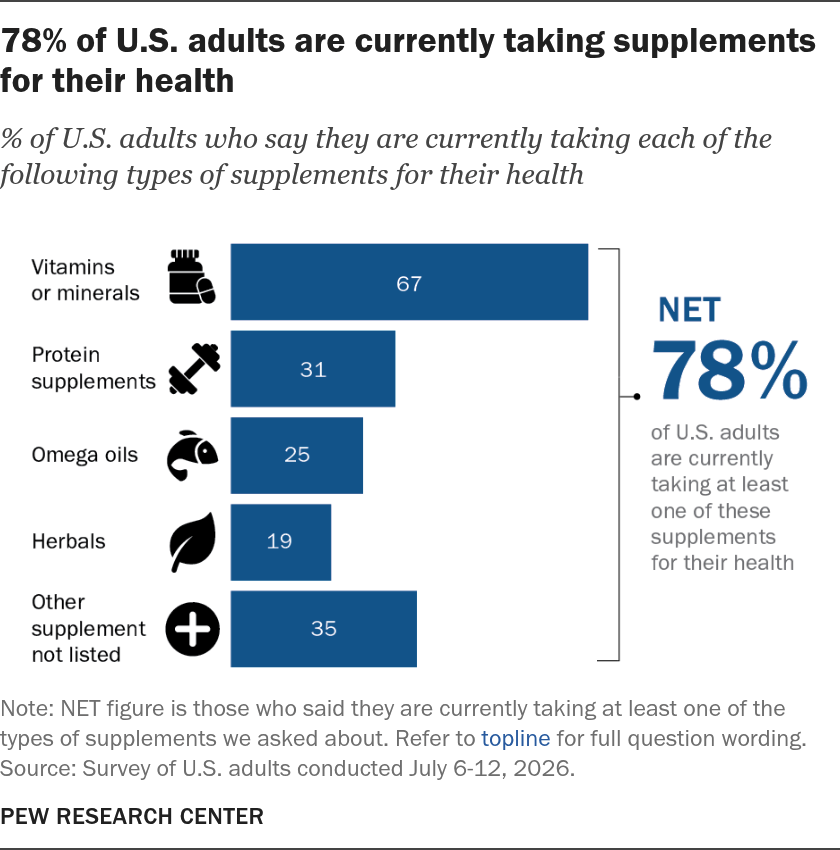
According to a September 2026 Pew Research Center survey, about 8 in 10 American adults take at least one supplement for their health.
Among them, the most popular by far is “minerals.”
Two out of three Americans take them.
There’s a good reason for this.
According to researchers at Oregon State University, depending on the mineral, up to 98% of American adults don’t get enough from food alone.
So taking a mineral supplement is actually a smart choice.
But mineral supplements should be taken with the right knowledge.
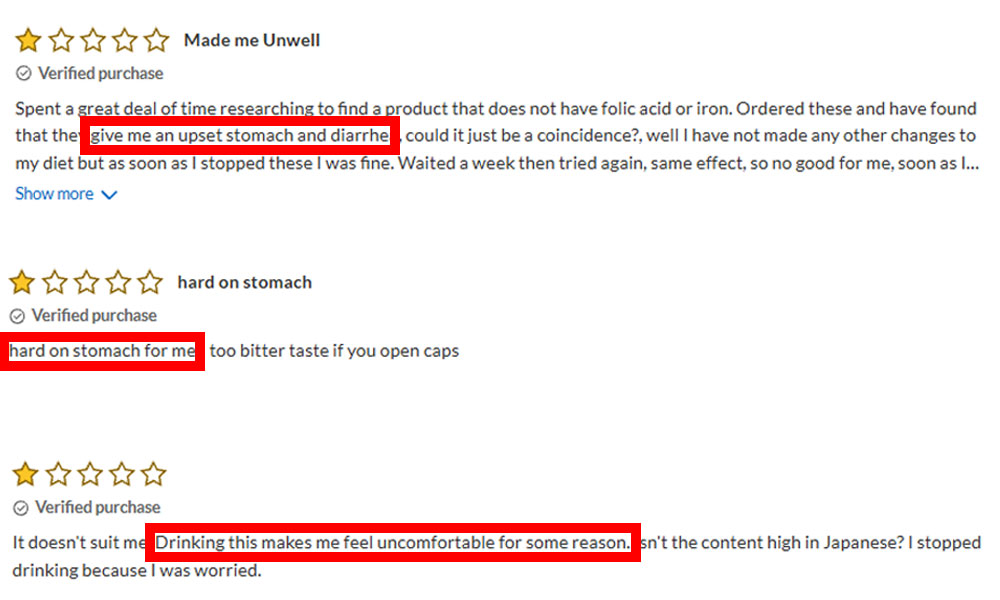
There are a striking number of reviews from people who took a mineral supplement off the shelf and ended up with nausea, heartburn, indigestion or diarrhea.
Today, drawing on my experience working as a pharmacist and on information published by government agencies such as HHS and the CDC, I want to clear up the misinformation and misunderstandings around mineral supplements.
[ Contents ]
1. Why mineral supplementation matters
2. What causes mineral deficiency
3. What key minerals do
4. How to choose a mineral supplement ★★★
5. Product recommendations ★★★
6. Product links
7. Final recap
If you only want the short version, skip straight to [5. Product recommendations].
1. Why Mineral Supplementation Matters
Minerals are one of the five major nutrients that shape your health, alongside protein, fat, carbohydrate and vitamins.
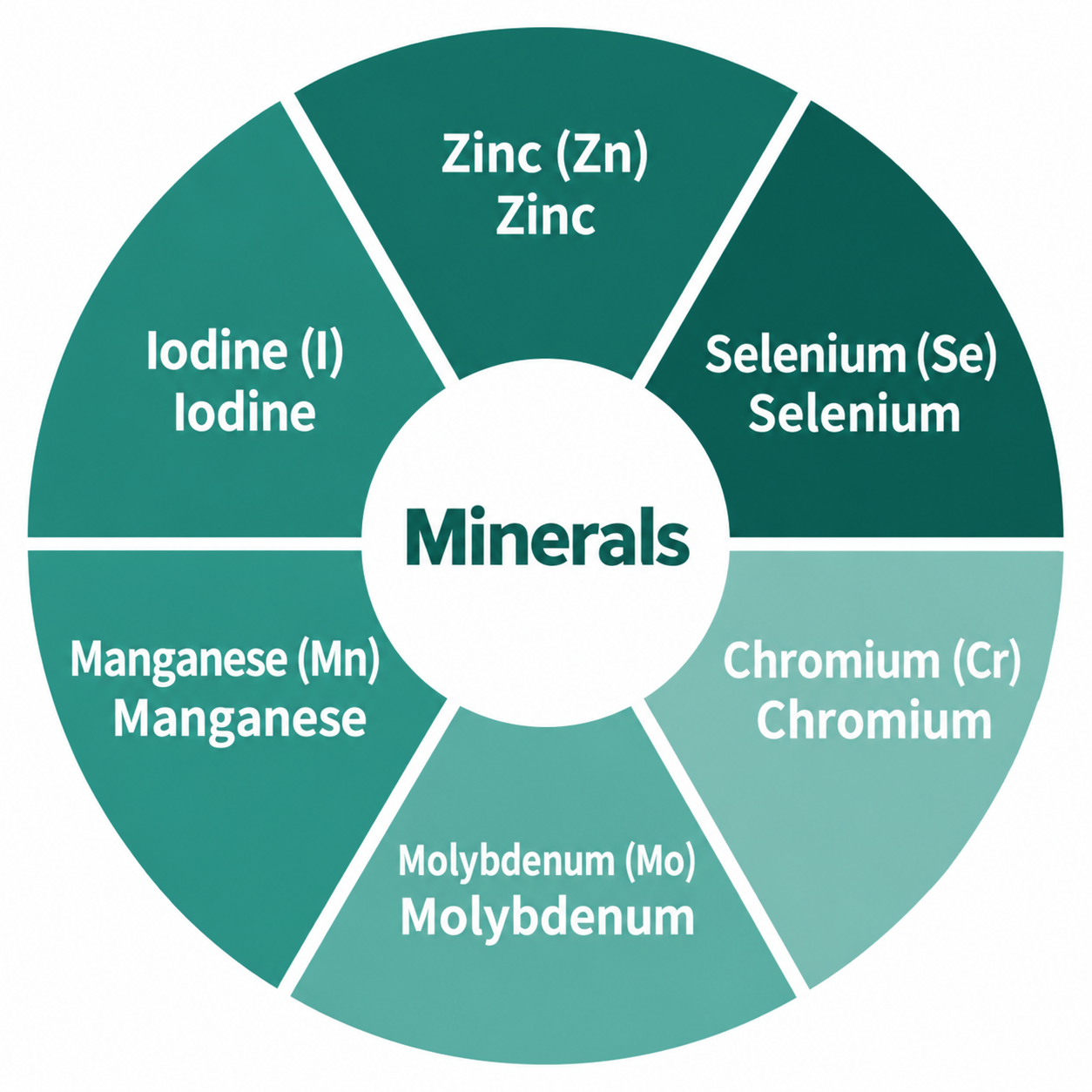
The best known are zinc (Zn), which goes into protein and DNA synthesis, selenium (Se), an essential mineral with antioxidant duties, and chromium (Cr), which supports strength and endurance.
There are many more: calcium, phosphorus, sodium, potassium, magnesium, sulfur, iron, iodine and others.
A lot of people think of minerals as a single ingredient. All of these together are what we call ‘minerals.’ There are a great many of them, and yet they make up only about 4% of the human body.
‘Only 4%? That’s it? and I’m supposed to take minerals for that?’
Did that thought just cross your mind?
Minerals may be tiny in amount,
but the work they do
is anything but small.

Once minerals are in the body, they coordinate every metabolic process you have.
Start with ‘nutrient absorption.’ You can eat all the protein, fat, carbohydrate and vitamins you like, but without minerals your body struggles to absorb any of it.
You eat a full meal and still feel hungry, and your energy drops off a cliff. If the food you eat is firewood, minerals are the kindling. Even the best logs won’t catch fire on their own.
Minerals are the catalyst that lets the firewood of ‘nutrients’ actually burn. When minerals run short, your body can’t convert food into energy, so it stores it as fat instead, which is one route to obesity. Minerals also carry the oxygen you breathe in to every corner of your body.
The organ that needs the most oxygen is the brain. If your memory suddenly slips, or you start getting forgetful and headachy, mineral deficiency is worth considering.
Those symptoms come from a shortage of the minerals that deliver oxygen around the body. For something doing that much work, calling it 4% of your body undersells it — the top 4% would be fairer.
2. What Causes Mineral Deficiency
Four percent is a small number, but modern life has pushed us into an age of mineral deficiency.

U.S. national nutrition survey data shows the same pattern: Americans take in plenty of carbohydrate, protein and fat, while minerals are where they consistently fall short.
The single biggest driver is ‘soil depletion’ caused by pesticides, chemical fertilizers, industrial waste and household wastewater.
Your body cannot synthesize minerals, so they have to come from what you eat.
To get minerals in any quantity, you need food grown in rich soil.

But chemical fertilizer use that began in the 1970s has stripped more than 70% of the minerals out of farm soil.
Yields went up, but produce grown with modern farming methods no longer carries the mineral content it used to. One research team found that pesticides, herbicides and chemical fertilizers have acidified the soil, and that losses of some important minerals run as high as 75%.
For anyone living with this, the fastest and easiest way to get minerals back is a mineral supplement matched to your own needs.
3. What Key Minerals Do
Minerals come in tiny amounts and do hundreds of jobs. Because they do so much, running short opens the door to a long list of problems. Here are the main ones and what they handle.
1) Zinc (Zn)
Zinc is a mineral that acts as a cofactor for more than 300 enzymes in the body.

It generates energy and helps you recover from fatigue, and it backs up your immune system. It is essential to cell renewal — skin health, slowing visible aging — and it supports growth in children and wound healing.
That is why zinc is recognized as essential to keeping the body running properly. It also maintains the taste buds on your tongue, which keeps your sense of taste working normally.
When zinc runs low, you see stunted growth, diarrhea, inflammation, loss of appetite, hair loss and weakened immunity.
2) Selenium (Se)
Selenium protects your cells by clearing out the free radicals that drive aging.
When selenium is short, free radicals don’t get cleared efficiently and damage accumulates in your cells and DNA. That matters, because it raises the possibility of normal cells mutating into cancer cells.
3) Chromium (Cr)
Chromium strengthens the action of insulin, which makes it central to blood sugar control.

It takes part in carbohydrate, fat and protein metabolism, supporting the process that turns nutrients into usable energy. It also blunts the sharp rise in blood sugar after a meal and helps keep levels steady.
Getting enough chromium matters for healthy blood sugar control. When it runs short you see loss of appetite and weight loss, along with tingling and cramping in the hands and feet.
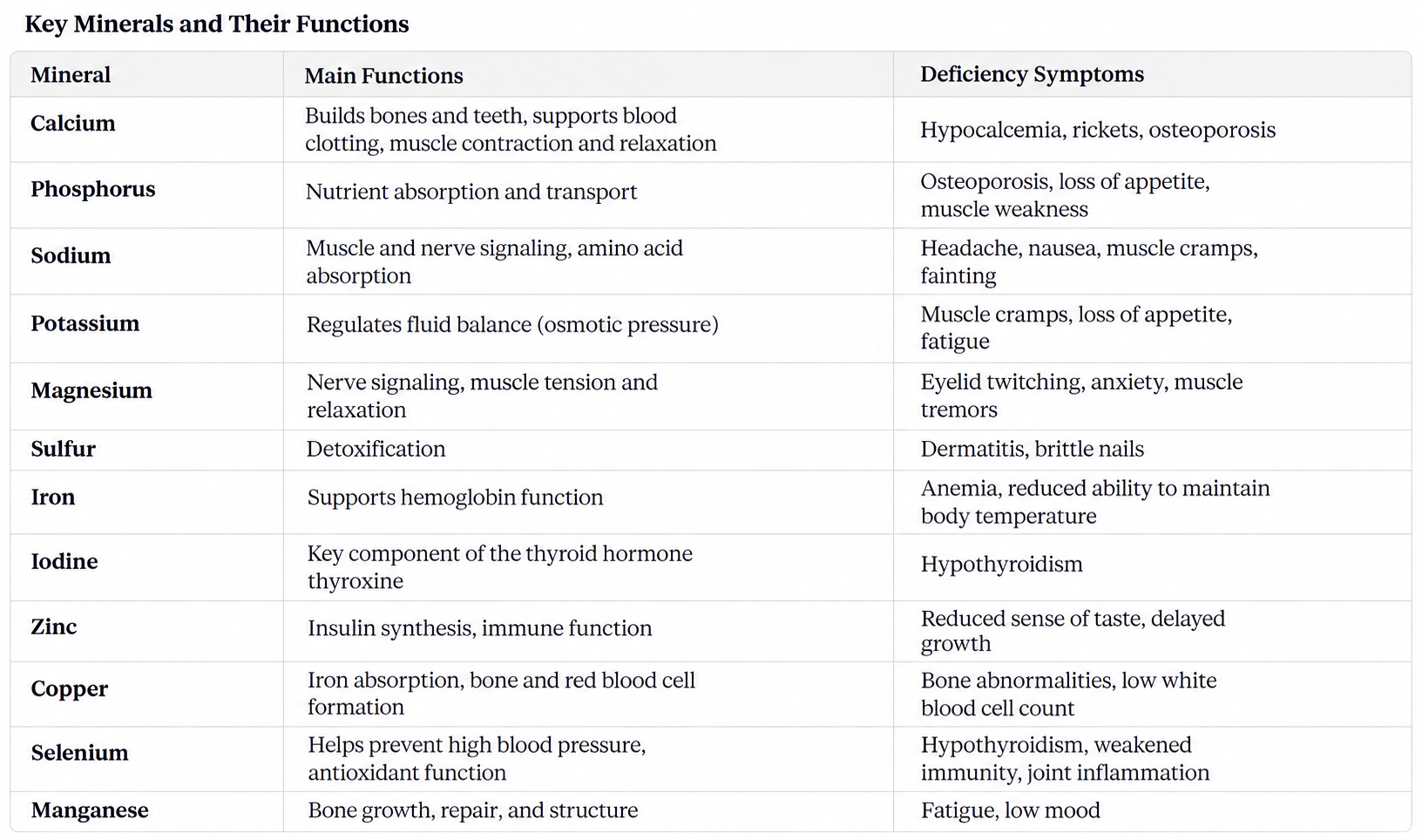
The table above covers the other minerals, what they do, and what shows up when you don’t get enough.
Use your own symptoms as a starting point to work out which mineral you might be missing.
4. How to Choose a Mineral Supplement ★★★
Minerals fall into two groups: ‘organic minerals’ and ‘inorganic minerals.’
Organic minerals are bound to an organic compound such as a protein or an amino acid, which gives them the advantage of high absorption.

Inorganic minerals are the ionic form, bound to an inorganic compound.
Common inorganic minerals such as zinc oxide and sodium selenite can’t cross the cell membrane, so absorption is poor.
Even if you swallow them, your cells don’t use them, so there is little benefit. And because absorption is poor, they end up causing stomach upset and diarrhea. Those reviews I mentioned at the top, the ones from people suffering side effects, are what happens when you take poorly absorbed ‘inorganic minerals.’
To get minerals right and avoid the side effects, you need to choose ‘organic minerals.’
Organic minerals are bound to proteins and amino acids, so they absorb well in the gut and get used efficiently by your cells.
A small dose goes a long way.
They also come with almost no side effects and don’t upset your stomach. (The downside is the price.)
Spotting organic minerals is simple.
For organic minerals, the label reads ‘dried yeast (XXX).’
[e.g. dried yeast (selenium), dried yeast (zinc), dried yeast (chromium)]
That wording means the yeast is carrying the mineral in an organically bound form, which makes it stable and well absorbed.
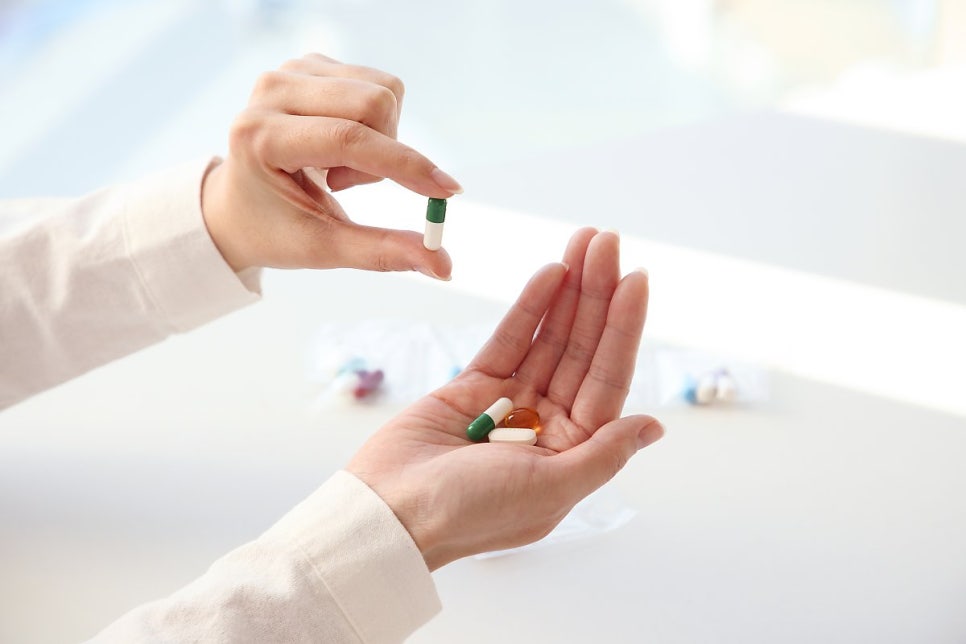
With vitamins, anything your body doesn’t use gets flushed out. Minerals are different: overdo them and the side effects are serious.
Look for a supplement built around 100% of the daily value, and no more than 200% for minerals like zinc and selenium.
5. Mineral Supplement Recommendations ★★★
So which product actually stays within the daily value, skips the side effects and still absorbs properly? That’s the question.
I narrowed the mineral products on the market down to 3 BEST picks on the evidence. If you’re stuck on what to take, the table below should help.
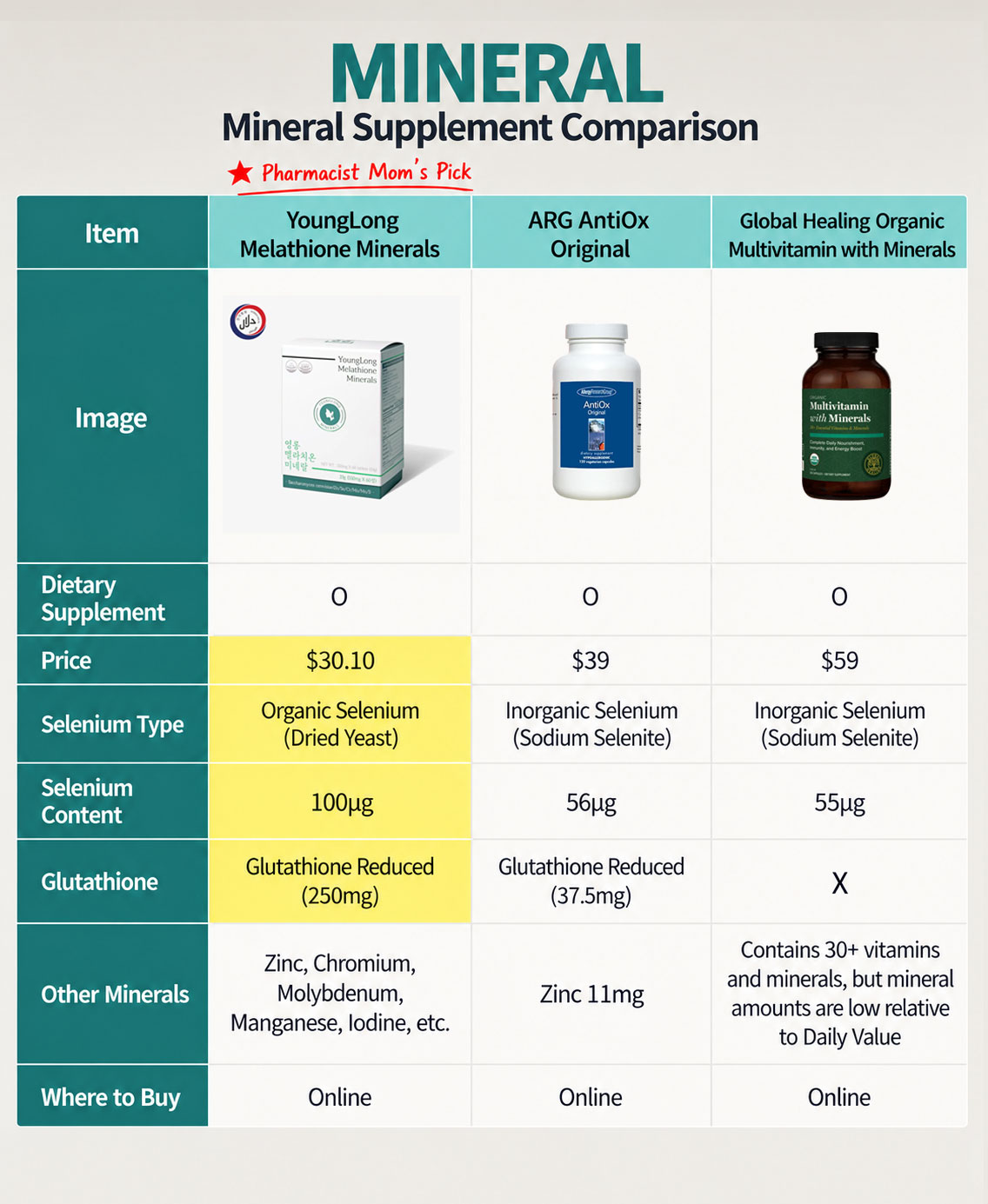
1) YoungLong Melathione Minerals
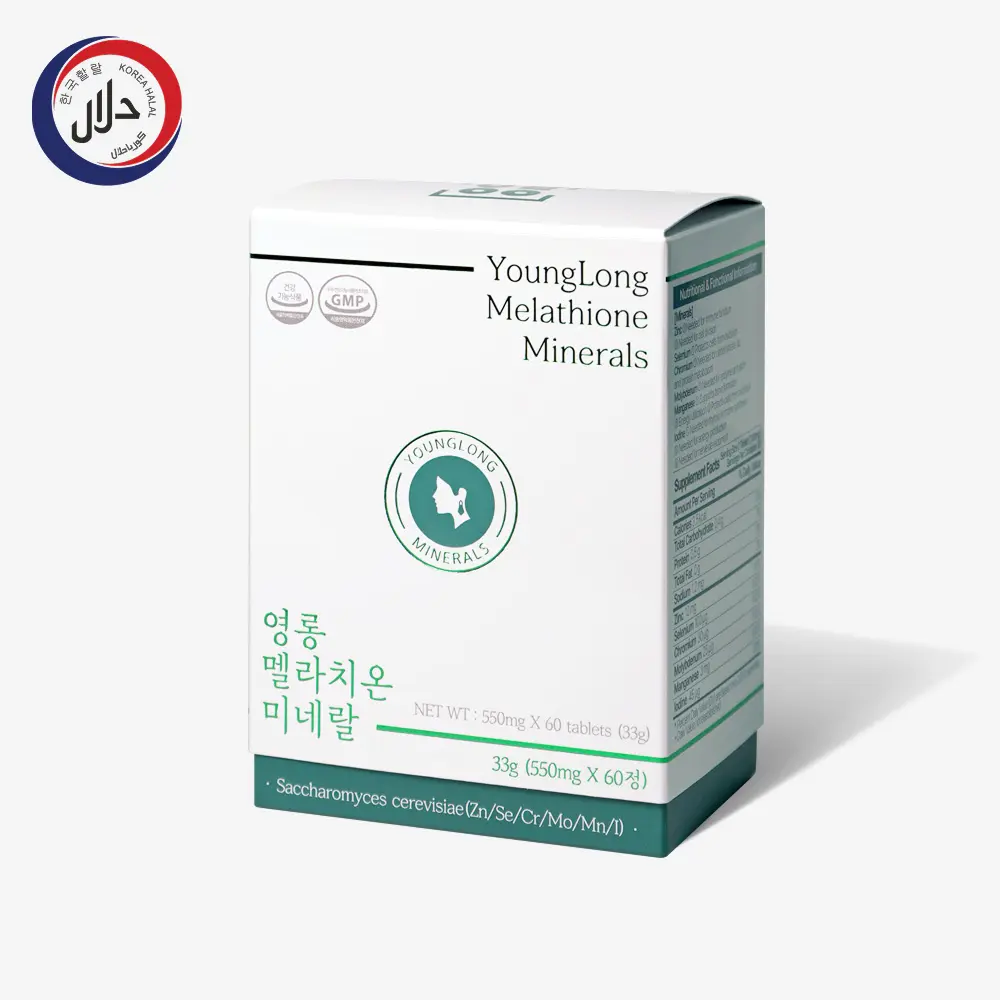
* In one line: all ingredients in organic mineral form + safe dosage design, so anyone can supplement minerals safely
– Category: dietary supplement
– Ingredient name: dried yeast
(★organic mineral (selenium) 100㎍)
– Tablet form / 60 tablets per box
– Price: $30.10
– Six organic minerals at once, including zinc, selenium, chromium and iodine. For general health management, my number one recommendation ★
– Contains 100㎍ of organic selenium, so it can be taken as a ‘thyroid supplement’ for hypothyroidism and thyroid care
– A multi-mineral product built around ‘antioxidant and immune function’ with key minerals such as selenium, zinc and chromium
– Zinc 12mg, selenium 100㎍, chromium 30㎍, molybdenum 25㎍, manganese 3mg, iodine 45㎍ — designed for how people live today, so there are no side-effect concerns
– Contains liposomal yeast extract 278mg as a secondary ingredient
(the source of liposomal glutathione)
→ liposomal formulation technology gives high absorption in the body
: antioxidant action in the body, including clearing free radicals and improving immunity
* Antioxidant means preventing the body from rusting
– Can be taken as a beauty supplement: glutathione for brightening + selenium for antioxidant action + zinc for cell renewal, for inner beauty care
* Glutathione is known as the main ingredient in dermatology brightening injections and glutathione IV drips.
– Made only with naturally derived ingredients, without chemical excipients
2) ARG AntiOx Original
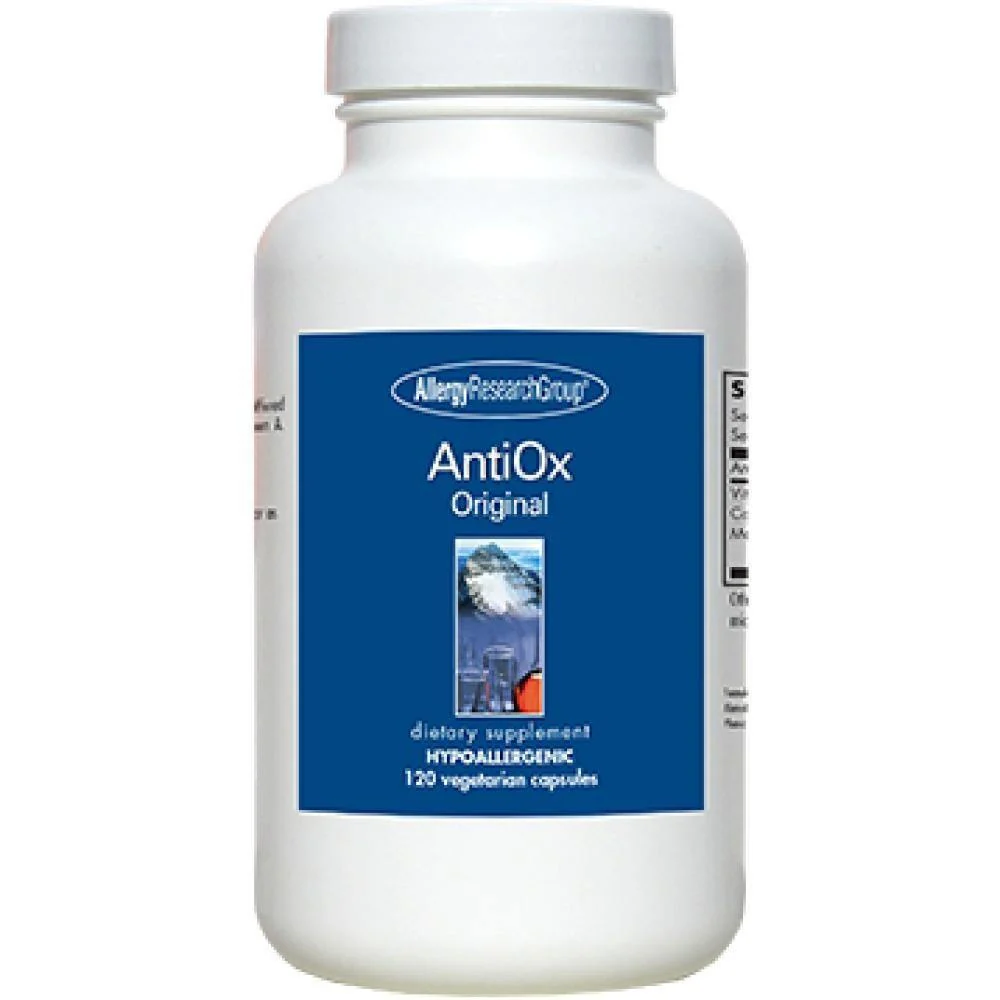
* In one line: a dietary supplement pairing selenium with glutathione.
– Category: dietary supplement
– Ingredient: sodium selenite (selenium) — inorganic mineral, 56㎍
– Capsule form
– Reduced glutathione 37.5mg per serving
– Zinc 11mg
– Price: $39
– The selenium here is the inorganic form, so absorption is lower than an organic mineral and the glutathione content is well below the first pick.
3) Global Healing Organic Multivitamin with Minerals
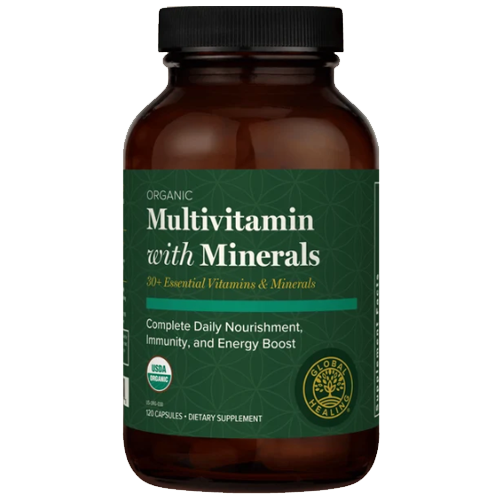
* In one line: contains more than 30 vitamins and minerals
– Category: dietary supplement
– Tablet form, 120 tablets per container / 4 capsules per serving
– Price: $59
– A vegan product containing plant-based ingredients, so suitable for vegetarians
– It contains a wide range of ingredients, but the mineral daily values are low — zinc 20%, chromium 60%, manganese 35%
6. Product Links
* I do not sell any of these products online myself.
Links to the products covered today are below.
Check each one for the details and pick whatever fits your own needs.
(Pharmacist Mom’s Pick ★)
1) YoungLong Melathione Minerals ★
https://younglong.ai/products/melathione-minerals
2) ARG AntiOx Original
https://www.vitalabo.com/allergy-research-group/hypoallergenic-base-supply-1
3) Global Healing Organic Multivitamin with Minerals
https://globalhealing.com/products/organic-multivitamin-with-minerals
7. Final Recap
1. Plenty of people take mineral supplements, but bad information leaves them dealing with side effects.
2. Minerals are only 4% of the body, yet they run essential jobs — coordinating metabolism, carrying oxygen and more.
3. Two out of three Americans take minerals, but soil depletion makes getting enough of them difficult.
4. Your body can’t synthesize minerals, so they have to come from food.
5. ‘Organic minerals’, the ones your body can absorb, don’t upset your stomach and are labeled as dried yeast (zinc), dried yeast (selenium) and so on.
6. Choose your mineral supplement using ‘5. Product recommendations ★★★‘ and you can cut down the worry about side effects.
Minerals do have side effects if you overdo the dose. Stay within the daily recommended amount, take them consistently, and you’ll be fine.
Thank you.
References
[1] Pe Research Center- About 8 in 10 Americans take supplements, and many see them as important to their health
[2] Drake, V. J. (2026). Micronutrient Inadequacies in the US Population: an Overview. Linus Pauling Institute, Oregon State University.