How to Reduce IBS Symptoms: The ‘Healthy’ Foods Making It Worse

Woman holding her stomach in discomfort with a glowing illustration of the intestines overlaid, representing IBS bloating, gas, and abdominal pain.


Hi, I’m the Pharmacist Mom.

Today I want to talk about Irritable Bowel Syndrome (IBS) — that all-too-familiar discomfort where your stomach acts up over the smallest things.

As a pharmacist and a mom of two, I look at supplements and food the same way I look at everything I bring into our home:

“Is this safe enough for my own kids and my own family to eat every day?”

That’s the lens I’ll be using throughout this article.

The wrong food choices can make your gut more reactive, and some of the most popular probiotics out there don’t match what a sensitive gut actually needs. They can even make symptoms worse.

Yet most of us never figure out the real cause. We just shrug and say, “I guess my gut is just sensitive.” But here’s the truth: IBS is one of those conditions where understanding the cause is half the battle. Manage the triggers, and the symptoms become much easier to live with.

So let’s go through this together. Are you eating foods that don’t agree with a sensitive gut? Is the probiotic you’ve been taking actually making things worse? Let’s check, one by one — Pharmacist Mom style.

📌 Table of Contents

1. What Causes IBS?
2. The IBS Diet
3. How to Manage IBS
4. Sensitive Gut:
How to Choose the Right Probiotic

Stick with me to the end — I promise this will help.


1. What Causes IBS?

— Why does IBS happen in the first place?

Let me be honest with you upfront: the exact cause of IBS isn’t fully understood yet. But from a pharmacist’s perspective, the research consistently points to a combination of these factors:

  • Imbalance in the gut microbiome
  • Abnormal gut and digestive function
  • Poor eating habits
  • Stress and psychological factors
  • Past gastroenteritis or genetic predisposition


Because the causes are so varied, there’s no single “cure-all” medication for IBS.

That’s why I approach IBS with two priorities, both as a pharmacist and a mom:

1) Fix the eating habits
2) Restore the gut microbiome

Consistently working on these two areas can make a real difference in how IBS feels day to day.

🔎 Pharmacist Mom Talk

A lot of people self-diagnose by saying, “My gut is sensitive because I’m stressed.” Yes, stress is one of the factors. But before you blame yourself, take a look at the other variables — your eating habits and your probiotics.

Stress is hard to control. But what’s on your plate and what’s in your probiotic? Those, you can change today.


2. The IBS Diet

You probably already know that what you eat shapes how your gut feels.

But here’s something many people miss: even foods widely considered “healthy” can leave a sensitive gut feeling bloated and uncomfortable all day.

That’s why people with sensitive guts often follow a low-FODMAP diet.

The low-FODMAP approach is recommended in the American College of Gastroenterology (ACG) 2021 IBS clinical guidelines, and it’s also been confirmed by meta-analyses of multiple randomized controlled trials (RCTs).

Let’s break down what FODMAPs are, which foods to avoid, and which foods can actually help.

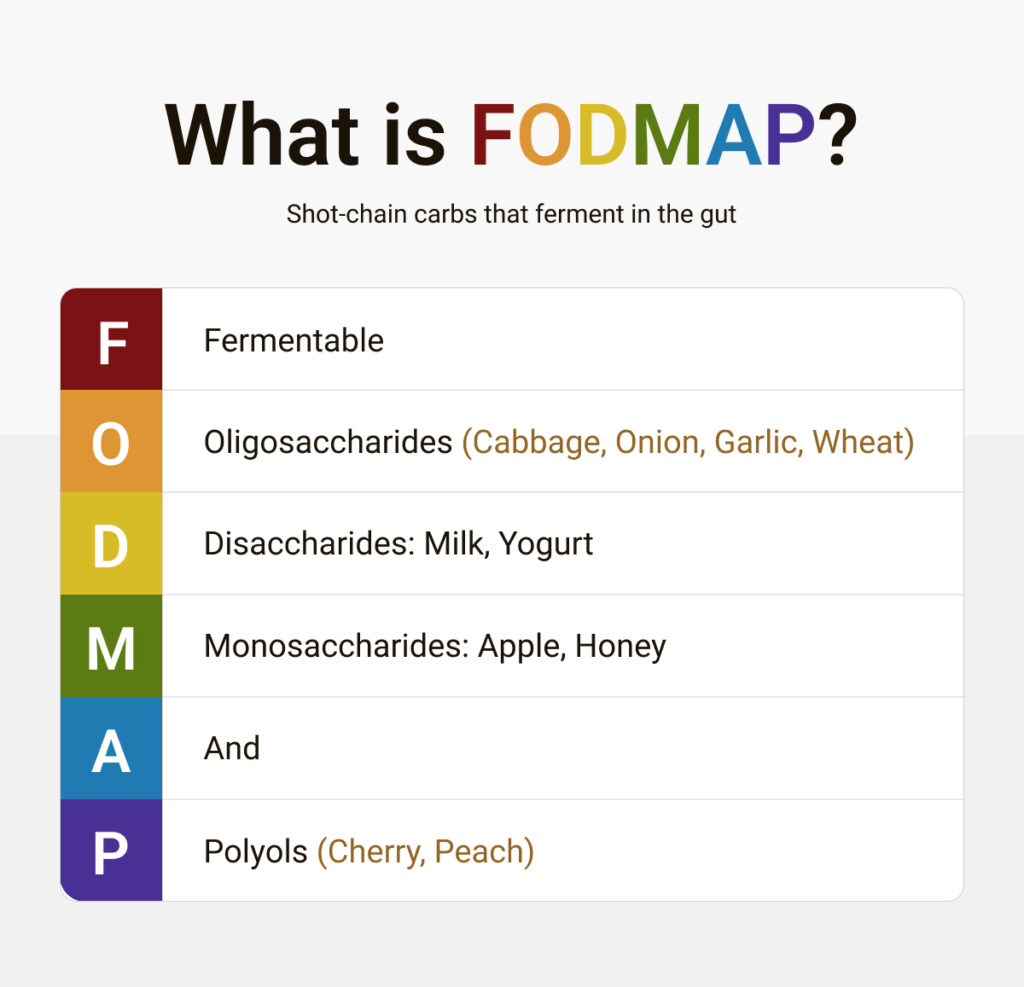
1) What is FODMAP?

Infographic explaining the FODMAP acronym — Fermentable, Oligosaccharides (cabbage, onion, garlic, wheat), Disaccharides (lactose in milk and yogurt), Monosaccharides (excess fructose in apples and honey), And, Polyols (sugar alcohols in cherries and peaches) — short-chain carbs that ferment in the gut.


Before we talk about low-FODMAP, let’s understand what FODMAP means.

FODMAPs are certain types of sugars that aren’t well absorbed in the gut and get fermented easily. They include oligosaccharides, disaccharides, and monosaccharides.

Here’s the catch: a lot of foods that we consider “healthy” in everyday life are actually high in FODMAPs. Apples, cabbage, dairy, legumes, and even honey — all classic high-FODMAP foods that can irritate a sensitive gut.

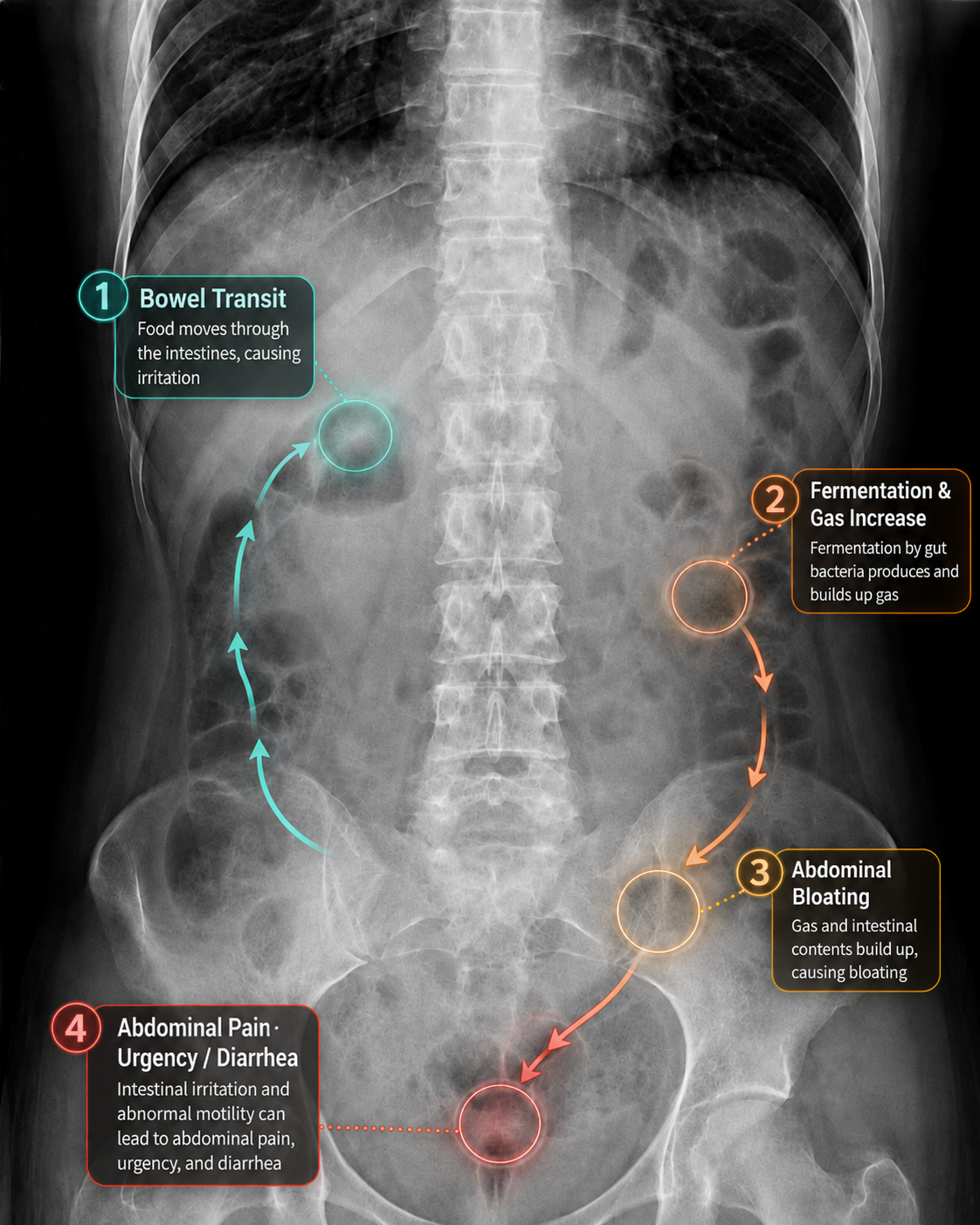
When these foods aren’t fully digested, gut microbes ferment them and produce gas. That gas builds up in the gut and leads to cramping, bloating, and diarrhea.

So for anyone dealing with frequent gas or IBS, cutting back on high-FODMAP foods and shifting toward low-FODMAP options can really help ease symptoms.

2) Foods to Avoid – High-FODMAP Foods

High-FODMAP foods chart listing common IBS triggers by category: excess fructose (apple, pear, watermelon, fruit juice, soda), lactose (milk, cheese, ice cream), fructans (garlic, onion, cabbage, wheat), GOS/galactans (beans, lentils, chickpeas), and polyols (apricot, cherry, plum, avocado, mushrooms, xylitol, sorbitol).


You may not be able to avoid them completely, but cutting back as much as possible is the goal.


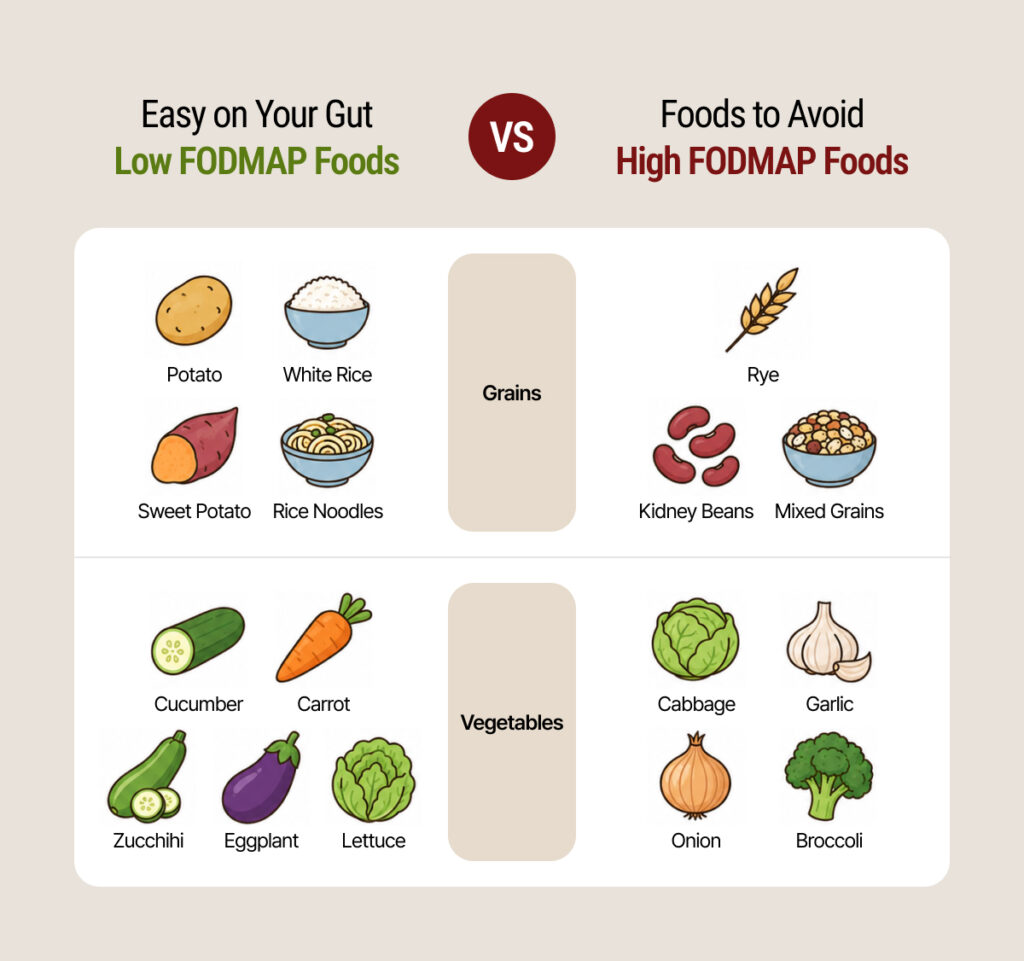
  • Vegetables: cabbage, garlic, onions, broccoli
  • Fruits: apples, pears, peaches, fruit juices
  • Grains: rye, kidney beans, mixed whole grains
  • Others: carbonated drinks, prebiotics (“food” for probiotics)

Looking at this list, you might be thinking, “Wait, aren’t most of these supposed to be healthy?” That’s exactly the problem. Cabbage, garlic, onions, whole grains, beans — they’re all classic “healthy foods.” But they’re also some of the most common high-FODMAP foods.

And prebiotics (oligosaccharides), often marketed as “food for your good gut bacteria,” are also high in FODMAPs.

“Unhealthy food” and “high-FODMAP food” are two completely different things.

This is one of the most common points of confusion I see.

🔎 Pharmacist Mom Talk

You’ve probably heard the phrase “cabbage juice is great for your stomach.” That statement isn’t wrong — cabbage does contain compounds like sulforaphane that help the stomach lining.

But here’s the key: it’s good for your stomach, not necessarily for a sensitive gut. Cabbage is a classic high-FODMAP food, so for someone with IBS, cabbage juice can actually make gas and bloating worse. “Good for your stomach” and “good for your gut” are not the same thing.


3) Foods That Help – Low-FODMAP Foods 

Low-FODMAP foods chart organized by category: fruits (banana, grapes, blueberries, kiwi, raspberries, lemon, orange, strawberries), vegetables (carrot, potato, sweet potato, tomato, pumpkin, bok choy, lettuce, spinach), grains (gluten-free products, rice, oats, quinoa), dairy (lactose-free milk), and seasonings (olive oil, herbs, maple syrup).


Building your meals around low-FODMAP foods is the way to go. You don’t have to be perfect every single day, but making a consistent effort matters.

🔎 Pharmacist Mom Talk
— Easy Everyday Low-FODMAP Swaps

Wheat flour
→ gluten-free bread, quinoa

Milk, soy milk
→ lactose-free milk, almond milk, oat milk (unsweetened)

Sugar, oligosaccharides
→ stevia, maple syrup


As a pharmacist and a mom, I’ve been swapping out items on our family’s table one by one. Don’t try to overhaul everything at once. Start with what you drink — like switching your milk — and go from there.


3. How to Manage IBS

Management Strategy 1) Low-FODMAP Diet

Side-by-side comparison chart for IBS and chronic bloating, contrasting gut-friendly low-FODMAP foods (potato, white rice, kiwi, banana, cucumber, lactose-free milk, low-FODMAP probiotics, maple syrup) with high-FODMAP foods to avoid (rye, apple, cabbage, garlic, onion, regular probiotics with prebiotics, coffee, xylitol), with the Monash University Low FODMAP Certified logo.
As I mentioned earlier, the foundation is a low-FODMAP diet — limiting foods that ferment in the gut and trigger gas or diarrhea.

IBS isn’t something you “cure.” It’s something you manage. And sticking with low-FODMAP foods consistently is one of the most effective ways to improve symptoms over time.


Management Strategy 2) Probiotics ★★★

BUT not just any probiotic will do!

Microscopic illustration comparing two gut microbiome states — an unbalanced gut where harmful bacteria outnumber beneficial bacteria (marked with a red X) versus a balanced gut where beneficial bacteria outnumber harmful bacteria (marked with a green checkmark).


The number one question I get is about probiotics. There’s so much information out there, yet most people have no clear framework for picking the right one for their gut.

Most folks assume “gut health = probiotics,” not realizing that a sensitive gut often doesn’t get along with standard probiotic products.

IBS is closely linked to the gut microbiome.

When your gut microbiome gets thrown off balance — often by poor eating habits or antibiotic overuse — harmful bacteria can outnumber the beneficial ones, and symptoms can get worse.

In other words: when the balance of “good vs. bad bacteria” in your gut tips the wrong way, the gut becomes more reactive, and symptoms like gas, cramping, and diarrhea intensify.

Especially when harmful bacteria dominate, abnormal fermentation occurs in the gut, leading to gas, diarrhea, and constipation.

So it’s important to increase beneficial bacteria and suppress harmful ones to restore balance — which is why probiotics (= live beneficial bacteria) are often recommended.

That’s why so many people with IBS turn to probiotic supplements to support their gut health.

But did you know? If you have IBS, you can’t just take any probiotic!

A hand holding a single blue probiotic capsule with a bold red X drawn over it, alongside the headline "Not Every Probiotic Is Right for You," signaling that people with IBS need to choose probiotics carefully.

Most probiotics marketed as “helpful for IBS” are essentially the same as probiotics for general constipation relief. Some can even make symptoms worse.

So how do you find the right “probiotic for a sensitive gut”? Let’s break it down.


4. How to Choose a Probiotic for a Sensitive Gut


1) Is the product free of prebiotics?

Most probiotic products on the market today are actually “synbiotics” — meaning they contain both probiotics and prebiotics (“food” for the beneficial bacteria).


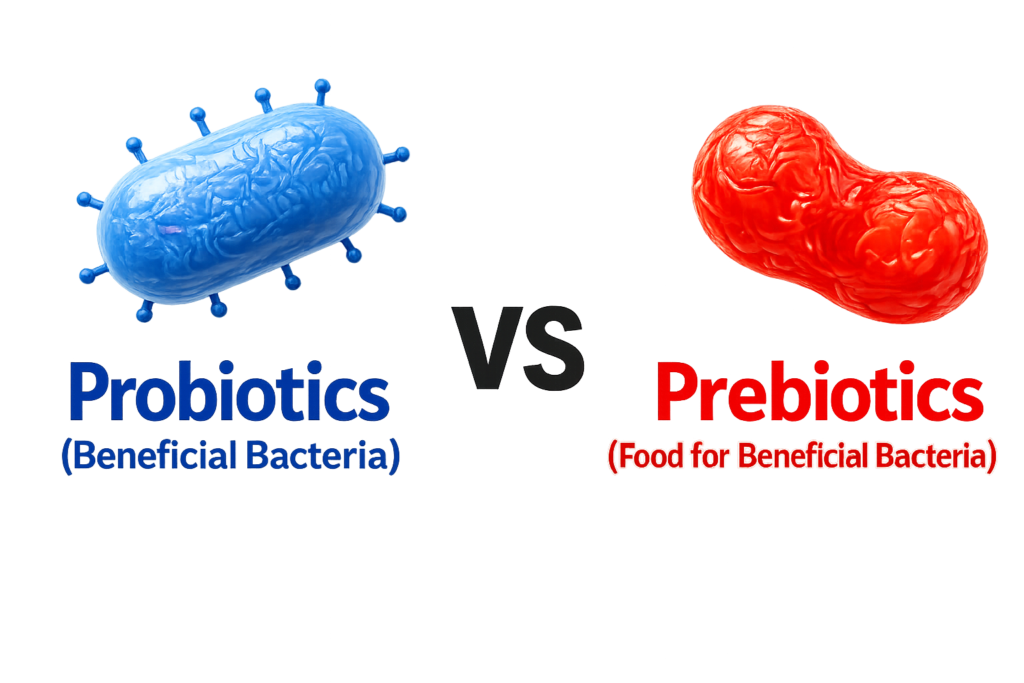
  • Probiotics: beneficial live bacteria

  • Prebiotics: “food” for beneficial bacteria → believed to help them multiply and improve the gut environment

  • Synbiotics: probiotics + prebiotics


Prebiotic ingredients like fructooligosaccharides, galactooligosaccharides, and xylooligosaccharides are known to feed beneficial gut bacteria and improve the gut environment.

Here’s the problem, though — these oligosaccharides (the main ingredients in prebiotics) all fall under the “O” in FODMAP (Oligosaccharide), which means they’re high-FODMAP.


Diagram comparing how prebiotics affect two types of people: a typical person experiences an improved gut environment after taking prebiotics, while a person with IBS may experience gas and bloating from the same intake.


So for people with IBS, taking prebiotics can actually trigger gas, cramping, bloating, and diarrhea.

That’s why you’ll want to choose a low-FODMAP probiotic that doesn’t contain prebiotics.


🔎 Pharmacist Mom Talk

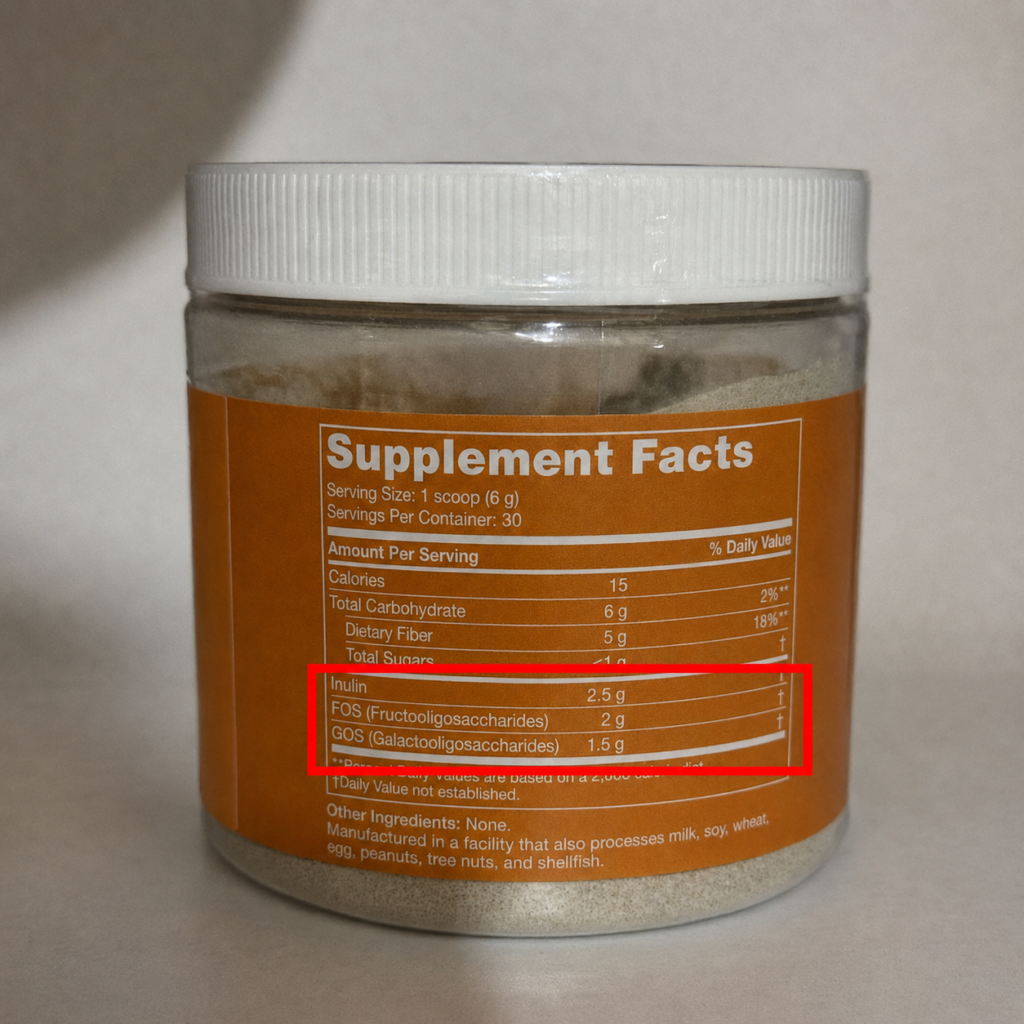
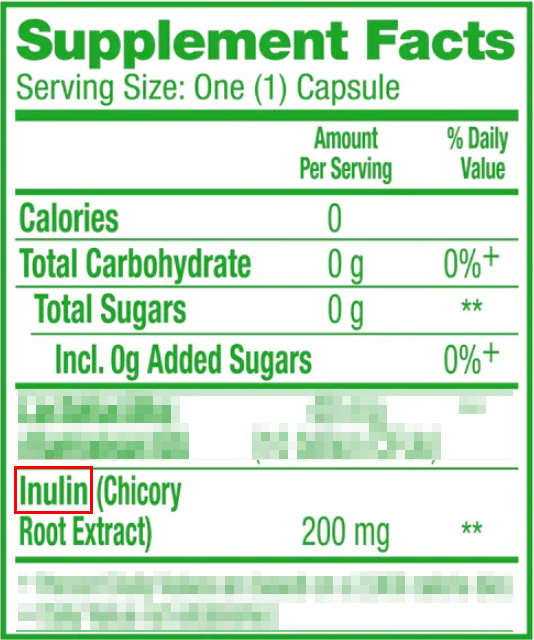
Flip your probiotic bottle around and check the Ingredients list. If you see any of these names, the product contains prebiotics:

fructooligosaccharides, galactooligosaccharides, xylooligosaccharides, inulin, chicory root extract, FOS, GOS. Marketing materials often frame these as “food for your good bacteria,” but for a sensitive gut, they can do the opposite.

If those words show up on the label, unfortunately that product isn’t the right fit for a sensitive gut.


2) Does the product contain Saccharomyces boulardii?

If you’re not familiar with Saccharomyces boulardii, you’re not alone. From a pharmacist’s perspective looking at the research, it stands apart from typical probiotics.

Unlike most probiotics, Saccharomyces boulardii has a eukaryotic cell structure. To put it simply, it has the same type of cell structure as the cells in our own body, which means it isn’t killed by antibiotics. It stays in the gut and helps restore normal gut function.

It’s also highly resistant to heat, stomach acid, and bile, so it doesn’t get easily destroyed and reaches the gut at a high survival rate.


🔎 Pharmacist Mom Talk

It goes by “Boulardii yeast” or “Saccharomyces boulardii,” but here’s something most people don’t realize:

it isn’t actually one of the typical probiotics like Lactobacillus or Bifidobacterium (which are bacteria). It’s a yeast. Taxonomically, it’s a completely different category.

Meaning, in biology, yeast and bacteria are classified as entirely different kinds of living things. That’s why it isn’t affected by antibiotics, which only target bacteria.

It often gets lumped into the broader “probiotic” category in marketing, but its mechanism is quite different — worth knowing before you take it.


Cover of the World Gastroenterology Organisation (WGO) Global Guidelines on Probiotics and Prebiotics, February 2023 edition, which lists Saccharomyces boulardii as a clinically supported probiotic.


Thanks to these properties, S. boulardii is listed by name in the World Gastroenterology Organisation (WGO) 2023 Global Probiotics Guideline, with the strongest level of evidence (Level 1) for preventing antibiotic-associated diarrhea.

In other words, this is the highest grade of medical proof for preventing the diarrhea that can happen after taking antibiotics.

In the IBS field, meta-analyses combining multiple randomized controlled trials (RCTs) have also reported meaningful improvements in quality of life (QoL) and other symptoms.

What this means is, when researchers pooled the results of the most reliable types of clinical studies, they found that people taking S. boulardii felt noticeably better in their daily lives.


Header of a peer-reviewed review article in the World Journal of Gastroenterology (2010) titled "Systematic review and meta-analysis of Saccharomyces boulardii in adult patients" by Lynne V McFarland, supporting the clinical evidence for S. boulardii.


According to meta-analysis research on S. boulardii, in studies involving patients with IBS, those who took S. boulardii showed a reduction in the frequency of bowel movements compared to the control group.

Since frequent urgency and constant trips to the bathroom are among the most disruptive symptoms of IBS, S. boulardii can be a meaningful option for symptom relief.

Clinical research has also reported no significant side effects with S. boulardii, and it’s known as a probiotic with a well-established safety profile — so you can take it with confidence.


Close-up macro photo of golden, bubble-like yeast spheres against a soft light background, visually representing Saccharomyces boulardii probiotic yeast.

* Even for those without IBS, S. boulardii is beneficial for general gut health.

One thing to note — while S. boulardii improves the gut environment, it isn’t a strain that permanently colonizes the gut.

Here’s what that means: it does its work and then naturally leaves the body, rather than settling in for the long term. So pairing it with probiotics that do colonize the gut is the most complete approach.


Pharmacist Mom’s Summary

For anyone struggling with IBS, here’s the framework I recommend:

1) Take Saccharomyces boulardii to consistently support your gut environment,

2) Make sure probiotics are also included so that beneficial bacteria can colonize the gut,

3) And confirm that the product is free of prebiotics (which are high-FODMAP).

Official Monash University Low FODMAP Certified trademark logo, the gold-standard certification for products tested as low-FODMAP for people with IBS and sensitive guts.

That’s why we’re starting to see low-FODMAP probiotics on the market that carry the

Monash University Low FODMAP Certified™ certification

— meaning every ingredient meets low-FODMAP standards.

The low-FODMAP certification means the product doesn’t contain ingredients high in FODMAPs that can cause gas or diarrhea.

It also means the product doesn’t include prebiotics, which fall into the high-FODMAP category.

Low-FODMAP probiotics are designed with one important fact in mind: for people with sensitive guts, taking probiotics with very high CFU counts can actually make symptoms worse.

Low-FODMAP probiotics are formulated with strains and CFU counts tailored to sensitive guts — which is why they can help relieve uncomfortable symptoms like bloating, cramping, and frequent gas.


Pharmacist Mom Recommendation

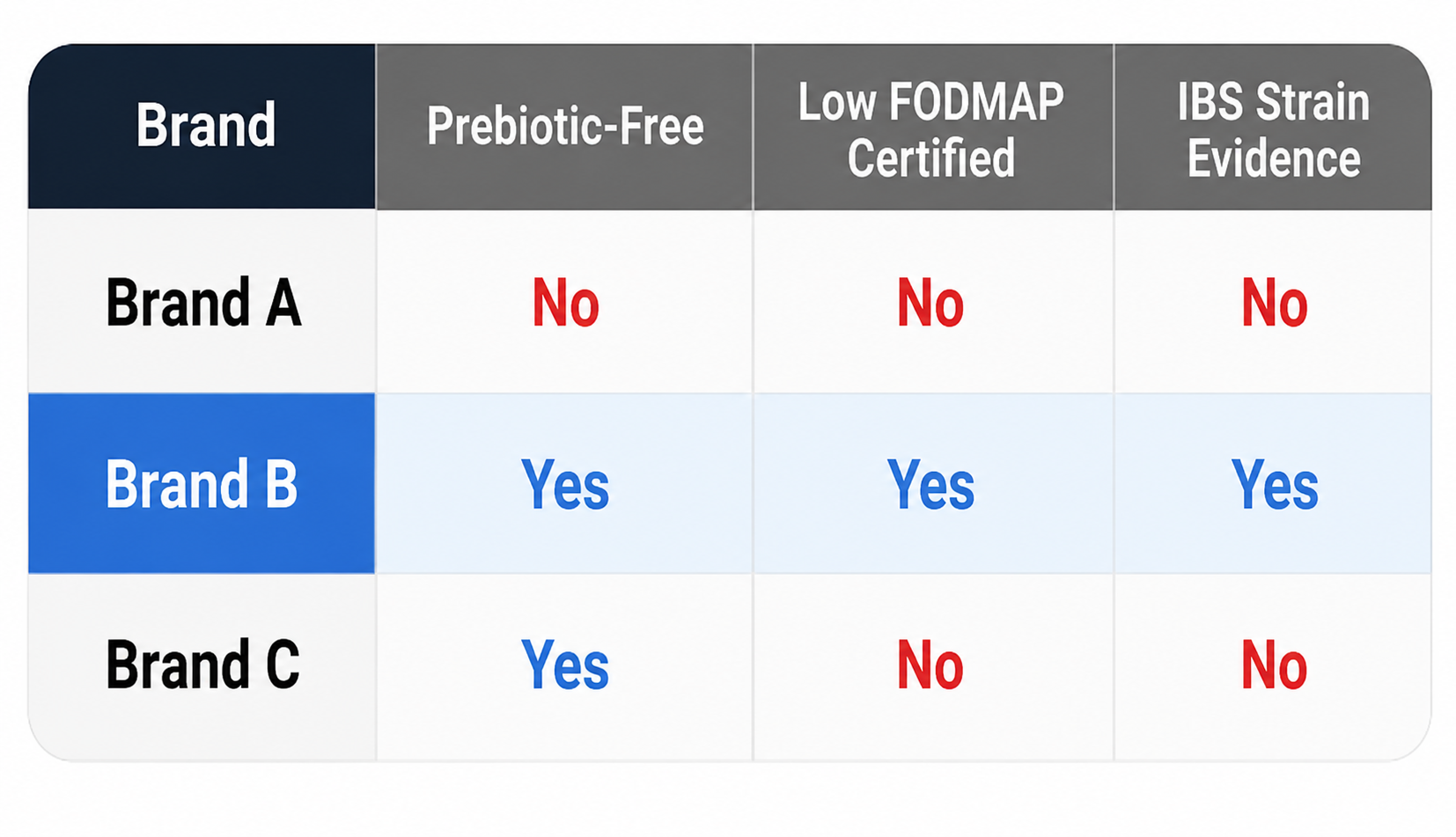
So which products actually meet these criteria? Here’s the short list I put together — S. boulardii products commonly available on the U.S. market, evaluated against the three things that matter for a sensitive gut.


Product comparison checklist between Jarrow Formulas Saccharomyces Boulardii + MOS (Boulardii 250mg, contains prebiotics, no Low-FODMAP certification, high-FODMAP) and YoungLong Yeast Biotics Sensitive (Boulardii 300mg, no prebiotics, Low-FODMAP certified, low-FODMAP) — comparing boulardii content, prebiotic inclusion, and FODMAP status.


🔎 Pharmacist Mom Talk

Products that meet all three conditions at once are rare on the market. In most cases, S. boulardii products and Monash-certified probiotics are sold as separate products.

So when choosing a probiotic, I’d recommend checking the Ingredients section directly — not just the marketing copy on the front of the bottle.


If you’ve been taking a probiotic that doesn’t suit your sensitive gut without realizing it’s the actual cause of your worsening symptoms, you’ll not only feel worse over time — you’ll also have a harder time maintaining gut health in the long run.

So for anyone with a sensitive gut, please make sure your probiotic is free of prebiotics and carries the low-FODMAP certification.

If you’d like to take a closer look at either product, the links below go straight to the seller’s page.

For full ingredient details, pricing, and shipping info, please check with each seller directly.


Pharmacist Mom’s Picks

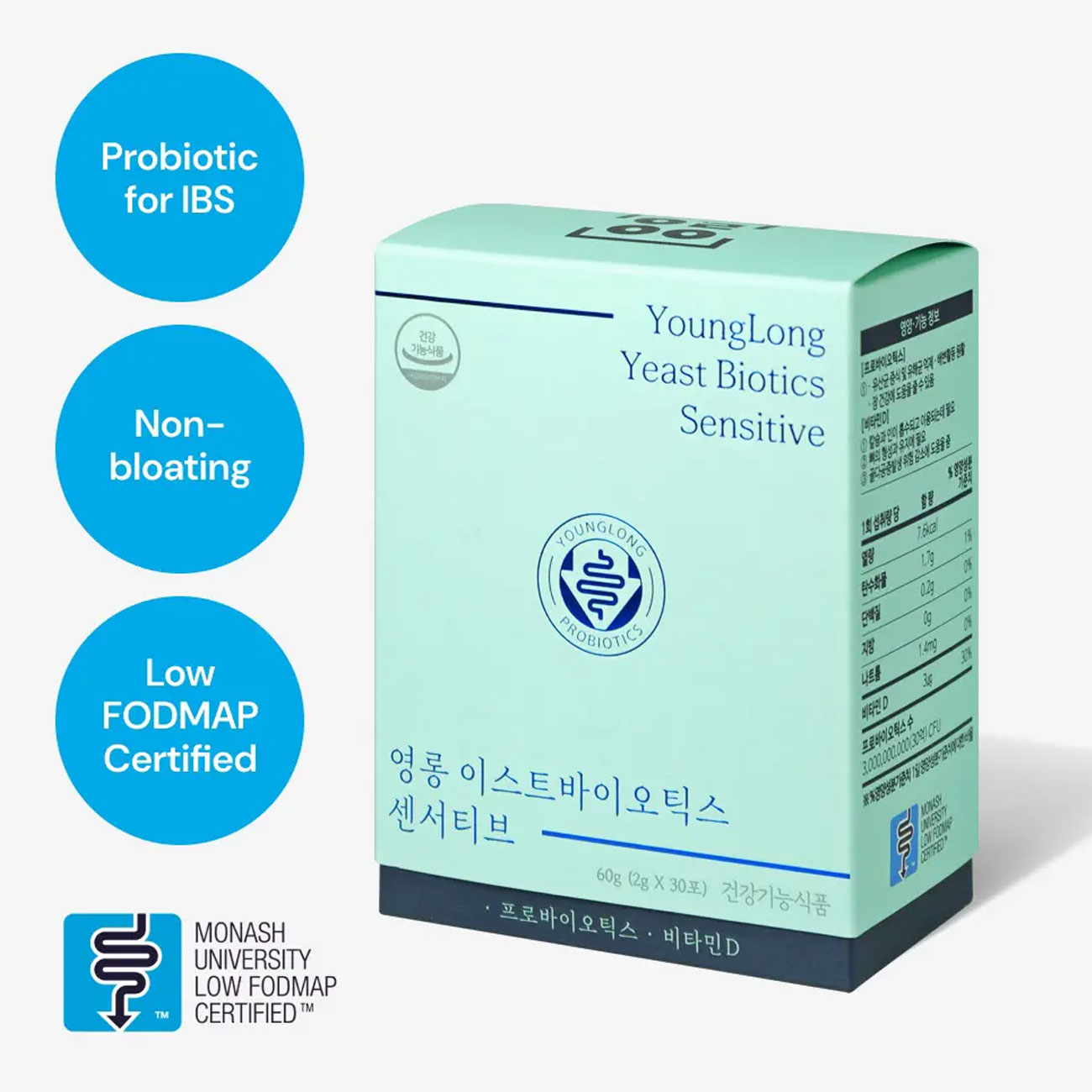
1. YoungLong Yeast Biotics Sensitive ★★★

① Best recommendation for IBS,
Low-FODMAP certified

② Probiotics Only, No Prebiotics 
– Bloating & Gas Relief for a Sensitive Gut
(Suitable for Everyday Gut Care, Too)

③ With Saccharomyces boulardii 
– Survives Antibiotics That Wipe Out Other Probiotics

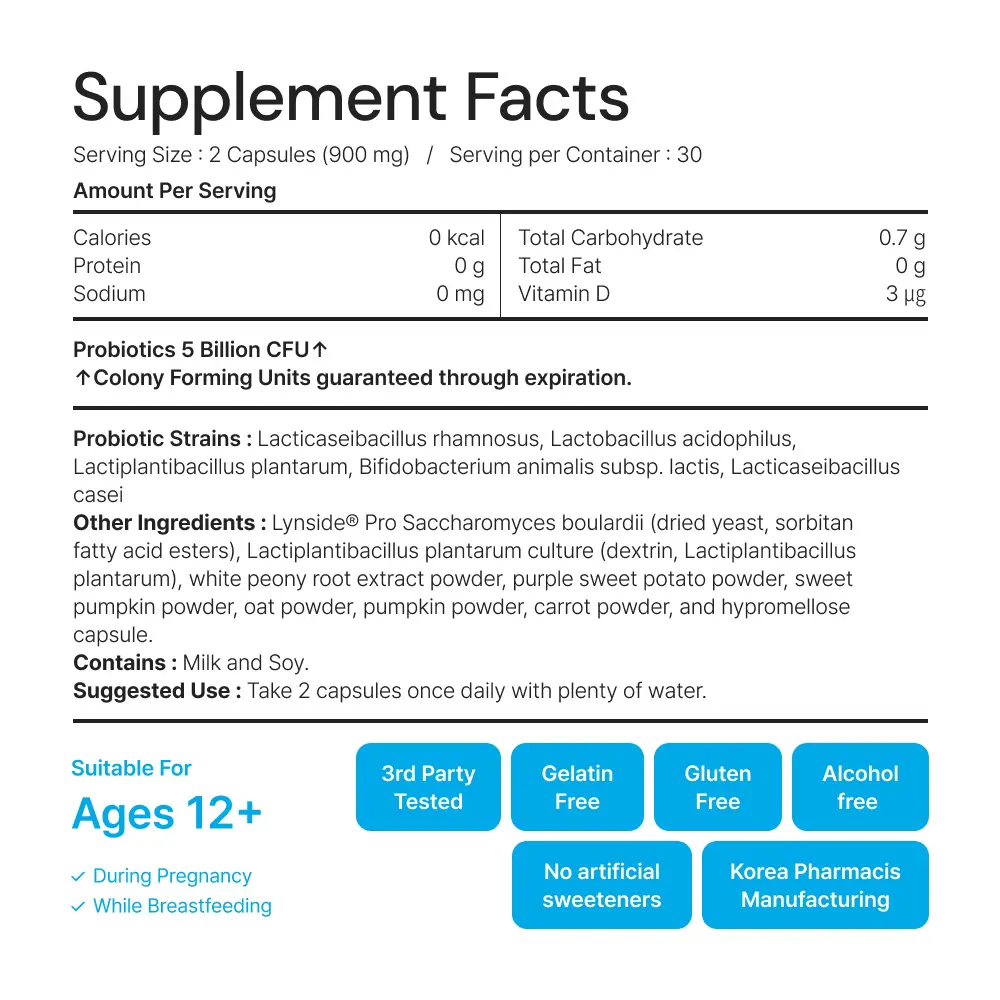
④ With Vitamin D 
– Needed for Calcium & Phosphorus Absorption and Bone Maintenance

⑤ 5-Strain Probiotic Complex 
– Gut Microbiome Balance

⑥ With White Peony Root 
– Soothes a Sensitive Gut

⑦ Two Formats 
– Powder & Capsule for Your Lifestyle
(Capsule with Clinically Studied Strains DDS-1 & UABla-12)

⑧ Shelf-Stable 
– Polysaccharide Freeze-Dried Coating Protects the Probiotics

YoungLong Yeast Biotics Sensitive product box — a mint-green carton containing 30 sachets (2g each, 60g total) of Saccharomyces boulardii probiotic with vitamin D, formulated for sensitive guts.

→ Visit product page


2. Jarrow Formulas Saccharomyces Boulardii + MOS

① Delayed-Release Veggie Capsule 
– Survives Stomach Acid

② With MOS Prebiotic 
– General Gut Support (Not for Sensitive Gut)

③ With Saccharomyces boulardii 
– Supports Normal Bowel Movement

④ Shelf-Stable, No Refrigeration

⑤ High-FODMAP
(No Low-FODMAP Certification)

Jarrow Formulas Saccharomyces Boulardii Plus MOS dietary supplement bottle — a probiotic plus prebiotic product containing 5 billion CFU per veggie capsule, providing clinically documented probiotic yeast.

→ Visit product page


From One Pharmacist, From One Mom

Having IBS doesn’t necessarily lead to serious illness. But it can disrupt daily life in real ways. Today, we looked at how to manage IBS symptoms in everyday life, and the kind of IBS-specific probiotics that support long-term gut health.

When choosing an IBS probiotic, even if it contains highly regarded strains like bifidobacterium, please make sure it’s low-FODMAP certified.

That said — if you’re experiencing blood in your stool, sudden weight loss, or persistent long-term diarrhea, please don’t try to manage it with diet and probiotics alone.

Consider a colonoscopy and visit a gastroenterologist to rule out other underlying issues.

When you look at a label through the lens of “would I give this to my own family?” — a lot becomes clear pretty quickly.

I hope this article gives you a starting point to take a closer look at what’s on your table and in your medicine cabinet.

Stay well! — With care, your Pharmacist Mom


References

📍 IBS Diet

1. American College of Gastroenterology (ACG). 2021 Clinical Guideline for IBS Management. 

https://pubmed.ncbi.nlm.nih.gov/33315591/

2. Black CJ, et al. Low FODMAP Diet in IBS: Systematic Review and Network Meta-Analysis. Gut, 2022. 

https://pubmed.ncbi.nlm.nih.gov/34376515/


📍 How to Choose a Probiotic for a Sensitive Gut

3. World Gastroenterology Organisation (WGO). Global Guidelines: Probiotics and Prebiotics, 2023. 

https://www.worldgastroenterology.org/UserFiles/file/guidelines/probiotics-and-prebiotics-english-2023.pdf

4. McFarland LV, Karakan T, Karatas A. Strain-Specific and Outcome-Specific Efficacy of Probiotics for IBS: A Systematic Review and Meta-Analysis. EClinicalMedicine, 2021. 

https://pubmed.ncbi.nlm.nih.gov/34712929/

5. McFarland LV. Systematic Review and Meta-Analysis of Saccharomyces boulardii in Adult Patients. World Journal of Gastroenterology, 2010.

https://pubmed.ncbi.nlm.nih.gov/20458757