Hi, I’m a pharmacist and a family-first mom.
Today I’m reviewing a product I recommended in an earlier post, now that I’ve actually been taking it. I’ll break it down honestly, the way I look at everything: through a pharmacist’s eyes, and a mom’s.
Here’s a confession: I know better than most how good probiotics can be. And yet, for a while, I stopped taking them — because the more I took, the more bloated and gassy I felt. “These are supposed to be good for me, so why don’t they work for me?” Even with my training, it took me a while to figure out.
It turned out the answer wasn’t the probiotics themselves, but what was packed in alongside them. For someone with a sensitive gut, an ordinary probiotic can actually work against you.
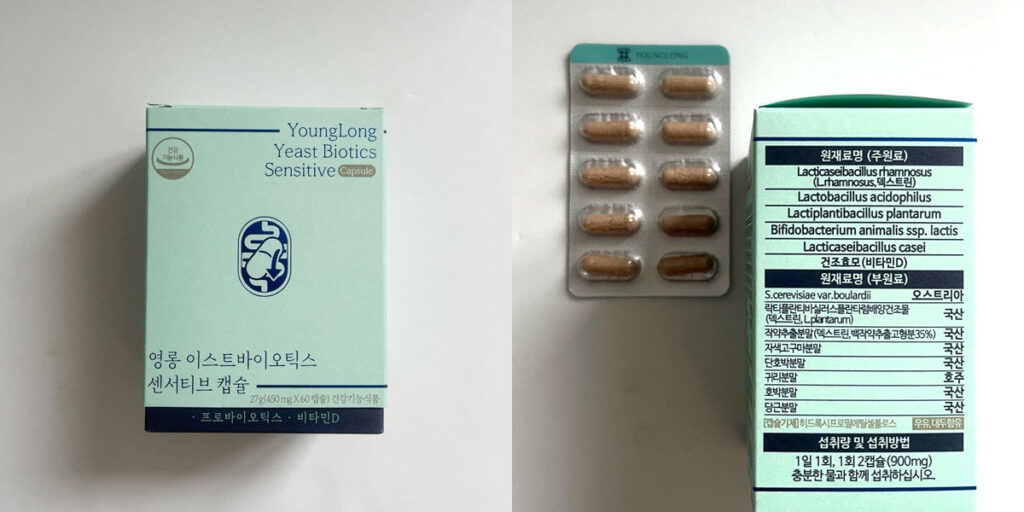
That’s when I came across YoungLong Sensitive. The first thing I did was look at the packaging — clean, no clutter, neatly done. When I looked into it, I found out it was a probiotic pharmacists had built specifically for IBS — for guts that react to everything. As a pharmacist myself, I couldn’t help paying closer attention to a starting point like that.
And reading the ingredient panel a little more critically, too. I take it every morning on an empty stomach, and I went with the capsule form since it’s the easiest to keep up with. Let me walk you through exactly why I recommend it, one reason at a time.
First, what to leave out for a sensitive gut
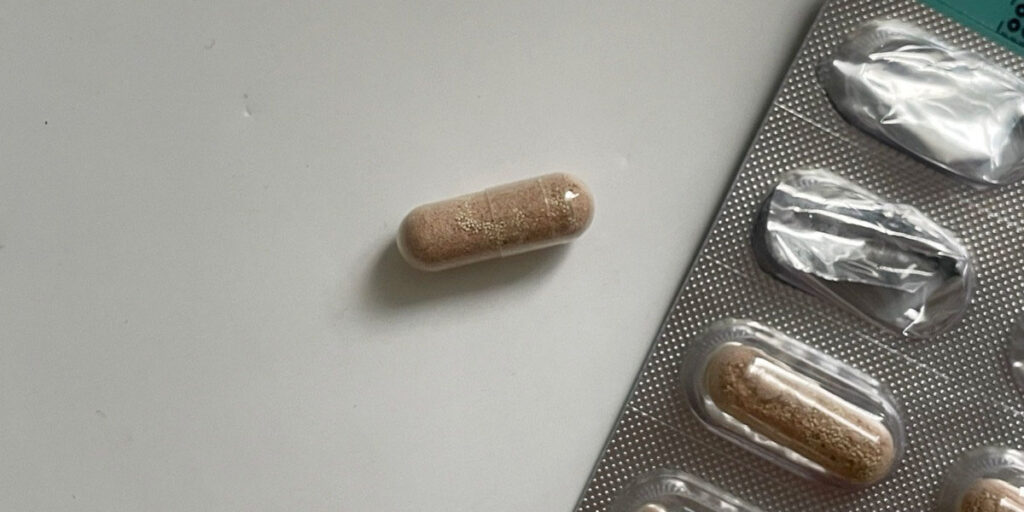
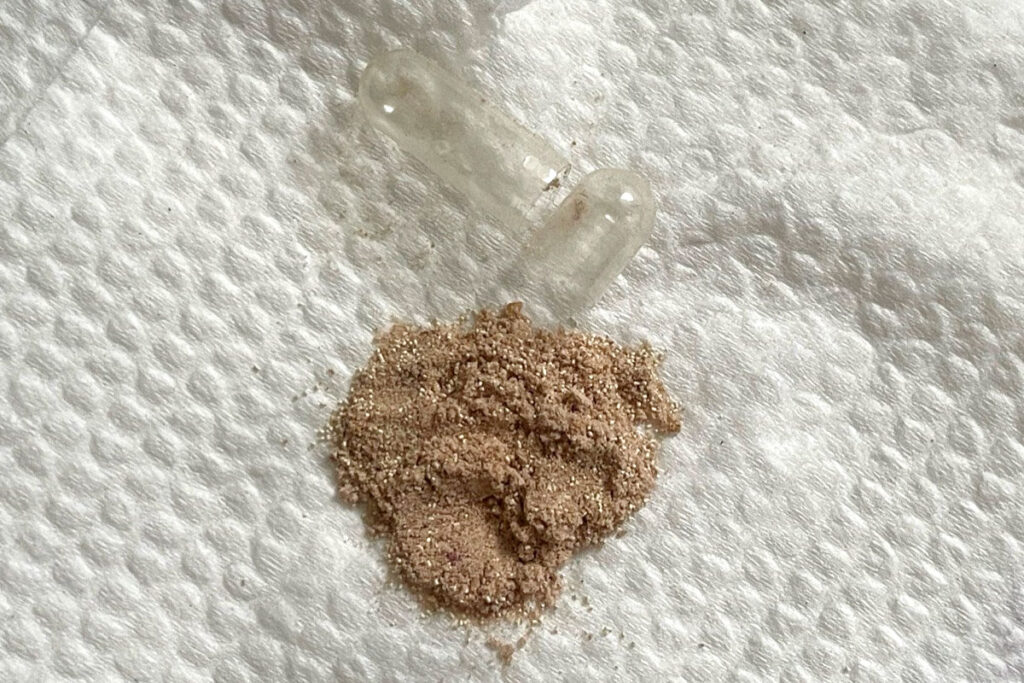
Prebiotic-free
YoungLong Sensitive capsules
The first thing I want to talk about is what this product leaves out — prebiotics.
Prebiotics are “food” for your good bacteria. They’re added on purpose to help good strains grow, and for most people, that helps. The problem shows up in people with a sensitive gut.
Most of that “food” comes in the form of what’s called FODMAPs — carbohydrates our bodies can’t digest
Since they aren’t digested, they travel all the way down to the large intestine, where gut bacteria feed on them and ferment them.
Two things happen during that fermentation: gas is produced, and water gets drawn into the gut. The result is exactly that tight, bloated feeling, the gas, the discomfort.
That was the very reason a “ordinary” probiotic was leaving me uncomfortable.
YoungLong Sensitive leaves prebiotics out, so you can take it without the discomfort. On top of that, every other ingredient is low-FODMAP, too — earning it Monash Low FODMAP certification, which guarantees a product is low in FODMAPs. And to that, it adds white peony root, which helps calm the gut.
For anyone with a sensitive gut, the right order is to remove what burdens it before adding anything good. And one more thing — making it gentle enough for even a sensitive gut to handle means it’s just as gentle for people whose guts aren’t especially sensitive.
Think of it as a formula that passed the strictest test there is.
Second, what a sensitive gut actually needs
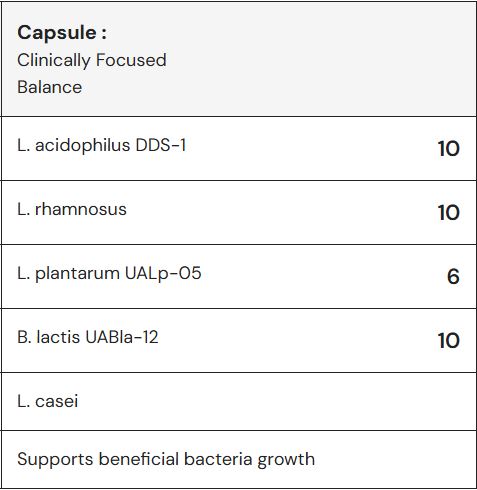
Photo courtesy of YoungLong
With the burden removed, let’s look at what’s inside. Sensitive contains five probiotic strains chosen for sensitive guts. Let me explain each one simply.
1. L. acidophilus DDS-1
The most dependable, core strain. It’s verified to survive stomach acid and reach the gut, and it’s a strain with human study results showing it eased bloating and discomfort.
2. B. lactis UABla-12
DDS-1’s partner. A strain shown to improve abdominal discomfort and bloating, it settles well in the large intestine and lays the groundwork for a healthy gut environment.
3. L. rhamnosus
The survivor. It holds up even in a gut full of stomach acid and bile, helping the other strains find their place.
4. L. casei
The supporter. Rather than playing the lead, it’s the dependable supporting role that keeps the whole balance in check.
5. L. plantarum UALp-05
The helper for gut function. A sturdy strain derived from vegetable fermentation that helps support and maintain normal gut function.
🔎 Pharmacist Mom Talk
I’ll be honest: not all five strains carry the same level of clinical data.
But the two that anchor this formula — DDS-1 and UABla-12 — do have human study results behind them.
From a pharmacist’s point of view, that’s what separates this from products that just pile on more strain counts.
When you choose a probiotic, don’t look at the number of bacteria added — look at the guaranteed count that survives and reaches your gut.
Third, what survives even on the days you take medicine
The last one is the ingredient I was happiest to see as a pharmacist: the yeast probiotic Saccharomyces boulardii (S. boulardii).
Most probiotics die off when you take antibiotics. Antibiotics don’t just kill the bad bacteria — they sweep out the good gut bacteria along with them.
But S. boulardii isn’t a bacterium; it’s a yeast. Since antibiotics are designed to target bacteria, they don’t act on a yeast like S. boulardii.
So even on the days you’re taking antibiotics, S. boulardii survives — meaning it keeps watch over your gut at the very moment your other good bacteria are being swept away.
It’s also a well-studied, highly trusted probiotic with a long history behind it.
As a pharmacist, and a mom
I don’t recommend anything I wouldn’t give my own child.
Leave out what burdens the gut, put in what it truly needs, and cover even the days you’re on medication — that’s the design here.
After taking it every morning on an empty stomach, my mornings have felt noticeably lighter.
As someone with a sensitive gut, I found it gentle to take myself. For me, that alone is enough to recommend it with confidence.
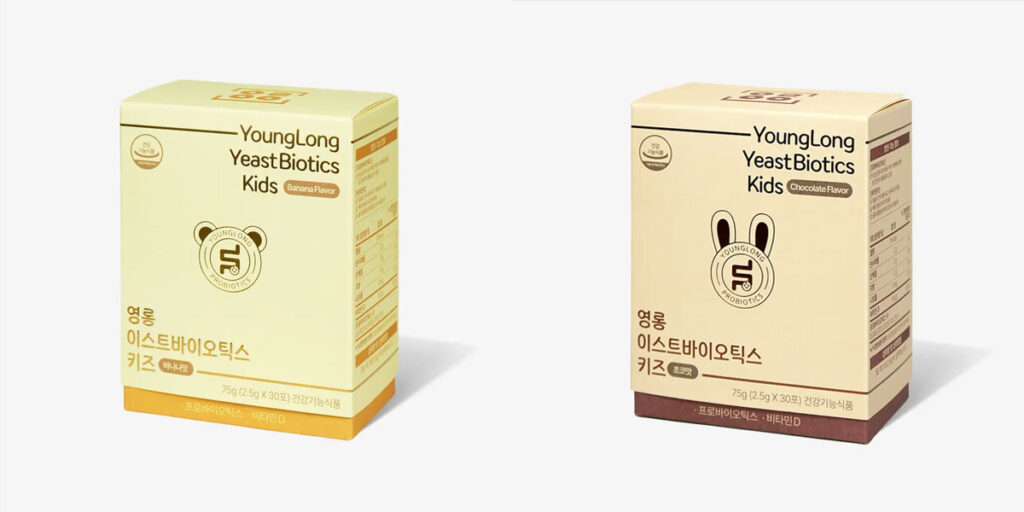
Photo courtesy of YoungLong
And one more thing, mom to mom. It turns out there’s a children’s version in the same line.
If YoungLong Sensitive is built for a sensitive adult gut, Kids is redesigned for a child’s gut. It’s built on the same S. boulardii base, so you can give it even on antibiotic days, and for little ones it also adds breast-milk-derived strains (reuteri and gasseri). For kids who get sick often and end up on antibiotics again and again — and lose their good gut bacteria each time, something that always weighed on me — it was a genuinely welcome lineup.
What moved me most was learning that this product, too, was made by a couple of pharmacists for their own child. As a fellow pharmacist and a fellow parent, I know exactly what that feeling is. The standard of “because my own child will be taking this” is more honest and more demanding than any flashy marketing line. That’s why it felt sincere to me.
Adults on the adult formula, children on the children’s — being able to cover the whole family’s gut health with one line felt reassuring to me as a mom.
So, today I wrote an honest review of YoungLong Sensitive.
If you’ve struggled to pick a probiotic because your gut runs sensitive — and equally, if your gut is perfectly fine but you simply want a gentle, fuss-free probiotic — I think you’ll be more than happy with it. After all, it was built around the most sensitive gut there is.
Stop putting up with the discomfort and experience an easier gut. As a pharmacist and a mom, I recommend it with confidence.
This review reflects my personal experience and opinion after using the product myself. I have no advertising or affiliate relationship with the manufacturer. Dietary supplements are not intended to diagnose, treat, cure, or prevent any disease, and individual results may vary.