Hello, this is Pharmacist Mom.
Today I want to take a close look at ‘coenzyme Q10’, a leading antioxidant ingredient and a nutrient everyone needs.
Coenzyme Q10 supplementation is especially important for:
1) people taking cholesterol medication
2) people on long-term blood pressure medication
In these cases, Coenzyme Q10 depletion is accelerated,
making supplementation not optional but essential.
On top of that, in 3) people in their 40s and older, both the total amount and the synthesis of CoQ10 in the body decline, so if you fall into any of these three groups, supplementing coenzyme Q10 is a must.
You take coenzyme Q10 for your health — but are you taking the right product?
Choose the wrong product and not only will you see no effect, it may actually be harmful to your health. With half the products on the market, you may regret it from the moment you start taking them.
Plenty of people in the age range where aging sets in go looking for coenzyme Q10, and since you’re taking it for your health, you want a product with better specifications.
To keep the coenzyme Q10 you took for its benefits from doing harm instead, you absolutely need to know how to choose it properly.
So which product should you take?
Contents
1. What is coenzyme Q10?
2. Coenzyme Q10 benefits
3. Causes of coenzyme Q10 deficiency
4. How to choose coenzyme Q10
5. Coenzyme Q10 product recommendations
I’ve laid out the criteria you need to check when choosing coenzyme Q10, along with examples that show you how to pick a proper product, so if you’re pressed for time you can read just the ‘5. Product recommendations’ part.
1. What Is Coenzyme Q10?
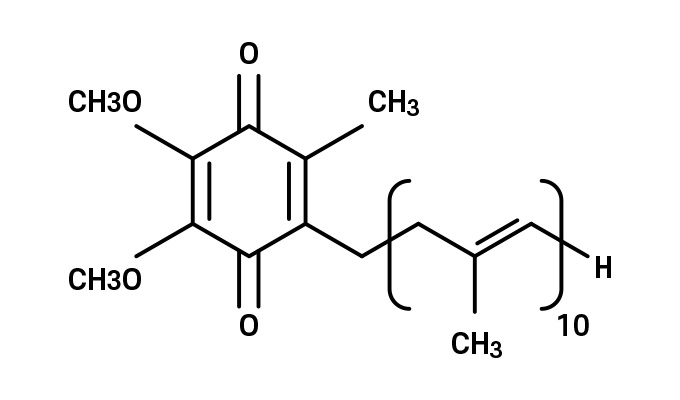
Coenzyme Q10 (CoQ10) is called by various names, including ubiquinone and ubidecarenone.
As one of the core components of the mitochondria, the organelle that produces energy inside cells, it is distributed in high concentrations in organs that need a lot of energy, such as the heart and the liver.
That is why coenzyme Q10 is an essential nutrient for every living mammal, and a coenzyme that is indispensable for producing the energy source (ATP) in the mitochondria, the cell’s energy factory.

The U.S. FDA identifies coenzyme Q10 as a dietary ingredient used in dietary supplements, and it is known for its ‘antioxidant’ action, which clears reactive oxygen species, and for ‘helping to reduce high blood pressure’.
Lately it has also been drawing attention as a cosmetic ingredient, not just in over-the-counter medicines and dietary supplements.
So let’s take a closer look at exactly what coenzyme Q10 does for our health and how it works.
2. Coenzyme Q10 Benefits
Benefit 1) Lowering High Blood Pressure

Coenzyme Q10 is a functional ingredient the U.S. FDA lists as a dietary ingredient, and one that ‘can help reduce high blood pressure’.
Because there aren’t many functional ingredients on record as being able to help lower blood pressure, interest in coenzyme Q10 remains high.

According to a study that looked at how depleted coenzyme Q10 was among people with high blood pressure, that is, hypertension,
only 6% of healthy adults were deficient in coenzyme Q10, while 39% of hypertensive patients were found to be deficient in coenzyme Q10.
Once the frequency of coenzyme Q10 deficiency turned out to differ this clearly between healthy people and the hypertensive group, researchers began studying the relationship between CoQ10 and blood pressure,
and in the human trials reported since, taking coenzyme Q10 over a long period produced a significant blood-pressure-lowering effect, which is how it came to be established as a dietary supplement ingredient.
Beyond that, a range of study results describe the link between CoQ10 and lower blood pressure.
Benefit 2) Antioxidant

CoQ10 is a widely used dietary supplement ingredient in the U.S.
The reactive oxygen species produced alongside energy are unstable molecules that damage cells, and they act as a cause of aging and of a number of diseases.
The problem is that as your body ages, its ability to clear reactive oxygen species declines, and damage builds up in those injured cells until recovery becomes difficult, and the aging of cells sets in.
What neutralizes and clears the reactive oxygen species behind aging is coenzyme Q10, which is known to protect your cells by being oxidized in their place.
In other words, it neutralizes reactive oxygen species, thereby contributing to preventing cell damage and to maintaining normal cell function.
Benefit 3) Energy Production

The root cause of fatigue is energy production not running smoothly, and chronic fatigue refers to a state where some part of the many steps in energy metabolism has broken down, so no amount of rest clears the tiredness.
Fatigue has many causes, but if coenzyme Q10 runs low, problems can develop in energy metabolism.
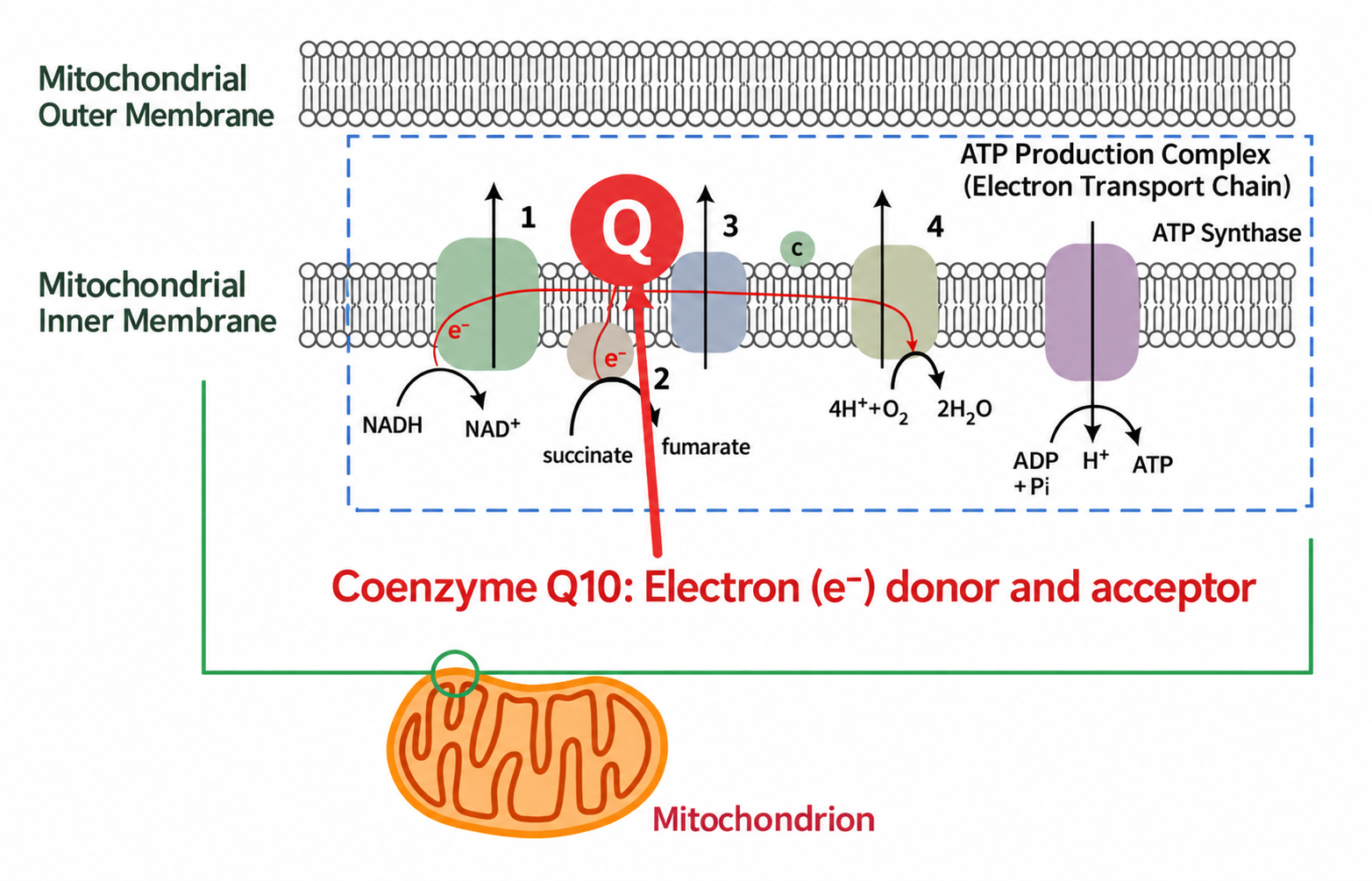
I mentioned earlier that coenzyme Q10 is a coenzyme you cannot do without for producing the energy source (ATP) in the mitochondria.
The mitochondria, which you could call the cell’s energy factory, not only generate reactive oxygen species in the process of producing energy but are also an organelle easily damaged by those species, so keeping mitochondrial function intact is an important factor.
If coenzyme Q10 runs low, it can cause mitochondrial function to decline and make energy production difficult. Fatigue and various metabolic disorders can follow.
If no amount of sleep clears your fatigue, supplementing coenzyme Q10 is worth considering.
3. Why Coenzyme Q10 Runs Low
Reason 1) Aging

Your body can synthesize coenzyme Q10, but that synthesis gradually declines with age.
Looking at how coenzyme Q10 is distributed through the body, as aging progresses the heart, where coenzyme Q10 is most abundant, drops by the widest margin, followed by the kidneys, lungs and liver.
In organs with high metabolic demand, like the heart, CoQ10 falls very quickly.
Since synthesis drops off with age like this, it’s a good idea to supplement coenzyme Q10, and the need to supplement coenzyme Q10 grows considerably after your 40s in particular.
Reason 2) Medications
Cholesterol medication, blood pressure medication

1) Cholesterol Medication
If you’ve been prescribed cholesterol medication at a clinic, 99% of the time it will be a statin (-statin) class drug.
Statins have relatively few side effects and clear effects, which makes them the first-line drug among treatments for high cholesterol.
The main ingredient names and brand names are as follows.
– Atorvastatin (Lipitor, Atozet, etc.)
– Rosuvastatin (Crestor, etc.)
– Pitavastatin (Livalo, etc.)

Statin-class drugs work by inhibiting HMG-CoA reductase, the most important enzyme in cholesterol synthesis, which blocks cholesterol from being made.
In other words, they block cholesterol synthesis and lower blood cholesterol, which is how they work against high cholesterol.

The problem is that statin-class drugs don’t only suppress cholesterol synthesis — they also suppress the synthesis of coenzyme Q10, which sits on the same pathway.
So when cholesterol medication is taken long term, coenzyme Q10 levels are very low.

According to one experimental study, taking Atorvastatin (Lipitor), the most commonly used of the cholesterol drugs, for 30 days produced a 49% drop in blood coenzyme Q10 concentration, and this is because statins inhibit the synthesis not only of cholesterol but of coenzyme Q10 as well.
There is also rhabdomyolysis, a serious side effect of statins in which muscle breaks down, and according to a journal of the American College of Cardiology, taking coenzyme Q10 was reported to reduce the muscle-related side effects of statin-class drugs by about 40%.
On top of that, statin-class drugs put a burden on the liver, so supplementing CoQ10, which has an antioxidant effect, is one way to protect liver cells.
So if you take cholesterol medication long term, coenzyme Q10 helps in several ways, and I recommend taking a coenzyme Q10 supplement alongside it to top up.
2) Blood Pressure Medication

Among blood pressure drugs, the beta blockers propranolol, timolol, metoprolol and alprenolol can inhibit the activity of coenzyme Q10 enzymes in the mitochondria and suppress its synthesis.
That leads to coenzyme Q10 depletion in the body, which can disrupt antioxidant action and energy production and cause a range of health problems.
If you are taking the medications above, I recommend supplementing coenzyme Q10, since it can both prevent coenzyme Q10 depletion and help with blood pressure management.
4. How to Choose Coenzyme Q10
How to Choose 1) Contains BioPerine ★
You’ve probably gone over everything carefully, from the ingredients to how to take it, and chosen fussily in order to top up the coenzyme Q10 that runs low so easily.
But will 100% of what you take actually be absorbed? No matter how good a coenzyme Q10 product you pick, it means nothing if your body can’t absorb it properly.
This is why ‘absorption rate’ has been getting attention lately as one of the factors in choosing a dietary supplement.
The higher the absorption, the more effective the result, and reducing the discomfort people felt with the older forms is another strong point.

BioPerine is a natural bioavailability enhancer made by processing piperine, the pungent compound in black pepper, which is used as the raw material. It works by increasing the absorption of a range of nutrients.
BioPerine has generally been shown to improve nutrient absorption by more than 30%, which is why it is used in a variety of products.
Thanks to these advantages, BioPerine is included in products such as selenium, vitamin B, vitamin C and curcumin for the purpose of raising absorption and bioavailability.

In an actual clinical trial comparing intake of a raw material with BioPerine against the raw material alone, a significant difference appeared in absorption and utilization.
When healthy adult men took 5mg of BioPerine together with CoQ10, plasma CoQ10 concentration rose by about 30% compared with the group that took coenzyme Q10 on its own, and the absolute change in concentration also rose by about 32%, a statistically significant difference.
Because BioPerine helps raise coenzyme Q10 absorption like this, it’s a good idea to check whether ‘BioPerine (black pepper extract)’ is included in the ingredients and amounts on the package.
How to Choose 2) Maximum Dose ‘100mg’

Coenzyme Q10 is synthesized in the body and can also be taken in through meat, fish, vegetable oils and so on,
but the CoQ10 you get from food is only about 5mg, so meeting the effective coenzyme Q10 amount of 30–60mg a day through food falls far short.
Coenzyme Q10 content differs from product to product. In particular, there are now plenty of products that sneak in only about 10mg a day, so you need to look closely at the amount.
The U.S. FDA does not state a daily intake standard, but since most of the related research produced significant effects at 100mg of CoQ10 a day,
for effective and safe intake I recommend a product that contains 100mg of coenzyme Q10 a day.
How to Choose 3) Country of Origin Disclosure
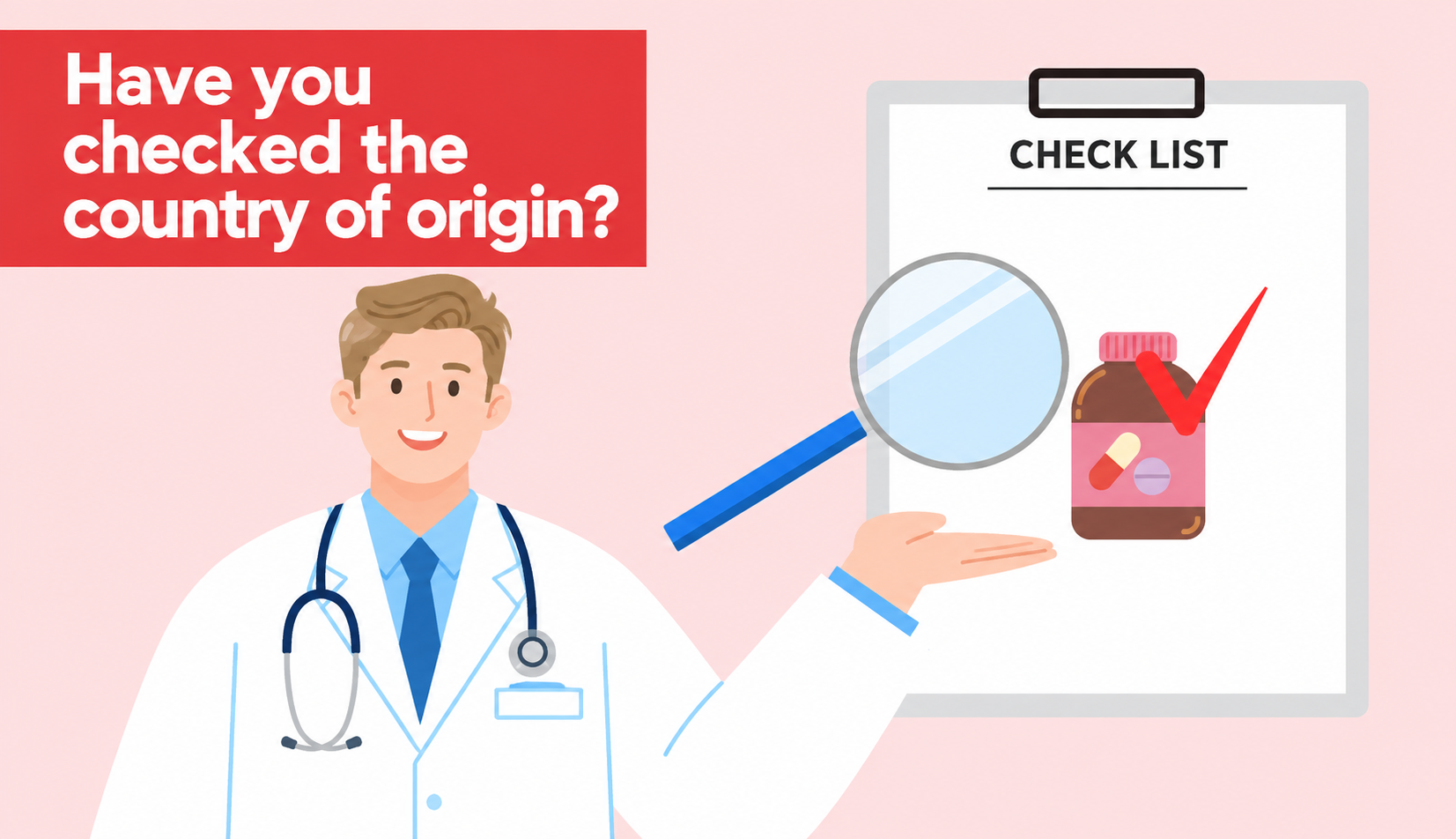
Coenzyme Q10 is an ingredient whose country of origin is rarely disclosed.
Raw materials made in countries that aren’t favored as food manufacturing origins mostly don’t disclose where they come from.
So when you look at the products on the market, there are more cases than you’d expect where the amount and the purity are disclosed but the country of origin is not. (It would be more accurate to say they can’t disclose it.)
On top of that, purity of the raw material matters with CoQ10, and when the extraction quality of coenzyme Q10 is poor and a low-purity raw material is used, impurities or extraction solvents end up in it, so it’s better to choose a high-purity raw material.
A company you can trust discloses the country of origin of its coenzyme Q10 along with the purity and the amount, precisely. Since you take supplements over a long period, going over the details carefully so there are no problems matters.
In other words, a product that clearly states the country of origin and the purity is exactly the kind of product you can trust.
How to Choose 4) Form

Coenzyme Q10 is fat-soluble, and multiple papers and study results have confirmed that it is absorbed best in capsule form.
Softgel capsules with a small amount of oil added are known to have particularly high bioavailability.
To raise absorption, I recommend softgel capsules over tablets or hard capsules.
5. Coenzyme Q10 Product Recommendations
There are hundreds of CoQ10 products on the market.
Looking at them against the criteria above, there are quite a few products that meet the 100mg CoQ10 content and softgel capsule conditions, but companies that contain BioPerine and also disclose the country of origin were very rare.
I looked for two or three products from companies that fit the criteria above.
* Based on products with top-tier sales volume.
Coenzyme Q10 products are everywhere now.
But because CoQ10 does so many jobs, it has excellent synergy with other supplements.
So as long as you’re taking supplements anyway, what I recommend most is a combination product that lets you manage several things efficiently rather than a single ingredient.

*Dietary supplements are not intended to diagnose, treat, cure, or prevent any disease, so please use this information for reference only.
Among the many CoQ10 products on the market, a few stand out for pairing CoQ10 with a complementary ingredient for added synergy:
1. Milk Thistle CoQ10
2. Omega-3 CoQ10
3. Red Ginseng CoQ10
Of these three, Milk Thistle CoQ10 is the combination I recommend most, because the two ingredients work especially well together.
In terms of function alone, it has the advantage of letting you manage liver health and high blood pressure at the same time.

Blood pressure and the liver are in fact correlated — a bad liver can raise blood pressure, and high blood pressure makes the liver prone to damage — and it’s something a lot of people in their 40s and 50s and older worry about.
Also, when cholesterol or blood pressure medication is taken long term it puts a burden on the liver, so managing liver health with milk thistle matters.
The liver handles detoxification among many other functions, so there’s nothing to lose by managing it in advance.

On top of that, taking milk thistle and CoQ10 together is known to produce synergy across the various chronic conditions that come with age, such as improving liver enzyme levels and blood cholesterol, on the back of their antioxidant effects.
If you’re going to take coenzyme Q10 anyway, why not take it as the ‘milk thistle coq10’ combination, where milk thistle is paired with CoQ10 so you can manage your liver at the same time.
Beyond that, Omega-3 CoQ10 has the advantage of omega-3’s functions, such as improving triglycerides and circulation,
but information on the omega-3 in that product is lacking and its credibility isn’t high, so there is the drawback that you can’t check the purity or the oxidation level.
Red Ginseng CoQ10 is also a good choice for people struggling with fatigue, but be aware that red ginseng is a warming herb, so it doesn’t suit people with high blood pressure and calls for caution.
A lot of you have contacted me through comments and messages about the product information for number 1, saying “it’s hard to find the product” or “why not just post the product you recommend.”
While I’m grateful for all the interest, naming a specific brand or product directly is genuinely awkward and difficult, so I hope you’ll understand.
That said, I’ll give you one small hint: the brand I recommend starts with the letter “Y,” so I hope that helps when you search.
Search “milk thistle coq10” and compare the various products, then choose after checking the main ingredients and amounts, such as:
- whether it contains BioPerine
- whether it contains 100mg of CoQ10
- whether it’s a milk thistle + CoQ10 combination product
Present in every cell in our body and carrying a range of benefits, coenzyme Q10 is a supplement that makes a good gift for people in their 40s and older.
That brings this post on coenzyme Q10, which helps with antioxidant action and lowering blood pressure, to a close.
References
[3] Drugs.com. Drug Information Database.
*This content has not been evaluated by the U.S. Food and Drug Administration (FDA). This product is not intended to diagnose, treat, cure, or prevent any disease.