“It’s fine while I’m on my meds, but the second I stop, it comes right back.”
Working at a pharmacy, this is one of the complaints I hear most often from patients with gastritis.
They drink cabbage juice by the box because it’s supposed to be good for heartburn, and they faithfully take the medication their doctor prescribed, but the relief never lasts.
As soon as they stop the medication or even the slightest stress comes up, the heartburn and bloating come right back without fail.
Why on earth won’t this exhausting vicious cycle ever end?

It’s worth checking whether you’ve only been taking care of half of the structural signals your stomach is sending you.
Today, from a pharmacist’s point of view, I want to explain in very simple terms the real cause of gastritis that keeps coming back and the key principles of care you must follow to make your stomach comfortable.
1. Why Your Stomach Gets Damaged
First, we need to understand what’s happening inside our stomach.

I explain to patients who come to the pharmacy that the stomach is like a battlefield.
That’s because, inside the stomach, attack and defense are happening at the same time, nonstop, every single day.

When we eat, the stomach releases powerful weapons called stomach acid and digestive enzymes to digest food and kill the harmful germs that come in from outside.
These are the aggressive factors (the spear).
Stomach acid is a strongly acidic substance, so normally, the stomach wall, which is delicate tissue, should melt away along with it.
But healthy people don’t get heartburn even when they faithfully eat three meals a day, right?

That’s because our stomach isn’t dumb.
To protect itself, it has a strong defense system (the shield) made of things like a sticky mucus called mucin.
Thanks to this, no matter how strong the aggressive factors are, as long as they’re in tight balance with the protective factors, the stomach stays undamaged and does its job.

The problem is when this peaceful balance breaks down.
With stress, heavy drinking, overeating, medications like ibuprofen and aspirin, or H. pylori infection, what happens when the attacks get fiercer and the defensive wall keeps getting thinner?
Eventually, the protective factors can no longer hold off the aggressive factors, and the aggressive factors slip through the gaps and eat away at the stomach wall.
The heartburn and indigestion we go through, and even gastritis and stomach ulcers, are ultimately your stomach screaming that this balance has collapsed.
2. The Common Mistake We Make with Chronic Gastritis
What do you do when you have heartburn?
Many people quickly grab some medicine at the pharmacy, or buy cabbage juice by the box because it’s supposed to be good for stomach health and heartburn.
Of course, both are excellent options, but when it comes to solving chronic stomach problems, they have a critical limitation.
The problem is that they only look at one side of the war.

First, antacids temporarily neutralize the aggressive factor called stomach acid.
Think of it like dousing a house fire with water. It knocks down the pain for now, but it does nothing to rebuild the damaged structure left behind — in this case, your stomach lining.
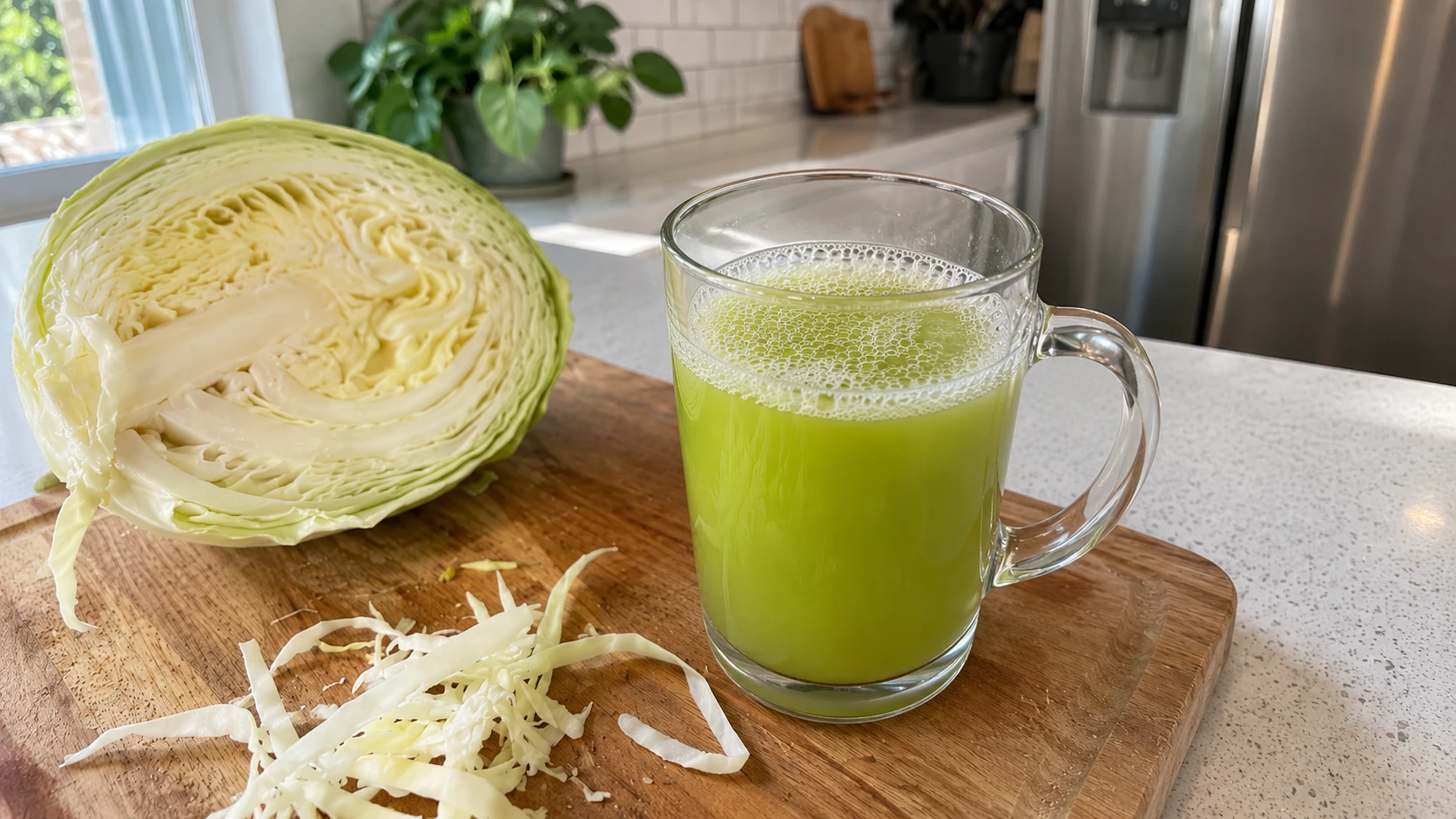
On the other hand, what about cabbage products like cabbage juice?
The MMSC (vitamin U) in cabbage may help protect the stomach lining and support its natural renewal, helping the protective factors. It’s like repairing a crumbling wall.
But for many Americans, the stomach is under constant strain from greasy, processed fast food, late-night overeating, alcohol, too much coffee and the everyday painkillers we reach for without a second thought, along with powerful cannons, the aggressive factors, like H. pylori firing nonstop.
Just building up the inner wall without blocking the attacks pouring in all too often ends up like pouring water into a bucket with a hole in it.

In the end, doing just one thing won’t end this long, drawn-out war.
Physically blocking the attacks while helping the stomach recover on its own at the same time
Unless these two things happen at the same time, the vicious cycle of feeling fine only while taking medicine and hurting again once you stop is bound to continue.
3. A Pharmacist’s Solution: Double Action
So what should you do? The answer is simple.
To restore that lost balance, you need to focus on two things at the same time: physical defense and fundamental recovery.
I stress this to patients as Double Action for stomach health.
Yes, it’s the same mechanism as the Double Action in Gaviscon Double Action, the well-known heartburn remedy.

The first action is to thoroughly protect the stomach wall from harsh stomach acid.
Stomach acid is a strongly acidic substance.
If the stomach wall is exposed to stomach acid without any protective layer, it’s only natural that it burns and hurts.

This is where mucin plays a key role.
Mucin coats the entire stomach wall in a thin, sticky layer, wrapping it so harsh acids can’t directly touch the delicate skin of the stomach wall, and acts as the first line of defense.

Add alginate to the mix, and stomach lining protection gets even stronger.
Alginate, which floats on top of stomach acid, becomes a backup barrier that seals even the gaps at the top when stomach acid sloshes around or tries to back up.
In other words, mucin coats the wall and alginate keeps acid from spilling over, so stomach acid’s attacks are blocked without any gaps.

The second action is to help the irritated stomach lining recover and stay protected.
You need an ingredient that helps the stomach lining, already thinned and worn down, renew itself.

A leading example is licorice extract, an ingredient the FDA lists as generally recognized as safe (GRAS)[6], and research suggests it can help support stomach health by protecting the stomach lining[2][3].
What deserves special attention is its activity against H. pylori, which has been studied in clinical research[1].
Because research suggests it can work directly against H. pylori, a major cause of stomach irritation, it goes beyond soothing today’s discomfort and can help break the cycle of recurring stomach trouble[4][5].

In the end, the key is timing.
Protecting the stomach lining (defense)
Letting the stomach recover on its own (renewal)
Only when these two mechanisms happen together in a single routine can your stomach finally rest comfortably and buy time to recover.
4. The Standard for Smart Stomach Care: Check for Double Action
Of course, the best thing is to get all of these nutrients from your diet.
But brewing licorice tea every day and eating seaweed by the basketful is close to impossible for busy people today.
That’s why people look for stomach supplements as a realistic alternative.
As a pharmacist, there’s just one thing I want to ask of you here.

Check the ingredient list on the back of the product carefully.
Don’t just look at phrases like good for your stomach; make sure the formula covers both of the two actions (defense + recovery) I mentioned.
① Does it contain mucin and alginate, which can physically protect the stomach wall?
② Does it contain licorice extract, which supports stomach lining renewal and has been studied for its activity against H. pylori?
Pharmaceutically, products designed around these two mechanisms are called Double Action stomach supplements.
Especially since the stomach is a sensitive organ that takes in food every day, if you also check whether it’s made from 100% plant-based ingredients with no worries about tolerance or side effects, it’ll be the best choice you could make.

If you’ve read this far, you’re probably wondering, So what actually has both of them?
The truth is, there are so many stomach supplements on the market.
But think back to the two conditions I mentioned earlier:
① Stomach wall protection and defense (mucin/alginate)
② Lining renewal and support against recurring discomfort (licorice extract)
Products that perfectly combine these two conditions and also ensure safety with plant-based ingredients are harder to find than you might think.
When it’s hard to compare ingredient lists one by one for everyone who comes into the pharmacy, I tell them to search for just one keyword.

Type Double Action stomach supplement into the search bar, then look through the products.
It’s what pharmacists and experts call the group of products built with a dual design of defense and recovery, the key to stomach health.
If you search for Double Action stomach supplement and pick one with good reviews that’s made with ingredients the FDA recognizes as safe[6], you’ll at least make a choice you won’t regret.
Small Daily Habits, a Healthier Stomach
Once the stomach is damaged, it’s slow to recover, so prevention matters more than anything.
To protect your stomach health, we should cut back where we can on the things we can control, like drinking, smoking, irritating foods and irregular habits, and make an effort to curb the factors that damage the stomach lining.
It’s also important to regularly take in nutrients studied for their activity against H. pylori, and eating foods that can protect the stomach lining can also help keep your stomach lining healthy.
Start building habits for your stomach health today.
References
*This content has not been evaluated by the U.S. Food and Drug Administration (FDA). This product is not intended to diagnose, treat, cure, or prevent any disease.