These days, the medicine, supplement, and health food markets are flooded with unverified information and distorted facts.
As a pharmacist, I believe I have a responsibility to sort out clear, accurate information so consumers can get what they really need and make the right choices.
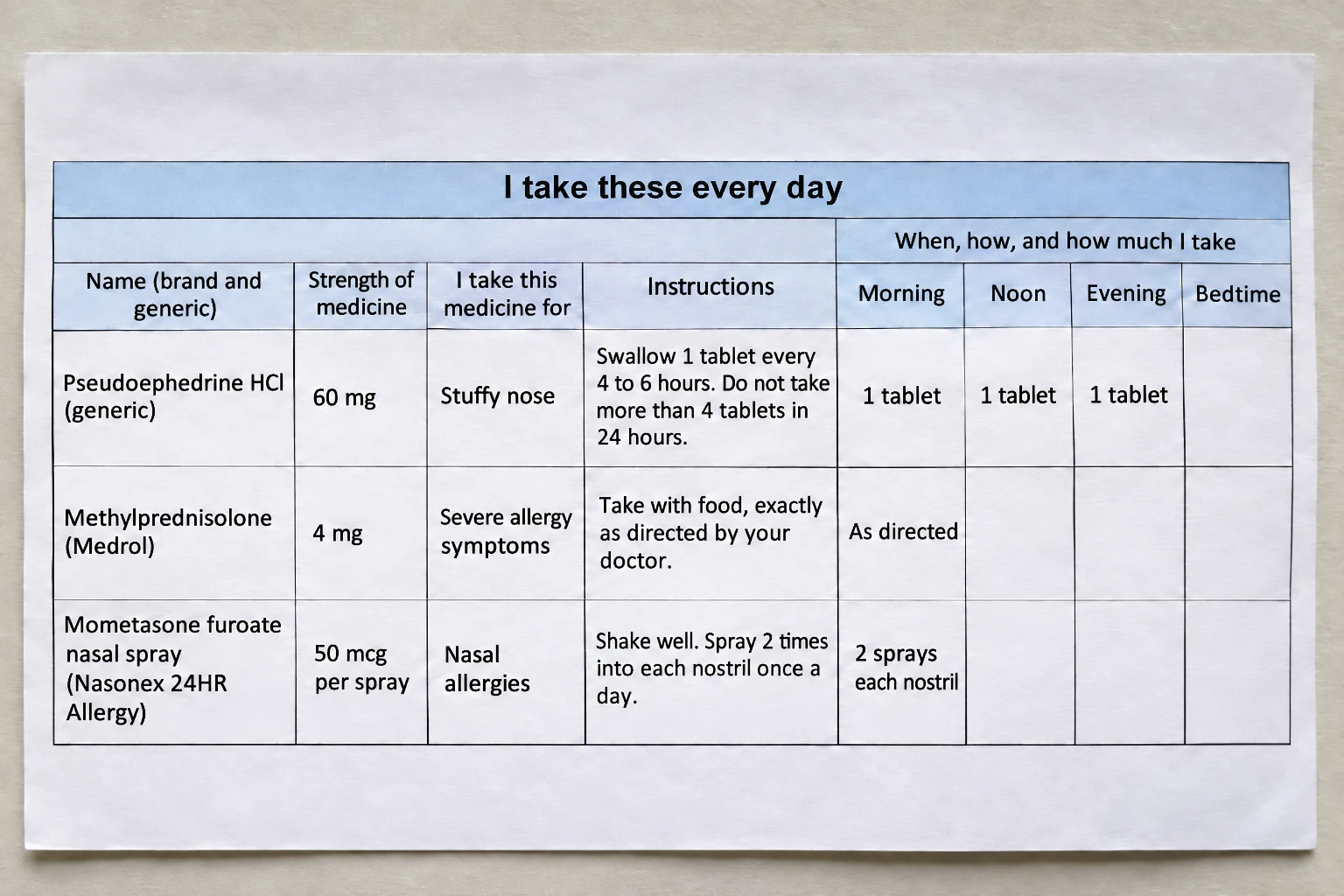
I’m also a pharmacist who has lived with severe allergic rhinitis since I was little.
So there’s nothing I haven’t tried, from foods said to be good for allergic rhinitis to home remedies, and I’ve taken a lot of the allergy supplements sold on the market.
Of course, that was before I became a pharmacist, back when I didn’t know much about medicine.

Now, looking at them with a pharmacist’s eye, many of the products sold as good for allergic rhinitis had never been properly tested for what they claimed, and some have even faced class-action lawsuits over allegedly false marketing.
If you’ve ever struggled with allergic rhinitis, you’ve probably searched for supplements like you were grasping at straws, only to end up wasting money instead of getting any real help.
“So how should you actually manage allergic rhinitis?”
Some people are wary of medication, so they avoid or stop it altogether and rely only on other methods.
That’s the wrong approach.
When your runny or stuffy nose is bad, the most important thing is to take allergy medication first to quickly calm the acute inflammation and symptoms.
However, while taking medication is very effective at putting out the fire in front of you, it can’t change the underlying tendency that keeps allergic rhinitis coming back.
Once you’ve put out the immediate fire by taking medication, the next step is to calm down the “overactive immune response,” the real cause behind allergic rhinitis.
So why is it so hard to prevent flare-ups by taking medication alone, and what should you do after taking it?
Let’s fact-check it one step at a time.
✓ Table of Contents
1. Why Does Allergic Rhinitis Happen?
2. Do Allergic Rhinitis Medications Really Work?
3. An Ingredient That Targets the Overactive Immune Response
(= a more fundamental way to manage allergic rhinitis)
4. A Look at Products on the Market
1. Why Does Allergic Rhinitis Happen?

Rhinitis is an inflammatory condition of the mucous membrane that lines the inside of your nose.
Rhinitis can be broadly divided into non-allergic rhinitis and allergic rhinitis.
① Non-allergic rhinitis can be caused by many different things, such as bacterial infections, blood vessel issues, or medications.

② Allergic rhinitis, which now affects about 1 in 4 U.S. adults[1], happens when the body reacts abnormally and overly sensitively to allergens (= an overactive immune response) such as pollen, dust mites, and pet dander that come in as you breathe, which leads to inflammation.
When inflammation from these allergens keeps going, the nasal lining loses its normal function, and when the seasons change and temperature and humidity swing widely, the lining becomes even more sensitive, so symptoms get worse.

An overactive immune response is when the immune system’s immune cells react too sensitively even to things that are harmless to the body, like pollen, causing inflammation or allergy symptoms.
Put simply, your body sees something that isn’t actually harmful as harmful and overreacts to it.
Once the body sees a certain substance as a threat, it makes immunoglobulin E (IgE).
This IgE settles on the surface of mast cells, and when the same substance comes in again, it triggers those mast cells.
In the process, a chemical called “histamine” is released.
Histamine widens the blood vessels in the nasal lining and irritates its nerves, causing inflammation.
In other words, when the overactive immune response irritates the thin nasal lining and inflammation sets in, you get symptoms like a runny nose, stuffy nose, sneezing, and itching.
Medications that ease allergic rhinitis symptoms by blocking this histamine action are actually used to treat allergic rhinitis.
2. Do Allergic Rhinitis Medications Really Work?

The most common treatments used to ease allergic rhinitis symptoms are antihistamines and steroid nasal sprays.
Antihistamines block the action of histamine.
By blocking the body’s response to histamine, which immune cells release during an allergic reaction, they ease symptoms like a runny nose, sneezing, and an itchy nose.

Steroid nasal sprays also work by calming the inflammatory response in the nasal lining.
Because you spray them right onto the nasal lining to calm inflammation, they also work well on symptoms like a stuffy nose that antihistamines alone often can’t handle, so they’re often used together when symptoms are severe.
Some people don’t use them properly because the word “steroid” makes them uneasy.
But steroid nasal sprays are barely absorbed into the rest of the body, so they work mostly inside the nose.
That’s why serious side effects are rarely reported, and some are even approved for kids as young as 2, making them a relatively safe medication.
As someone with allergic rhinitis myself, I’ve used them since I was a kid.

But if you’ve used antihistamines or nasal sprays, you know these medications only ease symptoms temporarily.
They don’t fix the root cause.
That’s why symptoms often get better while you’re on the medication and come back once you stop.
In the end, allergic rhinitis medications are not about curing it, but about calming it down.
Q. Do Foods and Home Remedies Said to Be Good for Allergic Rhinitis Actually Help With Symptoms?
Many people say that raw local honey, nettle leaf tea, apple cider vinegar, and saline nasal rinses are good for allergic rhinitis.
But do they really help?

Nettle leaf has long been used in folk remedies, and some studies have looked at it for easing hay fever symptoms, which is why nettle leaf tea is known as a go-to home remedy for allergic rhinitis.
Raw local honey is popular too.
Many people believe the small amounts of local pollen in it can help the body get used to seasonal allergens.
Honey also coats the throat, so it can help soothe a cough and an irritated throat.
We could also dig into their other benefits and the research behind them, but what we really want to know is whether these foods can keep allergic rhinitis from coming back.
Foods and home remedies said to be good for allergic rhinitis only help with symptoms like an irritated airway, coughing, and phlegm to some extent.
They are not a fundamental treatment.
So How Can You Tackle the Root Cause of Allergic Rhinitis?
The most important thing in improving allergic rhinitis is to correct the overactive immune response, the root cause of allergies, and restore a normal immune balance.
It’s not about simply boosting immunity.
It’s about bringing an unbalanced immune system back into balance.
In other words, the most fundamental approach is to address your allergy-prone tendency itself.
3. An Ingredient That Targets the Overactive Immune Response
As we’ve seen, allergic rhinitis medications and foods said to help with it only relieve symptoms temporarily. They can’t improve the root cause: the overactive immune response itself.
But did you know there’s an ingredient that a clinical study in people suggests may help improve an overactive immune response?
It’s hardy kiwi extract.

Hardy kiwi extract is an ingredient researched specifically for calming an overactive immune response.
Most immune-related supplements you see on store shelves are about boosting immunity, with claims like “supports normal immune function” or “boosts immunity.”
Hardy kiwi extract, on the other hand, works in the opposite direction: it’s aimed at calming an immune response that has become overly sensitive.
So even though it’s also an “immune” ingredient, it’s a different kind altogether.
In fact, its effects on overactive immune responses, including allergic rhinitis, are backed by clinical research and a range of published studies.
Because hardy kiwi extract works on the overactive immune response, it isn’t meant to make symptoms disappear right away the way medication does.
What sets it apart is that it targets the root cause itself: an immune response that has become oversensitive.
Here’s what the clinical data shows about hardy kiwi and the overactive immune response:

In the study, one group took hardy kiwi extract and another took a look-alike placebo, and neither the participants nor the researchers knew who was getting which. After 8 weeks, IgE levels actually went up in the placebo group, but in the group that took hardy kiwi extract, IgE levels went down, and the difference between the two groups was statistically significant[2].
Lower IgE means the immune system has calmed down, so it didn’t overreact, which points to an improved allergic response.

The trial also checked other markers besides IgE antibodies.
In the group that took hardy kiwi extract, levels of ECP (eosinophil cationic protein, a protein released by a type of immune cell) went down.
A drop in these means the immune system is settling into a normal state instead of overreacting.
Along with this, eotaxin, a signaling molecule where lower levels help with inflammation, and the total eosinophil count, which is closely tied to an overactive immune response, both went down.

The reason it can show these results lies in how PG102, the extract made from hardy kiwi, works.
PG102 is known to increase the production of IL-37 (interleukin-37), which plays an important role in reducing various allergic and inflammatory conditions[3].
With more IL-37, the Th2 cells and IgE that drive allergic reactions go down, and the overactive immune response improves.
In short, research suggests that hardy kiwi extract “may help improve an overactive immune response,” the root cause of allergic rhinitis, which is why it can be seen as an ingredient made for calming that response.
Because it lowers allergy antibodies and inflammatory substances in the blood while also rebalancing the immune system, many people take it as a supplement to improve an overactive immune response.
4. A Look at Hardy Kiwi Extract Products on the Market

There are actually a lot of immune-related supplement claims out there, like supporting normal immune function or boosting immunity.
Maybe that’s why many hardy kiwi extract products on the market also contain zinc, which can help support immune function.
They seem to be designed to manage both the overactive immune response and immune function at the same time, but given how they work, there doesn’t seem to be much benefit in taking them together.
Zinc is supplemented because a shortage gets in the way of immune cell activity.
It has little to do with rebalancing the immune system the way hardy kiwi extract does for overactive immune responses like allergies and allergic rhinitis.
That’s when NoseRelieve probiotics caught my eye.

This product contains NoseRelieve probiotics, a patented ingredient recently verified as one that can help relieve allergic rhinitis.
NoseRelieve probiotics are known to help block the release of histamine by reducing the Th2 cells and IgE that trigger allergic reactions.
Through this, they’re reported to help ease the overactive immune response and improve symptoms like sneezing, a runny nose, an itchy nose, and a stuffy nose.
This mechanism plays an important role in regulating the overactive immune response, and a range of studies backing it up are still underway.

Because allergic rhinitis is closely tied to an overactive immune response, taking hardy kiwi extract and NoseRelieve together can help with more fundamental management.
What’s especially great is that it doesn’t just calm symptoms temporarily.
By lowering IgE levels and regulating the inflammatory response, it can help calm an allergy-prone immune system.
On top of that, it also has a solid lineup of supporting ingredients, like bromelain (pineapple extract powder), which helps ease various kinds of inflammation, and guava leaf extract, which is known to ease allergy and rhinitis symptoms.
For more details, search AlleCare Hardy Kiwi and see for yourself whether it’s the right fit for you.
If you have allergic rhinitis, you probably already know this: it’s a condition that can come back at any time, even when your symptoms seem to have settled down for a while.
Instead of rushing to fix today’s symptoms, let’s focus on managing the root cause so you can get ahead of allergic rhinitis.
Wishing good health to everyone out there living with allergic rhinitis.
References
*This content has not been evaluated by the U.S. Food and Drug Administration (FDA). This product is not intended to diagnose, treat, cure, or prevent any disease.