Hi, I’m Pharmacist Mom, a pharmacist raising a little one.
Now that we’ve welcomed a healthy baby, I worry a lot less, but my husband and I spent a long time trying to conceive, and the stretch we spent worrying, “What if we’re infertile?”, was truly painful.
Wanting so badly to have a baby, I researched every pregnancy-related method I could find and looked for anything that might help.
What I discovered along the way was “inositol.”
Back when we were trying to conceive, there wasn’t much information about inositol, but lately it has become famous in online communities as a supplement for women preparing for pregnancy, and it’s even become a nutrient recommended by OB-GYNs and fertility clinics.
So there’s already plenty online about inositol’s benefits and the evidence behind them, but much of it is written in a way that’s too hard to follow, so I covered inositol in a way that’s easier for everyday readers to understand.

I’m proud to say I’m an unusually meticulous person.
When I recommend health tips or supplements to patients, I never suggest something for a vague reason like “I heard this is good.”
Everything I share is based on scientific evidence and trust.
Among the countless choices you face while preparing for pregnancy, I wanted to make learning about and taking inositol at least a little easier, so I’ve put together everything about inositol here.
I hope that anyone preparing for pregnancy can get all the information they need about inositol from this one post.
So, let’s get started.
Table of Contents
1. What Is Inositol?
2. The Benefits of Inositol
3. Inositol Side Effects
4. Recommended Inositol Dose
5. Inositol Supplement Comparison and Picks
6. Final Summary
If you want to learn about “inositol,” reading slowly will definitely help you a lot.
Since the post is long, if you only want the product picks and the conclusion, you can start from “5. Inositol Supplement Comparison and Picks.”
1. What Is Inositol?
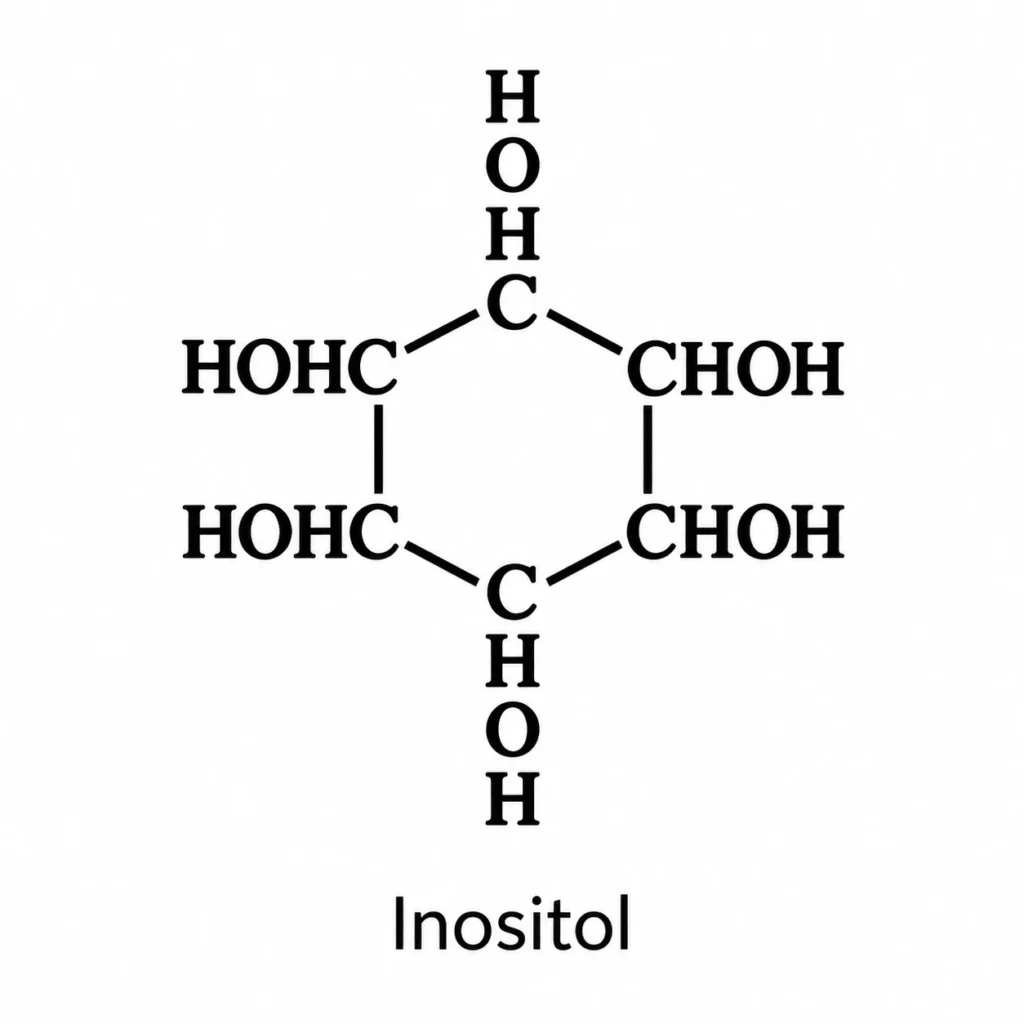
When it was first discovered, inositol was named vitamin B8, but it was later removed from the vitamin list once it became known that our bodies make it, too.
It has a structure similar to glucose, and among natural foods, it’s found mainly in nuts, grains, and citrus fruits; most multivitamins also contain small amounts of inositol.
Since inositol can be obtained from natural plants and already exists in our bodies, there’s no doubt it’s a safe, natural ingredient rather than a harmful chemical.
2. The Benefits of Inositol
All those inositol benefits you see online — are they all real?
Let’s check them against the evidence.
1) Insulin Resistance
To understand how inositol works, you first need a basic understanding of insulin resistance, the biggest cause of metabolic syndrome.
I’ll keep it simple.

Insulin is a hormone that lowers blood sugar, and when insulin is oversecreted for some reason, the protein that suppresses male hormones (SHBG) decreases.
Then, with no protein left to keep male hormones in check, male hormone levels go up.
(Women also produce small amounts of male hormones.)
In women, male hormones block ovarian maturation and ovulation, yet the body, unaware of this, keeps releasing only the ovulation-stimulating hormone (LH), telling the ovaries to ovulate.
When this happens, ovarian quality drops, the chance of pregnancy falls, and immature eggs build up, leading to polycystic ovary syndrome (PCOS).
Also, because insulin can’t work properly, gestational diabetes can develop, and male hormones can cause side effects such as hirsutism and acne.
“Now that we know how these conditions develop, let’s look at what the research says inositol can do.”
※ Supplements are not intended to diagnose, treat, cure, or prevent any disease. According to the U.S. FDA, only a drug can make that kind of claim.[1] Please use this for reference only.
2) Better Egg Quality and Pregnancy Prep (Recommended for IVF!)
The share of couples struggling with infertility has been rising recently.

Modern environmental pollution, rising stress, and people marrying later all play a part.
In particular, ovarian function drops sharply starting around age 35, lowering both the ability to ovulate and the ability to implant, so the chance of pregnancy goes down.
From age 35, you can check your risk factors with an ovarian reserve test (AMH), and depending on the results, you may also prepare for IVF.
In the U.S., IVF success rates (live births per egg retrieval, using a woman’s own eggs) are about 53% under age 35, about 40% at 35–37, and about 26% at 38–40, so the earlier you try, the higher the success rate.[2]
IVF is a procedure in which eggs are retrieved from the ovaries and fertilized with sperm outside the body; these days, ovulation-inducing medications are used to retrieve 10–15 eggs at once.
The embryos that are successfully fertilized are then transferred back into the uterus.
(Because so many eggs come out at once, you see a lot of fraternal twins these days.)
But when ovarian function is low, even with ovulation-inducing medications, fewer eggs can be retrieved.
And because the eggs don’t mature properly, the chance of fertilization drops.
That’s why, during IVF, women take inositol, which is known to improve egg quality, to retrieve healthy eggs and raise the chance of pregnancy.
Below is a study in women with low ovarian function that looked at how inositol affects their eggs.[3]
No need to read the whole tough paper — I’ll sum it up for you.

38 women, taking it consistently for 3 months
Group A: inositol 4g + folate 400mcg
Group B: folate 400mcg alone
To sum up just the results:
- Fertilization rate up 3%
- Pregnancy rate up 3%
- Grade 1 embryo rate up 6%
- Mature (MII) egg rate: 80.5% vs. 66.6% — the one difference that was statistically significant
Group A, which took inositol 4g and folate 400mcg, showed better results.
The study group was small and the differences weren’t large, so broader research seems necessary, but if you’re older and your AMH comes back low, taking inositol for about 3 months seems like a way to raise your chances, even slightly.
IVF isn’t as simple as it sounds.
Among people I know who’ve actually gone through it, many say it’s truly painful.
If it fails, you have to get the shots and the egg retrieval all over again, and since you never know when you’ll get pregnant, it’s a very hard process both financially and emotionally.
If it can raise the odds of a successful outcome even a little, I think inositol is worth a try.
If you’re having trouble getting pregnant or preparing for IVF, how about taking inositol 4g consistently for about 3 months?
※ Supplements are not intended to diagnose, treat, cure, or prevent any disease. According to the U.S. FDA, only a drug can make that kind of claim.[1] Please use this for reference only.
3) Polycystic Ovary Syndrome (PCOS)

PCOS is a very common endocrine disorder found in about 10% of women.
For reasons like insulin resistance, the number of immature eggs in the ovaries increases, and because ovulation doesn’t happen normally, periods become very irregular, and some women get their period only a few times a year.
Symptoms like abnormal bleeding can also appear.
Even with PCOS, if you time ovulation well, getting pregnant isn’t a problem.
That was the case for us, too.
In fact, there are quite a few studies on inositol’s benefits that report improvements in PCOS.

In one study, 42 women with PCOS were split into two groups for about 3–4 months (12–16 weeks).[4]
Group A: inositol 4g + folate 400mcg
Group B: folate 400mcg alone
The result: about 7 out of 10 women in Group A ovulated, compared with only about 2 out of 10 in Group B.
Progesterone, a hormone that rises after you ovulate, also went more than twice as high in Group A.
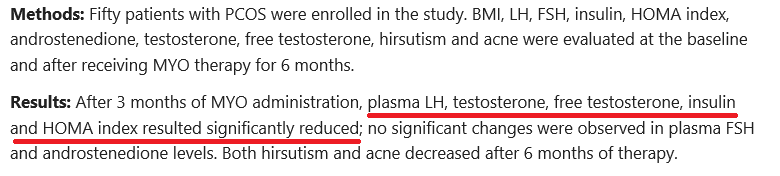
In a second study, when 50 women with PCOS took 4g of inositol and 400mcg of folate a day for 6 months,[5]
male hormone levels went down, the ovulation-stimulating hormone (LH) went down, and insulin levels improved.
These benefits are thought to come from inositol helping with signaling when hormones like insulin act on cells.
※ Supplements are not intended to diagnose, treat, cure, or prevent any disease. According to the U.S. FDA, only a drug can make that kind of claim.[1] Please use this for reference only.
4) Hirsutism, Acne, Weight Gain, and More
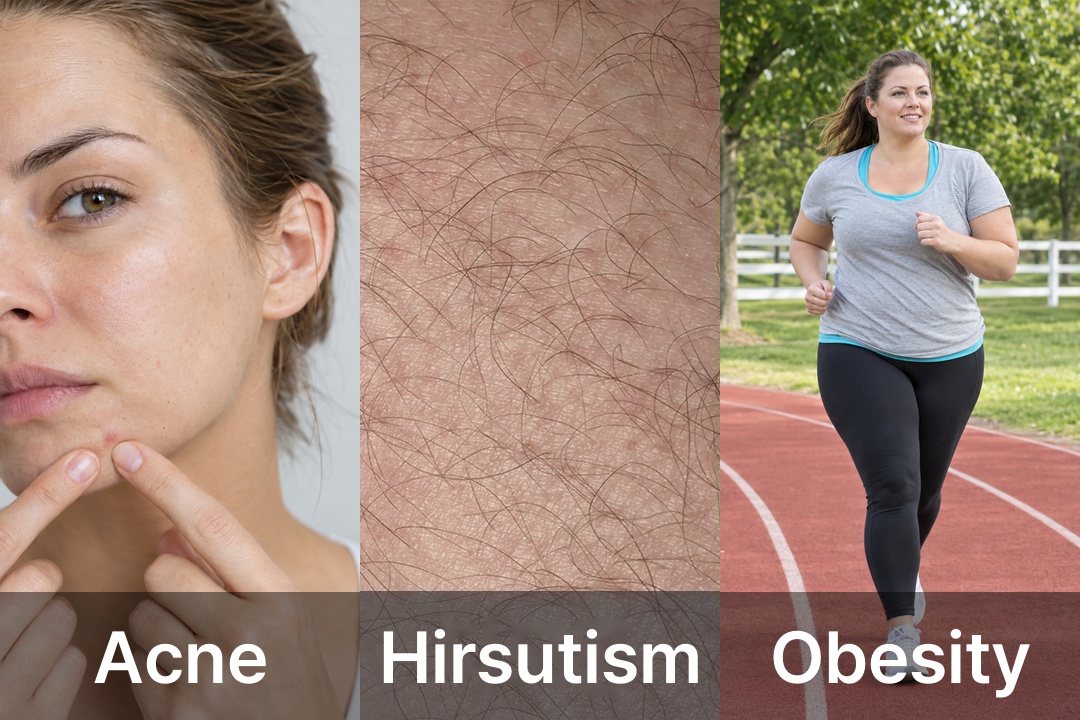
If you have PCOS or insulin resistance, increased male hormones can cause symptoms like hirsutism, acne, and weight gain.
Likewise, when women took inositol 4g and folate 400mcg for 6 months, acne improved, hirsutism improved, and it was reportedly effective at lowering cholesterol, too.[5]
※ Supplements are not intended to diagnose, treat, cure, or prevent any disease. According to the U.S. FDA, only a drug can make that kind of claim.[1] Please use this for reference only.
5) PMS (Premenstrual Syndrome)
Premenstrual syndrome (PMS) refers to a range of symptoms before your period, such as irritability, anxiety, and breast tenderness.
There’s research showing that inositol can also help people with PMS.[6]

To sum up the paper, when participants took 3.6–12g of inositol for 6 months and PMS symptoms like anger, depression, headaches, insomnia, and fatigue were evaluated, premenstrual dysphoric disorder symptoms decreased.
Also, no notable side effects were reported even at 12g of inositol.
※ Supplements are not intended to diagnose, treat, cure, or prevent any disease. According to the U.S. FDA, only a drug can make that kind of claim.[1] Please use this for reference only.
3. Side Effects of Inositol?
Taking 4g of Inositol Long-Term Caused No Side Effects
There are already many studies on inositol’s benefits, but the main reason people hesitate seems to be reviews about side effects.
According to “Inositol safety: clinical evidences,” a study on the safety of inositol, there were no notable problems even at up to 12g of inositol.[7]
Because it’s taken in naturally and is water-soluble, most of it reportedly leaves the body even if you take too much.
Even at up to 18g a day for 3 months, there were reportedly no notable symptoms other than gas, so taking about 4g of inositol consistently doesn’t seem likely to cause any particular problems.

Looking through the various questions posted about inositol side effects, the things people worry about most were:
① I developed abnormal bleeding
② My cycle became irregular
③ I have headaches, dizziness, or nausea
Those came up the most.
Side effects ① and ② have never been properly reported, and no causal link has been established.
In my opinion as a pharmacist, the main customers looking for inositol are people who already have PCOS or irregular cycles, so compared with other supplements, more of its customers already had abnormal bleeding or irregular cycles to begin with, and that may be why those reviews come up so often.
After all, when you start a new supplement, it’s usually the first thing you suspect when something goes wrong.
There are studies showing inositol can actually help with abnormal bleeding and regulating your cycle, but nothing showing it causes those problems.
* This is my personal opinion; everyone’s body is different, so side effects can vary too.
Bottom Line
There are no studies showing serious side effects from taking about 4g of inositol long-term.
I also took it consistently before getting pregnant without any problems, and my cycle actually became much more regular.
※ Supplements are not intended to diagnose, treat, cure, or prevent any disease. According to the U.S. FDA, only a drug can make that kind of claim.[1] Please use this for reference only.
4. Recommended Inositol Dose and Duration
Inositol 4g + Folate 400–800mcg, for 3+ Months
Once you’ve decided to take inositol, what matters is the dose.
Most studies on inositol’s benefits are based on taking 4g of inositol a day for 3 months, so taking 4g a day is likely what will produce meaningful results like those above.

To give you a sense of how much 4g is: if you take inositol as tablets, each tablet is 500mg, so you’d need to take about 8 tablets.
I suspect the indigestion and nausea some people report may come from taking too many pills.
These days there are powder products, and in terms of digestion and absorption, powder will probably be easier to take.
Most powders come in 2g packets, and recently I’ve also seen products with 4g per packet.
Taking 4g in one go would probably be more convenient.
Folate is an essential nutrient for forming the baby’s neural tube (brain, spinal cord, and more), so you should definitely supplement it before and during pregnancy.
Usually, you start preparing before pregnancy, and while the studies above used 400mcg of folate, that’s the basic amount, so if you haven’t been taking folate at all and want to raise your levels starting 3 months ahead, taking 600–800mcg of folate is also a good idea.
Rather than plain folate, I recommend naturally derived folate such as lemon folate.
To sum up, I recommend taking 4g of inositol a day and 400–800mcg of folate consistently for 3 months or more.
※ Supplements are not intended to diagnose, treat, cure, or prevent any disease. According to the U.S. FDA, only a drug can make that kind of claim.[1] Please use this for reference only.
5. Inositol Supplement Comparison and Picks
I chose products mainly by their Amazon search ranking for “inositol,” and picked only one representative product from groups of similar products.
1) Comparing Forms

Bottom line: for taking 4g a day, choosing a powder product is the BEST option.
2) Comparing Content and Ingredients
I wanted to compare every product on the market, but since the table is small, I picked only top-selling products with distinctive features.

* Prices are based on 3 months, the minimum recommended period for taking inositol.
They may vary by site, but I calculated them objectively, factoring in shipping, coupons, promotions, and other costs.
There may be slight differences.
What matters when choosing a product are these three things:
1. Inositol content and origin
2. Type of folate
3. Price
Among inositol powder products, there was no big difference in daily serving or ingredients.
The excipients differ slightly, but they aren’t ingredients with research behind them, and even where they’re needed, the amounts are small, so comparing just the inositol was enough.
One thing to watch out for, though: many products with 2g per packet and 30 packets per box are only a 15-day supply, not a full month, at a daily dose of 4g.
Products with 2g of inositol per packet say “take 1–2 times a day.”
Since most studies used 4g, I recommend taking 2 packets of 2g products.

If you want to shop smart, I recommend carefully weighing price against inositol content.
The most important factors are inositol content and origin, but most products use raw materials from the same few suppliers, so quality is similar; comparing prices is probably the smartest choice.
Comparing prices based on inositol content alone, the product with 4g per packet is the best value.
I also like that you only take it once a day.
In terms of quality, too, its folate isn’t ordinary synthetic folate but naturally derived lemon folate, so pregnant women can take it with more peace of mind.
(* This isn’t to say ordinary synthetic folate is bad.)
Folate is something you need to take consistently over a long period, from 3 months before pregnancy through week 13 of pregnancy.
Since even small amounts of an ingredient can have a cumulative effect over long-term use, I recommend naturally derived folate, which is known to be safer.
The 4g-per-packet product above has good inositol content and origin, and the price seems reasonable.
It’s also one of the few products that use naturally derived folate.
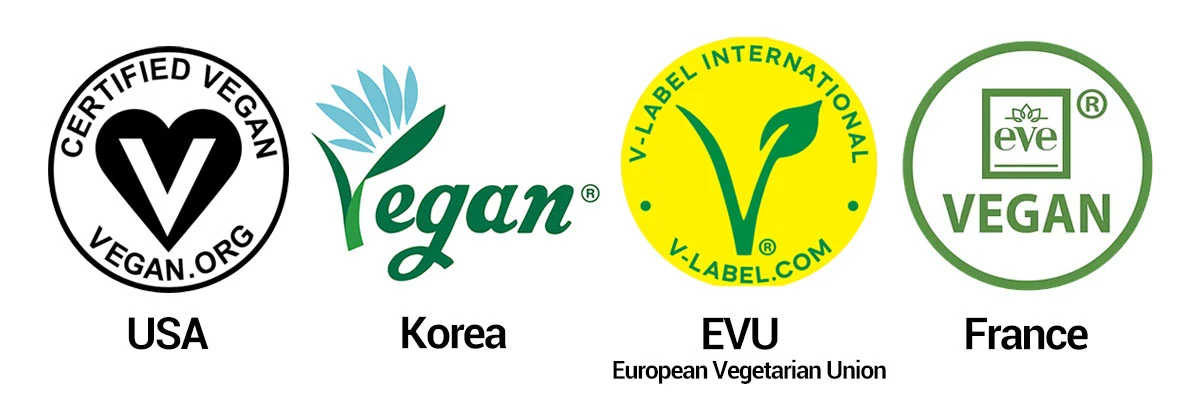
Beyond that, a product that has even earned vegan certification, free of chemical and animal-derived ingredients, would be even safer for women to take.
In general, vegan certification includes:
- Review and evaluation of the product’s ingredients
- Verification of the production process
- Confirmation of whether animal testing was done
To be certified, a product has to meet the certifying vegan organization’s very strict standards and requirements, and vegan certification serves as a way to prove trust in the manufacturing process and plant-based nutritional value.
These vegan-certified products display a “vegan certification mark” where they’re sold or include “vegan” in the product name, so you can easily identify certified products.
3) Top 3 Inositol Supplements
① Brand C Double Up Inositol ★★★
: OO Inositol 4g / 30 packets
- Price: $32.14
- Content: 4,000mg inositol / 4g
- Folate: lemon folate 600mcg
- At 4g a day: 1 packet a day / 30-day supply
- Vegan-certified product
- Where to buy: online
Comparing prices by daily serving, the “Double Up Inositol” product with “4g of inositol” is the best value.
It also contains plenty of folate, so I recommend it.
Reviews and ratings check out well, too.
② Brand A
: OO-sitol / 60 packets
- Price: $27.07
- Content: 2,000mg inositol / 2g
- Folate: regular folate 200mcg
- At 4g a day: 2 packets a day / 30-day supply
- 3-month price: $71+
- Where to buy: the brand’s own online store
Each packet contains 2,000mg of inositol, but with 60 packets in total, you can take 2 packets a day for 30 days.
It’s a shame, though, that the folate is a bit low even with 2 packets (400mcg of folate total).
This product has a huge number of reviews.
③ Brand D
: TeOO OOsimsitol / 30 packets
- Price: $25.00
- Content: 2,000mg inositol / 2g
- Folate: active folate 400mcg
- At 4g a day: 2 packets a day / 15-day supply
- 3-month price: $136+
- Where to buy: the brand’s own online store
Since you take 2 packets a day, you get 4g of inositol and 800mcg of folate in total, but because you take 2 packets a day from a 30-packet box, it only lasts 15 days, so I don’t recommend it for the price.
It does have the advantage of active folate, so you don’t need to take active folate separately while preparing for pregnancy!
6. Final Summary
1) There is meaningful research on inositol for pregnancy prep, PCOS, and more.
2) No side effects of inositol have been reported.
3) Take 4g of inositol + folate consistently for 3 months or more.
4) Most inositol raw materials come from the same few suppliers, so there’s no big difference in quality.
5) Since quality is about the same, aim for 4g of inositol a day, compare prices carefully, and buy smart.
6) What matters when choosing inositol: ① inositol content and origin, ② type of folate, ③ price
7) For folate, I recommend naturally derived folate.
* A lot of you have asked for the name of Brand C’s product, and I hope you’ll understand that I can’t mention it directly.
Just search for “Double Up Inositol” and choose a product that fits the “3 ways to choose inositol” I shared.
Reference
[1] U.S. Food and Drug Administration. Questions and Answers on Dietary Supplements.
[2] Society for Assisted Reproductive Technology (SART). Final National Summary Report, 2023.
*This content has not been evaluated by the U.S. Food and Drug Administration (FDA). This product is not intended to diagnose, treat, cure, or prevent any disease.