Hi, I’m Pharmacist Mom. I still remember one patient in their 40s.
They came in asking for an antacid right away and I ended up stopping them at the register to give them some tough love.
“How many years has it been now? If you keep drying up your stomach acid just so it won’t hurt right now, eventually your stomach will be so worn out you won’t be able to digest a single spoonful of food.”
For years, this patient had struggled with acid reflux symptoms, suffering through burning chest pain every night.
They kept antacids stocked by the box and reached for one by reflex every time their stomach started to burn.
I imagine the situation for many of you who clicked on this post isn’t all that different.
It hurts right now, and you feel like you have to do something.
I know that desperation to reach for medicine better than anyone.
But as a pharmacist let me say this firmly.

Constantly forcing stomach acid down artificially is a risky treatment that tries to put out the fire in front of you while paralyzing the normal function of your stomach itself.
It isn’t a proper way to treat acid reflux symptoms.
With long-term use, it goes beyond simple indigestion: your stomach acid can completely lose its germ-killing function, planting the seeds for even worse suffering, like atrophic gastritis or serious intestinal bacterial infections[1][2].
The real reason you’ve been stuck in the cycle of acid reflux for years,
even while living on acid reflux medication.
Today, I’m going to lay out that anatomical truth without holding anything back.
1. The Real Anatomical Reason Your Acid Reflux Isn’t Healing

When their stomach burns, many people habitually reach for acid reflux medications like antacids or acid reducers.
*Antacids: relieve symptoms by neutralizing stomach acid
*Acid reducers: relieve symptoms by suppressing stomach acid[3]
That’s because they mistakenly believe that if they just stop the acid, the burning pain in their esophagus will stop too.
But from a pharmacist’s point of view, let me say this firmly.
Neutralizing and suppressing stomach acid with medication is, in the long run, something that completely wrecks your digestive function.

Stomach acid plays a key role in digesting the food we eat and killing outside germs.
If you suppress it artificially, your digestion eventually slows down and you end up struggling with chronic indigestion.
Undigested food stays in the stomach and rots, and the gas it produces pushes stomach acid back up again, starting a terrible vicious cycle.
So why is it that acid reflux, of all things, never seems to heal and keeps tormenting people for life, even when they take acid reflux medication consistently?
The reason is simpler than you’d think.
It comes down to the difference in the protective barrier between the stomach and the esophagus.
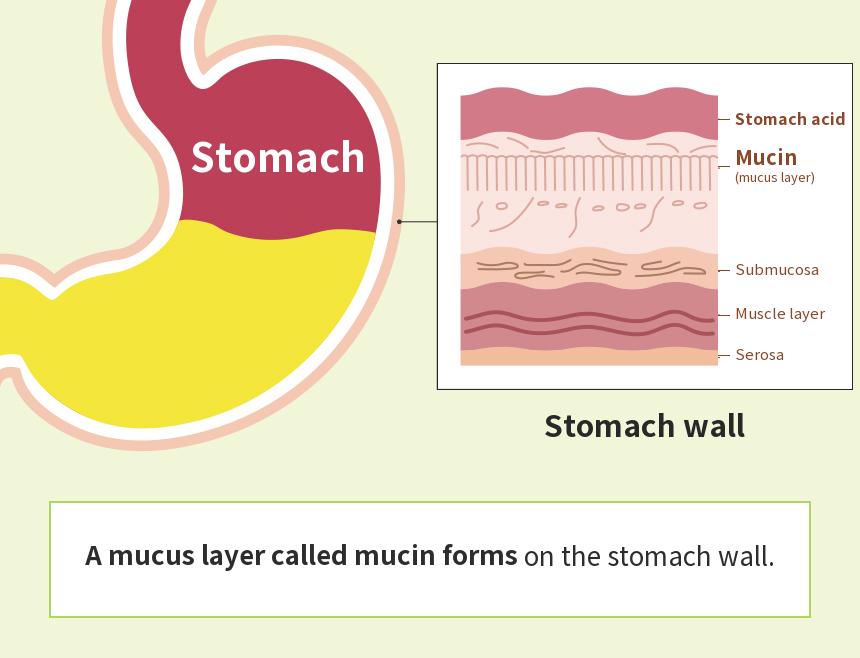
To protect itself from powerful stomach acid, your stomach constantly secretes a sticky mucus called mucin, coating the stomach wall layer upon layer[4].
But shockingly, the esophagus does not secrete
even 1% of the mucin needed to defend against this acid.
The esophagus is a very delicate organ that was never built to withstand stomach acid in the first place.
So even if just a tiny amount of acid or gas splashes up into the esophagus, the esophageal lining suffers terrible damage, like raw skin getting burned.
Once damaged, the delicate esophageal lining easily becomes inflamed with even the slightest irritation.
And this is the real anatomical reason
you can’t break free from the cycle of esophagitis for years, even while living on antacids.
2. Why the Reflux Medicine You’ve Seen in TV Ads Actually Works
At the pharmacy the reflux medicine people ask for most is by far the one you’ve seen on TV. It’s also the one that brings the fastest relief.[5]
The reason it works is simple.
It targets exactly the anatomical limitation I just described.
It doesn’t stop at simply suppressing stomach acid.
Two actions happen at the same time.

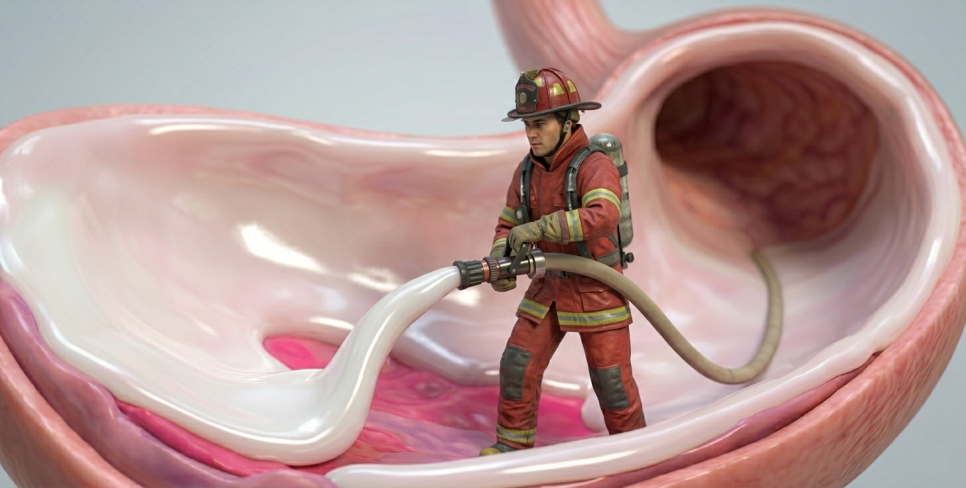
First, it puts a physical lid on top of the stomach contents so acid can’t splash up into the esophagus[6].
Second, it coats and protects the esophageal lining that’s already been burned and worn down by acid[7].
In other words, (1) a physical barrier that keeps acid from coming up,
and (2) a mucosal coating that covers the damaged esophagus.
This double-action mechanism, with both actions happening at once, is medically the most reliable and fundamental principle.
So why not just chew those tablets every day?
Absolutely not.
Some antacids contain aluminum.
When long-term overuse causes aluminum to accumulate in the body, it may exert neurotoxic effects, and researchers have raised the possibility of a link to dementia and other neurological disorders since the 1970s[8].
Above all, as I warned earlier, continuously suppressing stomach acid leads to irreversible conditions like atrophic gastritis or chronic bowel disease[2].
You can’t depend on medication for the rest of your life.
So what should you do?
There’s only one way.
Bring over the double-action mechanism as is,
but replace it with plant-based ingredients
that won’t wreck your stomach even with long-term use.
The idea is to use mucilage extracted from sources like seaweed to build a physical barrier that keeps acid from coming up, and to coat the damaged esophagus.
It won’t work instant magic the way medicine does, but at the very least, it can break the vicious cycle of depending on medication for life and suffering from indigestion.
Anatomically, it’s the most common-sense, fundamental way to manage it.
3. How to Spot the Fakes Among So-Called Acid Reflux Supplements
But there are hundreds of products on the market advertised as supplements that are good for acid reflux.
To pick a real product that properly recreates the double-action mechanism of the medicine, don’t look at the flashy marketing on the front.
Look at the ingredient list on the back of the product.
There are exactly two clear criteria to check.
Step 1: Does the Formula Build a Physical Barrier?

The key plant-based ingredient that builds a physical barrier is sodium alginate, a mucilage extracted from seaweed.
But this is where a lot of people get fooled.
Just because a product contains alginate alone doesn’t mean it forms a barrier that blocks reflux.

It must also contain sodium bicarbonate, a gas-producing agent that floats the alginate on top of the stomach contents,
and calcium carbonate, which firms up that floating layer into a solid raft.
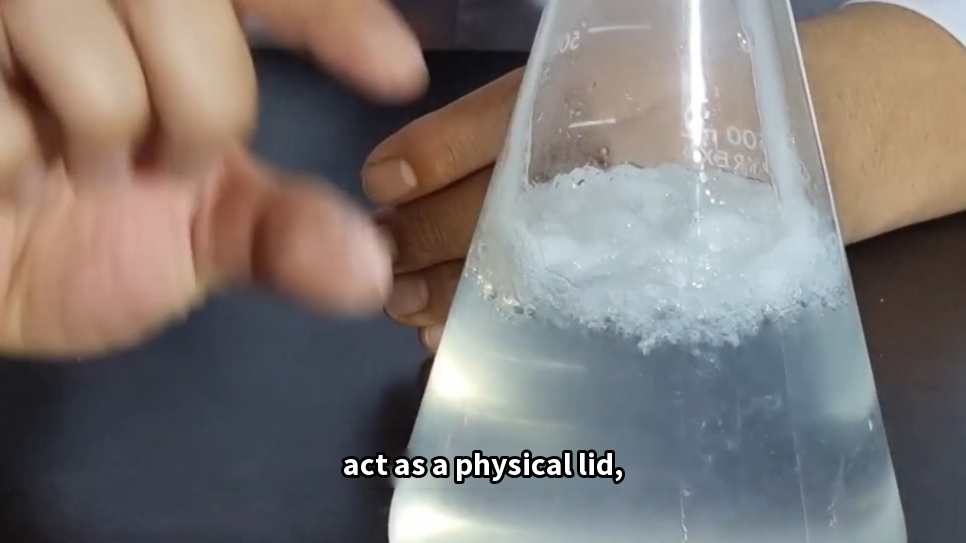
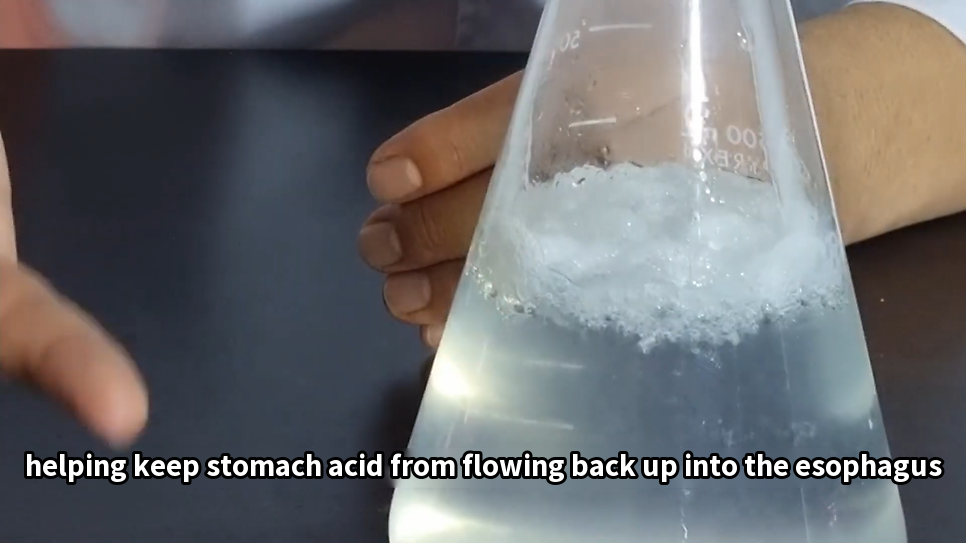
Only when these three ingredients come together is a complete physical barrier formed that keeps acid from splashing up into the esophagus[6].
If even one is missing, it’s only doing half the job.
Step 2: Does It Contain Ingredients That Support the Stomach Lining?
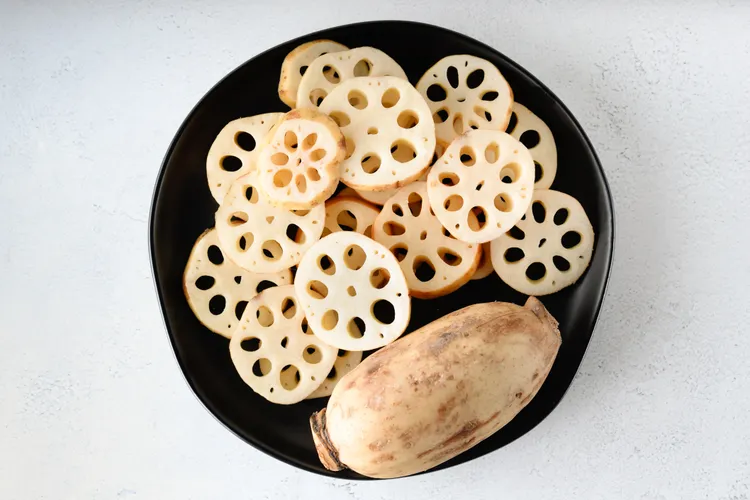
Note: Mucin is what gives foods like lotus root their naturally slippery, sticky texture. It helps coat and protect the lining of your stomach and esophagus.
Earlier, I told you the esophagus doesn’t secrete any mucin at all to defend against stomach acid.
That’s why it’s essential to supply mucin from the outside to give the esophagus an artificial protective layer, and the safest way to get it is directly from food.
A classic example is mucin, which comes from the slimy part of yam.[9]
On top of that, licorice extract is widely used as a supplement ingredient for stomach health to help protect the already-damaged stomach and esophageal lining and help soothe irritation, so it’s a good idea to check for this ingredient when choosing a product, too[10].
So what would I recommend?
By now, that’s probably what you want to ask.
Since it’s something that goes into your body every day, it’s essential to check it with your own eyes rather than relying only on someone else’s recommendation.

The market is flooded with acid reflux supplements advertised as good for the esophagus, but products that properly combine the two mechanisms I mentioned, a physical barrier and a mucosal coating, are few and far between.
Earlier, I said that when two mechanisms work at the same time, it’s called double action.
In fact, double action is the concept getting the most attention in acid reflux supplements lately, and products that apply it properly are called weshield double action supplement.
So you don’t need to overthink it.
When choosing an acid reflux supplement, look for one that works in two ways at the same time:
- Physically blocks reflux
- Protects and restores the stomach and esophageal lining
Only this double action can help you break free from the cycle of discomfort that keeps coming back.
So if you’re not sure which product to choose, I recommend putting double-action stomach supplements, not just ordinary stomach supplements, at the top of your list.
If you check that a product carries the name weshield double action supplement and contains all four key ingredients experts emphasize, sodium alginate + carbonates (calcium carbonate, sodium bicarbonate) and mucin + licorice extract, finding the right product will be much easier.
A life of suffering while depending on antacids for years.
Now it’s time to break that vicious cycle.
This isn’t a problem you can solve just by suppressing stomach acid.
Acid reflux is a condition you manage, not one you cure once and for all.
Even if you don’t have symptoms right now, don’t ignore it.
The key is to block acid reflux, help restore the damaged esophagus and stomach, and manage it in a sustainable way.
Improving your eating habits and using the right treatment can be enough to improve your stomach and esophageal health[3], so I hope you start taking care of your esophagus today and enjoy healthy days ahead.
Thank you for reading this long post today.
References
[10] National Center for Complementary and Integrative Health (NCCIH). Licorice Root.
*This content has not been evaluated by the U.S. Food and Drug Administration (FDA). This product is not intended to diagnose, treat, cure, or prevent any disease.