Today, I want to talk about hyperlipidemia (high cholesterol), a condition that may not show any obvious symptoms right now, but needs steady, proper care because, if left alone, *lipids can clog your blood vessels and lead to serious cerebrovascular disease.
*Lipids: a term that includes cholesterol and triglycerides
When I explain to patients diagnosed with hyperlipidemia why they need medication, this is the question I hear most often.
“I heard once you start cholesterol medication, you have to take it for the rest of your life. Can’t I just not take it?”
More people than you’d think say they can’t bring themselves to take medication because of the worry that once you start cholesterol medication, you’ll have to take it forever, or because of concerns about side effects.
But if you understand the types of cholesterol medication, their side effect risks, and what to watch out for, you can take them without side effects.
This post draws on the latest ACC/AHA guideline on the management of dyslipidemia[1] and is written to be professional but as easy as possible for anyone to follow, so if you read to the end, I’m sure it will help you.
* Table of Contents *
1. What Is Hyperlipidemia?
2. Why Hyperlipidemia Is Dangerous
3. How Cholesterol Medications Work & Their Side Effects
4. Supplements for High Cholesterol
5. Final Summary
This post is quite long, so if you’re only curious about [How to Manage High Cholesterol the Right Way], focus on sections 3 to 5.
If you have more questions about this post, leave them in the [comments], and I’ll answer whenever I have time.
1. What Is Hyperlipidemia?
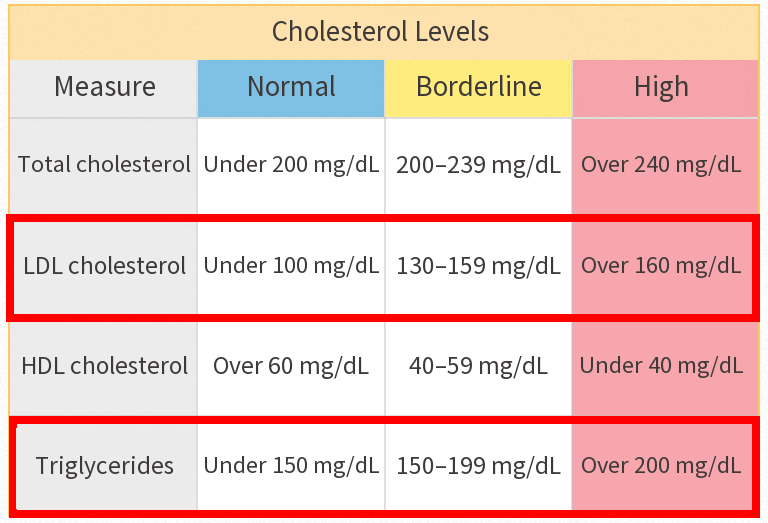
Hyperlipidemia is a condition in which lipids (fats) in the blood, including cholesterol and triglycerides, are elevated, and in most cases it means the levels are high.
① High total cholesterol (includes all three below)
② High LDL cholesterol
(= bad cholesterol)
③ Low HDL cholesterol
(= good cholesterol)
④ High triglycerides

In other words, hyperlipidemia comes with high cholesterol levels and high triglyceride levels.
Put simply, it’s a state where there’s too much bad fat and not enough good fat.
Hyperlipidemia is a cause of cardiovascular disease, the leading cause of death in the U.S., and heart disease alone takes about 680,000 American lives every year.[2]
“So if there’s too much fat in my blood, can’t I just eat less fat from now on?”
Here’s what a lot of people overlook.
Managing your diet is definitely necessary, but the truth is, it’s hard to treat hyperlipidemia with diet alone.

That’s because the cholesterol you get from food makes up only 20% of all the cholesterol in your body, while the cholesterol your liver makes on its own accounts for as much as 80%.
Many people focus on changing their diet first when their cholesterol is high, but that isn’t the only answer.
Eating animal fat, lack of physical activity and exercise, obesity, aging, smoking and drinking, and stress are named as the main factors behind hyperlipidemia, and genetic factors, as in familial hypercholesterolemia, can also cause it.
2. Why Hyperlipidemia Is Dangerous
Hyperlipidemia has no particular noticeable symptoms, so in most cases it progresses without you even knowing.
That’s why the only way to know whether you need treatment is a blood test.
“So why does hyperlipidemia need so much attention?”
Even while it causes no symptoms, hyperlipidemia quietly damages your blood vessels and can lead to all kinds of deadly complications, so it needs special care.
A typical example: when fat levels in the blood stay high because of hyperlipidemia, cholesterol builds up on the blood vessel walls and forms clumps, and as these gradually grow, they narrow the passage that blood flows through.

When blood vessels narrow, blood pressure rises and blood doesn’t flow smoothly, leading to complications like cardiovascular disease and cerebrovascular disease, the leading causes of death worldwide.
In fact, the factors that have the biggest impact on developing cardiovascular disease are
1. High blood pressure
2. Hyperlipidemia
3. Smoking
These three, and if you have all of them, you need to work even harder to prevent heart and brain blood vessel disease that can strike suddenly.
When the cholesterol clumps that have built up on blood vessel walls burst, the result is angina and heart attack, and they’re also a cause of stroke and coronary artery disease.
It’s also closely linked to high blood pressure and diabetes.
“Just hearing about these diseases is scary, isn’t it?”
So if you’ve been diagnosed with hyperlipidemia, don’t leave it alone just because nothing seems wrong right now.
Regular checkups to prevent cardiovascular disease and keep your cholesterol in check are essential.
3. How Cholesterol Medications Work & Their Side Effects
Many people are especially reluctant to take cholesterol or blood pressure medication.
Caught up in the idea that once you start, you can never stop, some people quit their medication on their own, and they trust poorly supported information like “I heard from so-and-so that…” more than they trust experts.
What if your doctor recommends medication and you stop taking it out of stubbornness?
Cholesterol will gradually clog your blood vessel walls, and by the time complications strike, it’ll already be too late.
On top of that, even if you have side effects, you shouldn’t just stop your medication without your doctor’s instructions.
Cholesterol medications are among the most commonly used drugs, so try not to worry too much, follow your doctor’s instructions, and focus on managing your cholesterol.

If you’ve been diagnosed with hyperlipidemia, your doctor will decide on medication based on your level of risk.
The primary goal is controlling your LDL, the bad cholesterol, and the ultimate goal is preventing cardiovascular disease.

If you’ve been prescribed cholesterol medication, there’s a 99% chance it’s a statin (-statin).
Statins have relatively few side effects, and their LDL cholesterol-lowering effect is clear, which also makes them excellent at preventing cardiovascular disease, so they’re used as the first-line treatment for hyperlipidemia.
Here are the common ingredient names and brand names.
- Atorvastatin (Lipitor, etc.)
- Rosuvastatin (Crestor, etc.)
- Pitavastatin (Livalo, etc.)
So how exactly do statins treat hyperlipidemia?
How Statins Work

In our bodies, an enzyme called HMG-CoA reductase makes cholesterol and CoQ10.

Statin medications block HMG-CoA reductase, the enzyme that makes cholesterol.
In other words, they stop cholesterol from being made and lower the cholesterol in your blood.

Blocking HMG-CoA reductase stops the formation of *mevalonate,
*Mevalonate: an intermediate substance that appears during cholesterol production
and when mevalonate isn’t made, the liver produces less LDL cholesterol, which helps clear LDL from the blood.
It gets rid of the bad LDL already in your body and keeps more from being made.
Put simply, it’s an effective medication that blocks the path cholesterol is made through, keeping cholesterol production down.
“But…”
Statins are excellent at lowering lipids and preventing cardiovascular disease, but they have two main downsides.


Problem 1) They also block the production of coenzyme Q10 (= CoQ10), not just cholesterol, raising concerns about a higher risk of heart disease and high blood pressure
Problem 2) Higher liver enzyme levels
These are the possible downsides.
Statin medications are effective at blocking cholesterol production, but their biggest downside is that they also reduce the production of CoQ10, which is made through the same pathway.
Statin Side Effect 1) CoQ10 Deficiency

CoQ10 is a very important nutrient found in high concentrations in the heart and liver, where it produces energy and clears harmful free radicals.
When CoQ10 runs low, energy production in the heart and elsewhere doesn’t go smoothly, which can cause problems with heart function, and free radicals aren’t cleared, so damage builds up in blood vessels and liver cells.

In one study, taking a statin for 30 days lowered blood CoQ10 levels by 49%, because statins block not only cholesterol but also CoQ10 production.[3]
If you take cholesterol medication long term and become low in CoQ10, your risk of cardiovascular disease like heart failure and high blood pressure goes up,[4][5][6][7][8][9]
and this means energy production goes wrong, which can lead to chronic fatigue, and your antioxidant capacity drops, which can speed up aging.[10][11]

One of the serious side effects of statins is rhabdomyolysis, a severe breakdown of muscle (though it’s very rare).
A study published in The American Journal of Cardiology reported that taking CoQ10 reduced the intensity of statin-related muscle pain by about 40%.[12][13][14]
It isn’t required yet, but many pharmacists, including me, recommend that people taking statin cholesterol medication long term take a CoQ10 supplement along with it to make up the difference.
Statin Side Effect 2) Higher Liver Enzyme Levels

The second downside of statins is that they can cause higher liver enzyme levels.
Under U.S. FDA labeling for statins, liver enzyme tests are done before you start a statin, and again whenever your doctor thinks they’re needed.[15]
This also means it’s understood that statins can put a burden on the liver, so after starting cholesterol medication, it’s a good idea to talk with your doctor about checking your liver enzyme levels.
“If it’s bad for my liver, why should I take it?”
You might ask that, but the benefits for treating hyperlipidemia outweigh the downsides, so taking it is recommended.
If you’re taking a statin but are worried about your liver health, adding a liver-support supplement like milk thistle can help you manage your health a little more safely.
What Is Milk Thistle?

Milk thistle (= silymarin) is an ingredient that the NIH’s National Center for Complementary and Integrative Health notes has historically been used for liver disorders, and it’s known to protect liver cells through its antioxidant effects.[16]
In one study, liver enzyme levels that reflect liver cell damage (ALT and AST, also called GPT and GOT) dropped after 8 weeks of taking milk thistle,[17]
and it’s a very valuable ingredient that’s also used in medicines for treating liver disease.
Source: Hepatitis Monthly 2008;8(3):191-195

Milk thistle is mainly chosen by people with liver concerns, but there are also many studies suggesting that milk thistle can be expected to help improve cholesterol,[18]
and because its antioxidant effect can be expected to help protect blood vessels, it’s a nutrient you can expect to support your cholesterol management.
★ Summary ★ If You’re Taking Cholesterol Medication
Problem 1) Low CoQ10
→ Supplementing CoQ10 is a must, since it’s easily depleted
Problem 2) Higher liver enzyme levels
→ Taking milk thistle alongside is recommended
4. Supplements for High Cholesterol
As I’ve mentioned throughout, if you take cholesterol medication (a statin), you become low in CoQ10, which your heart and cells need to produce energy, so it’s a nutrient you need to take in extra.
To make up for easily depleted CoQ10, you’ll probably look carefully at everything from ingredients to how to take it, and be picky about which one you choose.
But will it really be 100% absorbed as you take it?
No matter how good a CoQ10 supplement you choose, it means nothing if your body can’t absorb it properly.
That’s why absorption rate has been getting attention lately as one of the factors in choosing supplements.
The higher the absorption rate, the more effective the results, and another advantage is that it cuts down on the inconvenience of older forms.
How to Choose CoQ10, Tip 1) Contains BioPerine
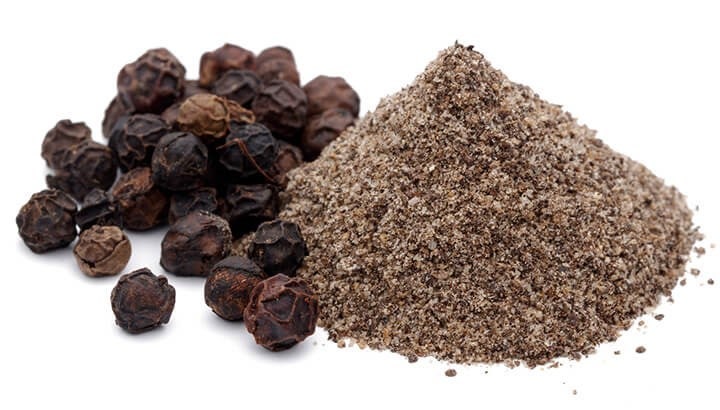
BioPerine is a natural bioavailability enhancer made from black pepper by processing piperine, the compound behind its spicy taste.
It helps increase the absorption of a wide range of nutrients.
BioPerine has generally been shown to boost nutrient absorption by 30% or more, and it’s an ingredient used in many products.
Because of this advantage, BioPerine is included in products like CoQ10, selenium, vitamin B, vitamin C, and curcumin to raise their absorption and bioavailability.
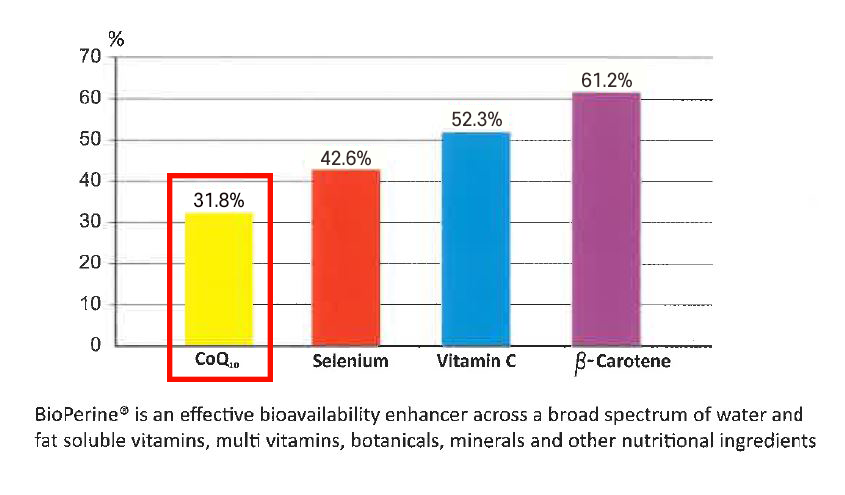
In a clinical trial comparing intake with BioPerine against intake without it, there was a meaningful difference in absorption.
When healthy adult men took CoQ10 together with 5 mg of piperine, compared with a group that took coenzyme Q10 alone, plasma CoQ10 levels rose by about 30%, and the change in absolute concentration was about 32% higher, a statistically significant difference.[19]
Because BioPerine helps raise coenzyme Q10 absorption like this, it’s important to check the ingredients and amounts on the package for BioPerine (black pepper extract).
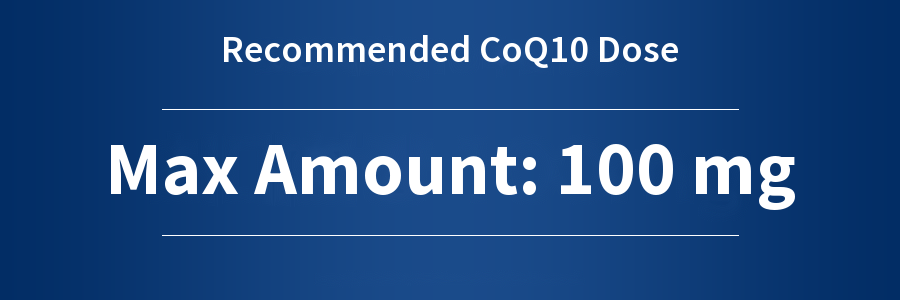
How to Choose CoQ10, Tip 2) The Maximum Amount, 100 mg
The amount of CoQ10 varies from product to product.
In particular, many products on the market contain a mere 10 mg of CoQ10.
But most clinical studies on CoQ10 showed meaningful effects based on taking 100 mg of CoQ10 a day.
Since 90 to 100 mg a day is generally considered a safe intake, I recommend taking a product that contains 100 mg of CoQ10 per day.
How to Choose CoQ10, Tip 3) Is the Country of Origin Disclosed?
CoQ10 is a raw material whose country of origin is rarely disclosed.
Most raw materials made in countries that aren’t preferred for food manufacturing don’t disclose their origin.
So if you look at CoQ10 products on the market, more of them than you’d think disclose the amount or purity but not the country of origin.
It’s fair to say they can’t disclose it.
On top of that, the purity of the raw material matters for CoQ10. If a product uses a low-purity raw material because of poor extraction quality, it contains impurities or extraction solvents, so it’s best to choose a high-purity raw material.
A trustworthy company clearly discloses CoQ10’s country of origin, along with its purity and amount.
Supplements are something you take long term, so it’s important to check carefully to make sure there are no problems.
In other words, a product that clearly lists its country of origin and purity is a product you can trust.
If I Had to Recommend a CoQ10 Product
There are a huge number of CoQ10 products on the market.
As the importance of CoQ10 has become widely known, CoQ10 supplements are now easy to find.
So if you’re going to take a supplement anyway, I most recommend a combination product that lets you take care of several things efficiently, rather than a single nutrient.
Recommendation 1) Is It a Milk Thistle CoQ10? ★

If you have hyperlipidemia, I recommend a dual-function product that combines CoQ10 and milk thistle.
As I mentioned earlier, statin medications that lower cholesterol 1) deplete CoQ10 and 2) can put a burden on the liver,
so as ingredients that pair well with cholesterol medication, I chose CoQ10 to replenish it and milk thistle, which can help support liver health.
If you’ve been taking cholesterol medication for a long time, it can’t help but put some burden on your liver, so you need to take care of your liver day to day.
What’s more, there’s research showing that when antioxidants like CoQ10 and milk thistle are taken together, an improvement in blood cholesterol can be expected, so I recommend it even if you aren’t taking medication.
Recommendation 2) Contains BioPerine
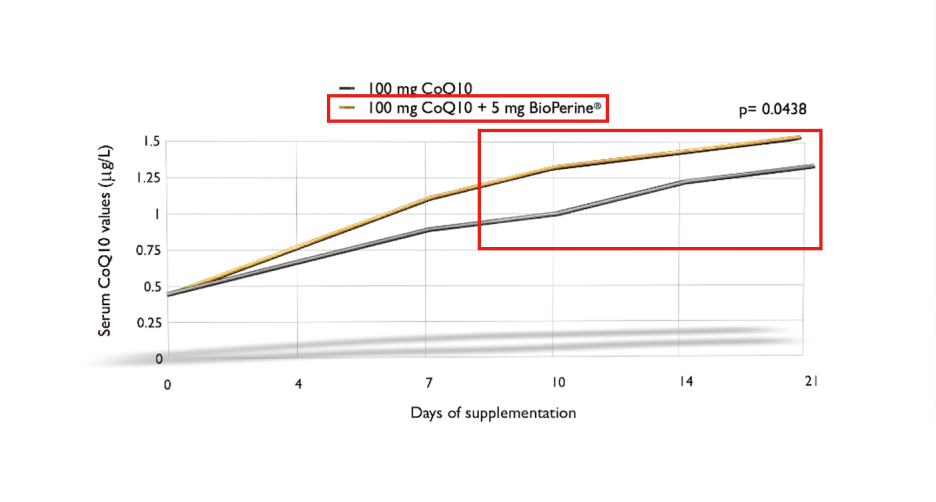
BioPerine’s main benefit is that it improves the bioavailability of nutrients.
It raises how much of the same nutrient your body absorbs, so you can expect a bigger effect.
Fat-soluble ingredients with low absorption, like CoQ10, are absorbed much more smoothly when taken with BioPerine.
So even among CoQ10 products with the same amount, a product that includes BioPerine may be more effective.
Recommendation 3) How Trustworthy the Raw Materials Are
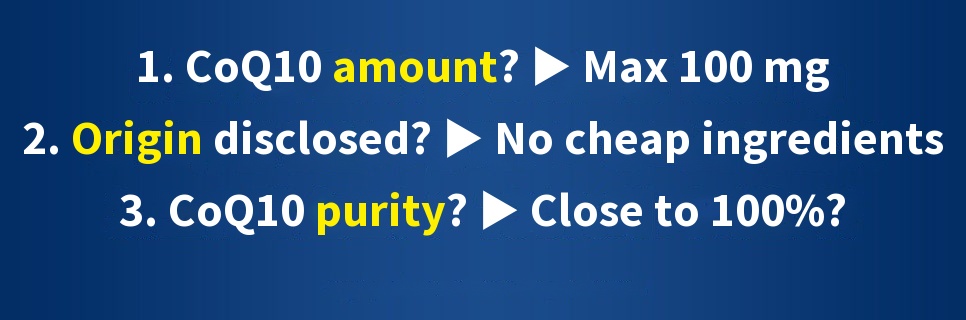
Beyond that, there are three more things to check.
Check the amount, country of origin, and purity of the raw materials, and make sure the raw materials come from a highly trustworthy source.
Check whether a product contains the maximum amount of 100 mg of CoQ10, uses high-quality milk thistle seeds, and avoids cheap raw materials by being a product that discloses its country of origin.
You should also check the purity of the CoQ10.
The closer it is to 100%, the higher the purity, so it’s wise to be suspicious of the purity of products that are too cheap.
★ Summary ★
Hyperlipidemia may have no symptoms right now, but it’s the starting point for serious cardiovascular disease.
You must manage it.
The management I most recommend, along with regular doctor visits rather than other supplements, is
Cholesterol medication
(statin) as prescribed
+ CoQ10 supplementation
+ diet and exercise
This is the most effective and safest approach.
5. Final Summary ★★★
1. Hyperlipidemia is a condition with abnormally high levels of fat in the blood.
2. It has no symptoms, and as blood vessels gradually narrow, the risk of cardiovascular disease rises.
3. Even if you work hard at diet and exercise, hyperlipidemia may not improve. ▶ Genetic causes
4. Statin medications are the most effective way to manage hyperlipidemia. (Lipitor, Livalo, etc.)
5. Statins are effective, but as side effects they can speed up CoQ10 deficiency and cause higher liver enzyme levels.
6. When taking cholesterol medication, Milk Thistle CoQ10, which combines CoQ10 and milk thistle, is the best-matched option for replenishing CoQ10 and supporting liver health.
7. When choosing a CoQ10 product, be sure to check for BioPerine, CoQ10 amount, country of origin, and purity.
Keep up the diet and exercise I mentioned above, and protect your body from hyperlipidemia.
If you have any other questions, leave them in the comments, and I’ll check and reply when I can.
Stay healthy, everyone.
Thank you.
★ One More Note
Many of you have personally reached out with words of support along with questions about products.
I’m truly grateful for that.
But because of my personal life and work, I’m sorry I can’t reply to everyone one by one.
When choosing a CoQ10 product, check
1. whether it’s a dual-function Milk Thistle CoQ10 product that pairs well with cholesterol medication,
2. whether it contains BioPerine, which improves CoQ10 bioavailability, and
3. the amount, country of origin, and purity of the raw materials,
and you’ll be able to pick a good product.

There are so many CoQ10 products out there, but if you search by these criteria, YoungLong Milk Thistle & CoQ10 looks like the best fit.
These are my personal selection criteria, chosen after weighing possible interactions with the cholesterol medication I’m currently taking, so please use them for reference only.
These days, more and more brands advertise supplements without showing that they meet the FDA’s cGMP standards, which require checks on a supplement’s identity, purity, strength, and composition,[20] so if you use the criteria above as a guide, you’ll be able to choose the right CoQ10.
Thank you.
References
*This content has not been evaluated by the U.S. Food and Drug Administration (FDA). This product is not intended to diagnose, treat, cure, or prevent any disease.