Hi, I’m Pharmacist Mom.
I break down the ingredients and mechanisms inside the medicines and supplements we take.
If you’ve ever searched for “the best ___ for hair loss,” you’ve probably seen ads like these at least once.
“Just use this, and your hair will grow back.”
“One bottle of this shampoo, and your hair loss worries are over.”
The problem is that these ads go beyond simple exaggeration.
They take advantage of how desperate people with hair loss feel to sell unproven products.
In fact, regulators have warned about false or exaggerated ads for hair loss cosmetics sold online, claiming treatment effects that cosmetics can’t deliver, like “promotes hair growth,” “prevents hair loss,” and “improves inflammation.”
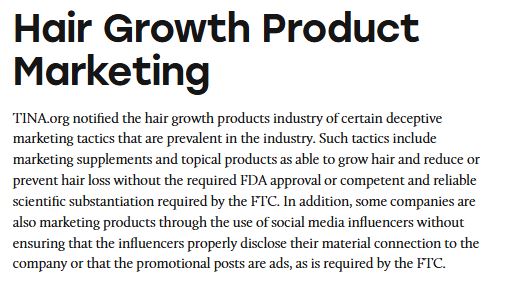
In the U.S., the nonprofit watchdog TINA.org has flagged the same problem.
It notified the hair growth product industry that marketing supplements and topical products as able to grow hair or prevent hair loss, without the required FDA approval or reliable scientific substantiation, is a deceptive tactic.
In other words, in the U.S., once a supplement or cosmetic claims to “grow hair” or “stop hair loss,” it is making a drug claim, and a drug claim needs FDA approval.
A product that hasn’t gone through that process shouldn’t be promising those results.
And this isn’t just a problem with a few cosmetics.
Look across the whole hair loss market, and you’ll find plenty of shampoos and scalp serums, and even supplements with biotin, brewer’s yeast, zinc, and collagen, advertised as if just taking them will stop your hair from falling out and grow new hair.
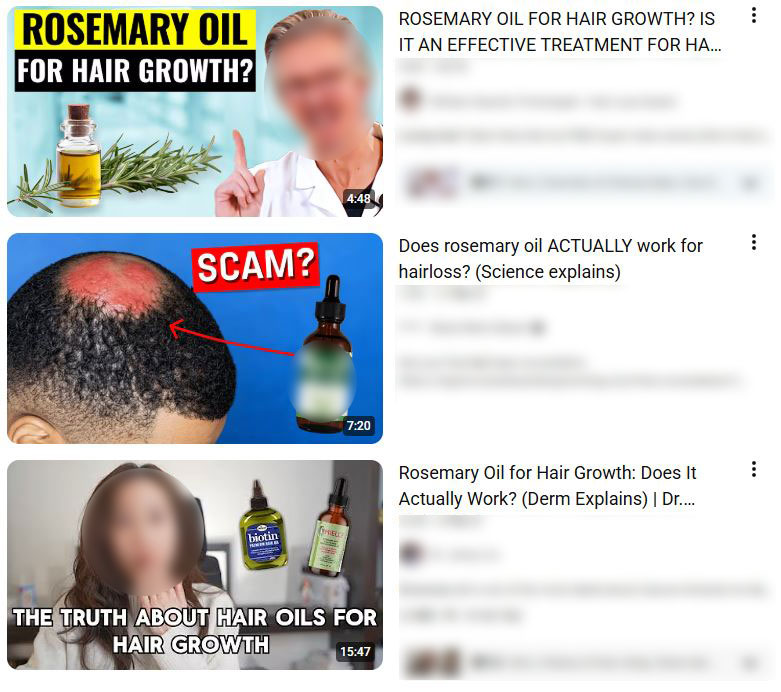
Home remedies like rosemary oil also had scientific evidence that was far too thin to convince me as a pharmacist, and hair loss shampoos and scalp serums costing hundreds of dollars made it hard to see results as clear as expected.
In the end, what matters isn’t celebrity marketing or buying whatever famous supplement everyone else is taking.
It’s figuring out the cause of your own hair loss and finding the right way to manage it.
So today, from a pharmacist’s point of view, I’ll walk you through what causes hair loss, how to get at the root of it based on each cause, and which hair loss treatments actually have evidence behind them.
1. What Causes Hair Loss?
Before you start managing hair loss, there’s one thing you need to check first.
And that’s “why your hair is falling out.”
Hair loss doesn’t always come from the same cause.
The cause differs depending on where the hair is falling out and how it progresses, and the right way to manage it changes too.
Put simply, it can be divided into these 2 types.
① A Receding Hairline or Thinning Crown = Male Pattern Hair Loss

If both sides of your front hairline are moving up into an M shape, or the hair on your crown is getting thinner until your scalp shows through, you can suspect classic male pattern hair loss.
Male pattern hair loss happens through a genetic predisposition combined with the male hormone testosterone being converted into a substance called DHT.

Hair follicles affected by DHT don’t disappear all at once.
Instead, thick, strong hairs go through several growth cycles and gradually get thinner and shorter, a process called “follicle miniaturization.”
So at first, you simply feel like “my hair seems a little thinner,” but over time, your hairline recedes or more and more of the scalp on your crown shows.
This type needs medical treatment that blocks DHT, which drives hair loss, as the first priority.
② Hair Falling Out All Over = Diffuse Hair Loss

If hair suddenly falls out in large amounts from your whole head rather than one specific area, and your hair gets thinner overall, it may be diffuse hair loss.
Diffuse hair loss can mainly occur after going through situations like these:
- Excessive stress
- Childbirth or surgery
- Rapid weight loss
- Extreme dieting
- Nutrient deficiencies like protein and iron
- Thyroid problems
- Taking certain medications
Our hair has a set growth cycle: it grows, rests, and falls out.
But when the body goes through severe stress or poor nutrition, hairs in the growth phase can move into the resting phase all at once.

As a result, hair starts falling out more than usual not right after the cause, but usually 2 to 4 months later.
Especially if you went on a diet that cut your food intake sharply, or weren’t getting enough protein and iron, the “raw materials” that make hair run short, so hair can get thinner and more of it can fall out.
In the end, the first step in managing hair loss isn’t hunting for a famous supplement or shampoo.
It’s figuring out whether your hair loss is driven by hormones, whether you’re short on the nutrients that make hair, or whether another cause is hiding underneath.
When my husband started dealing with hair loss, the first thing we chose was a hair loss medication medically proven to work for his type of hair loss.
So how do the medications used to treat hair loss today stop hair from falling out and help it grow back?
2. Hair Loss Medications
The most common ways to treat hair loss today fall into 2 main types.
① Oral Hair Loss Medications

The best-known hair loss medications, Propecia (finasteride) and Avodart (dutasteride), block the production of DHT, the hormone involved in male pattern hair loss.
As a pharmacist, the first thing I looked for, of course, was a medically proven “hair loss medication.”
When people come to me worried about hair loss, I always tell them to get a hair loss medication prescribed first.
That’s how well it works, and how solid the evidence is.

He has stopped for personal reasons, but side effects he had while taking the medication, like chronic fatigue and reduced sexual function, plus the burden of having to take it for life, became a pretty big wall.
And especially as we were preparing for pregnancy, we worried about possible serious side effects for the baby, so in the end, he decided to stop the medication.
(Women who are or may become pregnant should never take it.)
② Topical Hair Loss Medications
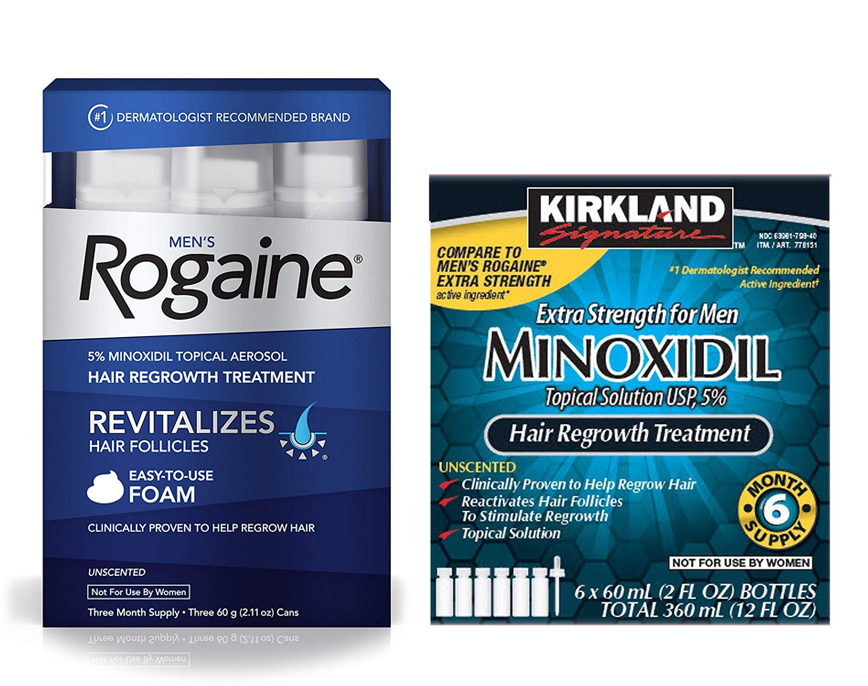
Minoxidil, the best-known topical hair loss medication, improves blood flow to act on the hair follicles and the hair growth cycle.
In short, it creates the “environment” for hair to grow.
Both ingredients are medications with clearly proven mechanisms for treating hair loss.
However, if you stop taking or using them, hair loss can progress again, and there’s a chance of side effects like changes in sexual function or scalp irritation.
So if you just use the medication, will your hair grow back thick and strong?
Here’s one fact most people miss.
“Hair loss medications manage the cause of shedding or create an environment for hair to grow,
but they don’t supply the raw materials for hair.”
Just as you can’t put up a building without enough bricks and cement, no matter how well you prepare the construction site, the same goes for hair.
For hair to be made, the raw materials that make up hair and the nutrients needed to build it have to be supplied together.

In fact, Pantogar-type OTC medicines used as a supportive treatment for hair loss also contain medicinal yeast, L-cystine, keratin, and B vitamins.
The fact that Pantogar is registered as an actual hair loss medicine shows how important it is to supply nutrients for hair.
Especially when extreme dieting or irregular meals leave you short on protein and essential nutrients, it can affect normal hair growth.
So while getting the right treatment for your type of hair loss, you should also check that you’re not short on the nutrients that make hair.
So what’s the first nutrient you need to build hair that’s gotten thinner?
Many people think of biotin first, but there’s something to check before that.
And that’s what hair is mainly made of.
3. The Hair Nutrient Getting All the Attention
Hair is mainly made of a protein called keratin.
And every protein is made of many amino acids linked together.
In other words, to make hair, you need a sufficient supply of amino acids, the building blocks of protein.
Here’s where a lot of people have a misconception.
Many people think “hair supplement = biotin,” but biotin is just one of several vitamins that help metabolize protein, fat, and carbohydrates.
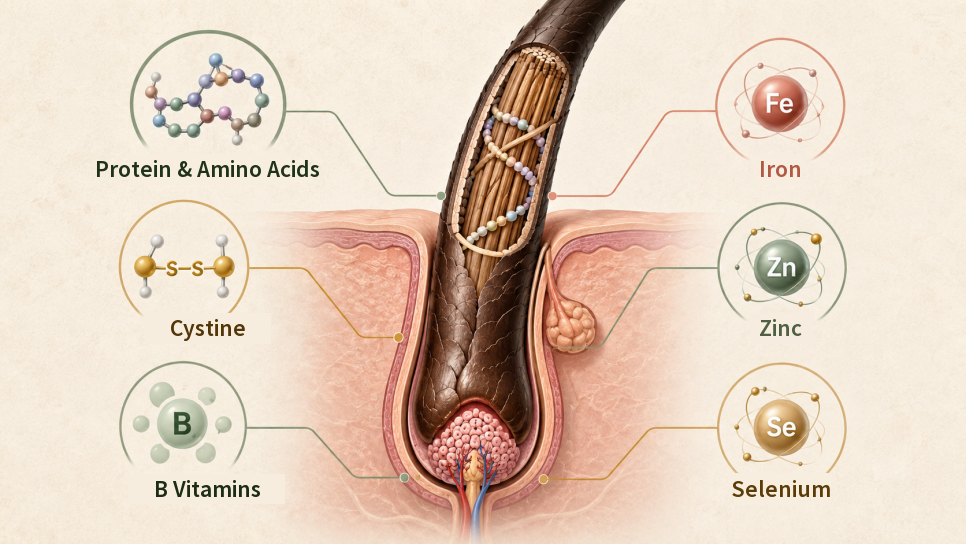
It’s true that a biotin deficiency can cause hair loss, but biotin deficiency itself is rare, and simply adding more biotin doesn’t make new hair.
In other words, rather than taking high-dose biotin alone, the first step is to supply the variety of amino acids and nutrients that actually make up hair.
So is there a food that can fill in these nutrients evenly, all at once?
The food I recommend as a pharmacist is brewer’s yeast.
Brewer’s yeast is the yeast used to ferment beer, processed so it can be eaten.
There’s a fun story behind how it got attention for hair nutrition.
It’s said that research into the link between yeast and hair health began after people noticed that workers at a brewery in Germany had especially thick hair.
In fact, more than half of brewer’s yeast by weight is plant-based protein, and it contains amino acids in proportions similar to the essential amino acid ratio humans need.

It’s especially rich in amino acids like cystine and cysteine that make up keratin, so it’s considered a nutrient source that can evenly fill in the “raw materials” for hair.
On top of that, B vitamins were first discovered in yeast, and its B vitamin content is excellent.
It also contains minerals like selenium and chromium in a form bound to amino acids, so they’re absorbed relatively well.

In fact, the main ingredient in OTC medicines like Pantogar, used as a supportive treatment for hair loss, is also “medicinal yeast.”
However, the amount of yeast in one capsule of these medicines is only about 100 mg, which is a bit low to count as the daily nutrient supply an adult needs.
That’s why some experts say that taking about 3 g a day, or 3,000 mg of pure brewer’s yeast is more helpful nutritionally.
However, taking too much, 4 g or more a day, can actually cause side effects like gout, so taking too much isn’t recommended.
* Who should not take brewer’s yeast
Brewer’s yeast is a natural food that infants, pregnant women, and older adults can all take.
Brewer’s yeast is nutritionally excellent, but there are people who shouldn’t take it.
1) People with gout
Brewer’s yeast is very high in purines, which produce uric acid.
Because gout can come back, if you have or have had gout, it’s best to avoid it.
2) People with kidney disease
Likewise, because it produces a lot of uric acid, and people with weakened kidney function have a weakened ability to filter out uric acid, people with kidney disease should avoid taking it.
Taking brewer’s yeast won’t worsen kidney function, but people whose kidneys are already weak need to be careful.
3) If you’re taking medications or supplements
If you’re already taking other medications or supplements, interactions and doses need to be checked, so talk to a professional first.
4. How to Choose the Right Brewer’s Yeast
① Check Where It Comes From

I recommend brewer’s yeast from Europe, such as Lithuania and Germany.
Lithuania and Germany are among Europe’s top three beer countries.
They produce so much that freshness is excellent, the aftertaste is less bitter than other brewer’s yeast, and because high heat isn’t applied during production, the protein isn’t denatured and quality is said to be good.
② Check the Amount and Percentage
Taking 4 g or more raises the risk of side effects

I recommend a high-purity, 100% brewer’s yeast product at 3 to 3.5 g a day.
If you’re taking a product to get brewer’s yeast, one that’s 100% brewer’s yeast with no additives is best.
If it contains other excipients or additives to bind the brewer’s yeast together, their effects can build up.
Also, if it has added other herbal ingredients (rosemary, etc.) that aren’t clearly known to help hair, the brewer’s yeast content may be low.
③ Form: Is It Easy to Take?
I recommend pellets!
Brewer’s yeast basically tastes bitter and sour.
It doesn’t taste good, to the point that first-timers may find it off-putting and uncomfortable.
Brewer’s yeast products on the market come as powder, tablets, and pellets.
1) Powder
Brewer’s yeast powder is inexpensive, but it tastes so bitter that it’s hard to take consistently, so you don’t end up reaching for it much.
With powder, you have to take a full tablespoon at a time.
It’s exposed to the air often, which isn’t good for hygiene either.
2) Tablets
With tablets, you have to swallow 6 to 10 a day, and since they’re on the large side, they’re a little hard to get down.
They also contain excipients to press the brewer’s yeast into tablets.
3) Pellets
Pellets are made of very small granules pressed together, so they go down easily and have almost no taste, making them the easiest to take.
They’re also good for people who have trouble swallowing pills, and pellets are my favorite.
Among brewer’s yeast pellets, products in a tub are exposed to the air every time, so they have a high risk of going rancid.
Among pellet products, I recommend ones that are individually packed in stick packs so they’re easy to take.
5. Pharmacist’s Best Picks
① 100% Brewer’s Yeast Pellets ★★★
“YoungLong Brewer’s Yeast“ (dietary supplement)
- 100% brewer’s yeast is rare, but this is a unique 100% product
- No excipients
- Meets the 3 g+ daily amount / a safe amount
- Hygienic stick packs
- Easy-to-take pellets, a best-seller (high repurchase rate)
- Reviews: 26,000+ in Korea
- Price: $23.10 for a 1-month supply (30 sticks)
- Where to buy: online

▶ Why I recommend it
It’s the product that most faithfully meets the 4 criteria I mentioned earlier (amount, purity, amino acid testing, and form).
With no unnecessary extra ingredients, just brewer’s yeast, it’s a product you can choose when you want to directly replenish the “raw materials” that hair is made of.
② Capsule Product
“Merz Pantogar“ (OTC medicine)
- Large packs (90 or 300 capsules) let you take it long term
- Contains added B vitamins
- Where to buy: online
▶ Why I recommend it
It’s a medicine approved as a supportive treatment for diffuse hair loss, and it contains not only yeast but also L-cystine, keratin, and B vitamins, the ingredients needed to make hair.
③ Topical Product
“Men’s Rogaine 5% Minoxidil Foam“ (OTC medicine)
- One of the best-known minoxidil brands in the U.S.
- A 5% minoxidil foam that dries quickly and is easy to spread through the hair
- Free of propylene glycol, so it may be a gentler option for sensitive scalps than the liquid version
- Where to buy: online

▶ Why I recommend it
It’s an ingredient with clearly proven effectiveness for treating hair loss, and it is thought to improve scalp blood flow, directly creating the environment for hair to grow.
But since the environment alone isn’t enough, it’s best to fill in the “raw materials” with a nutrient source like brewer’s yeast.
The key to managing hair loss is figuring out the cause of your hair loss first, then keeping up with the treatment and nutrition that fit it.
Instead of rushing because of flashy ads, choose exactly what your type of hair loss needs and stick with it.
This has been Pharmacist Mom, breaking down the ingredients and mechanisms inside the medicines we take.
This post is based on general health information and personal opinions.
For diagnosis and treatment based on your own condition, please talk with your healthcare provider.
References
[1] TINA.org (Truth in Advertising). Hair Growth Product Marketing.
[2] U.S. Food and Drug Administration. Is It a Cosmetic, a Drug, or Both? (Or Is It Soap?)
*This content has not been evaluated by the U.S. Food and Drug Administration (FDA). This product is not intended to diagnose, treat, cure, or prevent any disease.